Guide de conduite du col de la Furka : virages, Bond et les meilleurs arrêts
Planifiez une vraie traversée du col de la Furka, avec des choix d’itinéraires, des arrêts au glacier, des conseils sur l’ouverture saisonnière et les détails qui transforment une route suisse célèbre en une journée mémorable.
The first surprise on Furka is how little speed you need for the road to feel extraordinary. The valley drops away, the next bend folds back on itself and a mountain appears to have occupied most of the windscreen. Your humble hatchback has suddenly acquired the setting of a very expensive car advert.
Furka earns its reputation through that combination of scale and detail: exposed slopes, tight bends, old buildings and a route that carries you between Uri and Valais. The James Bond connection helps, of course. But there is considerably more to a good visit than finding the famous hotel and leaving with a photograph.
Here is how to plan a proper Furka day, including direction, seasonal access, the Rhône Glacier, sensible stops and links with Grimsel and Susten. Start with the road you can enjoy comfortably, then build the itinerary around it.
Understand the route before following the satnav
Furka Pass reaches 2,429 metres and links the Urseren Valley in Uri with the upper Rhône Valley in Valais. Realp is the eastern gateway to the climb; Gletsch is the junction on the western side, with Oberwald farther down the valley. Andermatt is a useful base east of Realp.
The distinction matters when comparing distances. A journey described as Andermatt to Gletsch is not identical to one measured from Realp to Oberwald. TCS gives approximately 29 kilometres for its Obergoms–Realp section. Set your own endpoints and stops before deciding how much driving the day contains.
For a first visit: Allow half a day for a single crossing with several stops, and longer if you want a glacier visit or substantial walk. This is our planning allowance rather than a minimum journey time. The drive itself can be relatively compact; the reasons to get out of the car are what expand the day.
Navigation tip: Enter Furkapass as a waypoint. A route between Realp and Oberwald may instead use the car-carrying train through the base tunnel. That is useful transport, but it does not give you the mountain road you came for.
Choose a direction that fits your day
Andermatt and Realp towards Gletsch
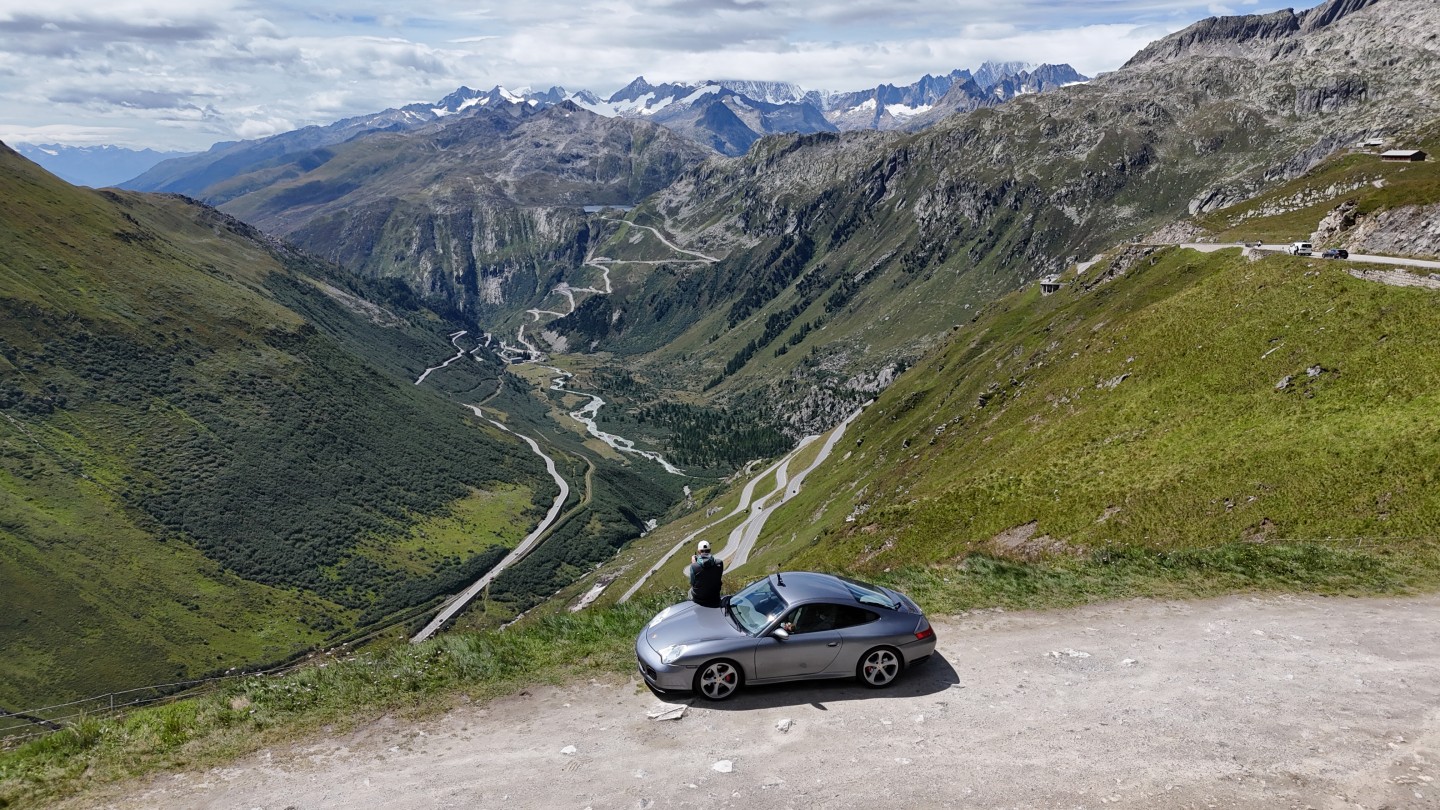
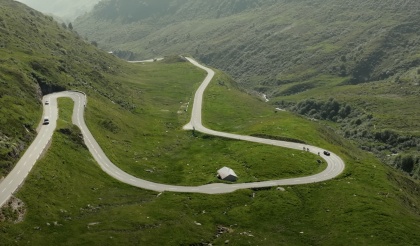
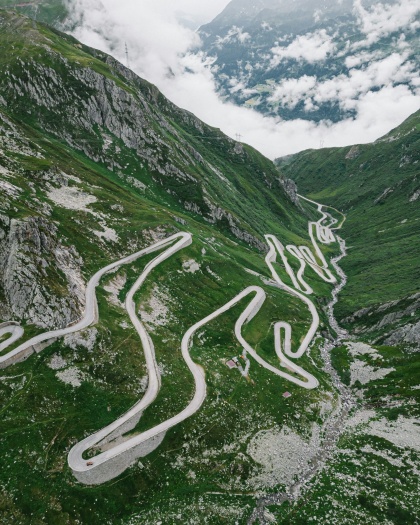
This is our recommendation for a first visit from central Switzerland. The approach through the Urseren Valley lets you settle into the journey before the climb becomes more concentrated. Beyond Realp, the road gains height through bends that make the valley behind look progressively less like the place you were driving through a few minutes earlier.
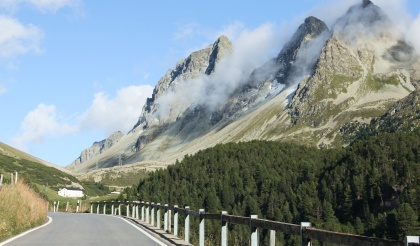
Higher up, the route runs across exposed mountain terrain towards the summit. Sightlines change repeatedly: an open view across the valley does not necessarily reveal what is immediately around the next bend. The pleasure comes from reading the road and making each input feel unhurried.
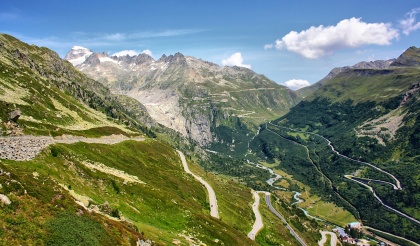
After crossing the summit, the Valais side brings the Belvédère and glacier visitor area before the descent to Gletsch. That sequence gives the day a useful shape: climb, high crossing, a longer stop, then a decision about whether to continue into the Goms or towards Grimsel.
Gletsch towards Realp and Andermatt
Approaching from Valais or Grimsel reverses the emphasis. You meet the western climb and glacier area earlier, then cross towards Uri and finish with the descent to Realp. Andermatt provides a natural place to end the day if your accommodation is there.
Choose this direction when it suits the rest of your trip rather than repositioning simply to copy a recommended itinerary. The road works both ways. Weather, daylight, booked visits and the comfort of your passengers are more useful deciding factors than an argument about which side has the perfect sequence of corners.
On either side, leave space around cyclists and expect oncoming vehicles to need room through tighter bends. Stay within your lane and the distance you can see to be clear. Furka supplies enough drama without borrowing any from the opposite carriageway.
Seasonal opening: check the crossing, not just the month
Furka is a seasonal road, generally associated with summer and early autumn. Snow and local conditions determine when it opens and closes. Temporary restrictions can also affect an otherwise open season, so check the Uri road information and the current pass report shortly before leaving.
A partial opening is especially easy to misread. Access to a business or a point partway up one side does not mean you can continue over the summit. Look for confirmation of the complete crossing and read any restrictions that apply to your vehicle.
A settled summer weekday is a sensible target for a first drive. Earlier starts can leave more time for stops and reduce parking pressure, but there is no universally perfect hour. After a cold night, waiting for better light and temperatures can be more sensible than arriving before sunrise with frosted scenery and uncertain visibility.
In autumn, shorten the plan before you shorten the breaks. A clear afternoon may still be excellent for one pass, while a three-pass itinerary pushes the final descent into darkness. If low cloud removes the views or fresh snow complicates the crossing, choose another day or use a suitable transport alternative.
Hotel Belvédère: an icon with an important distinction
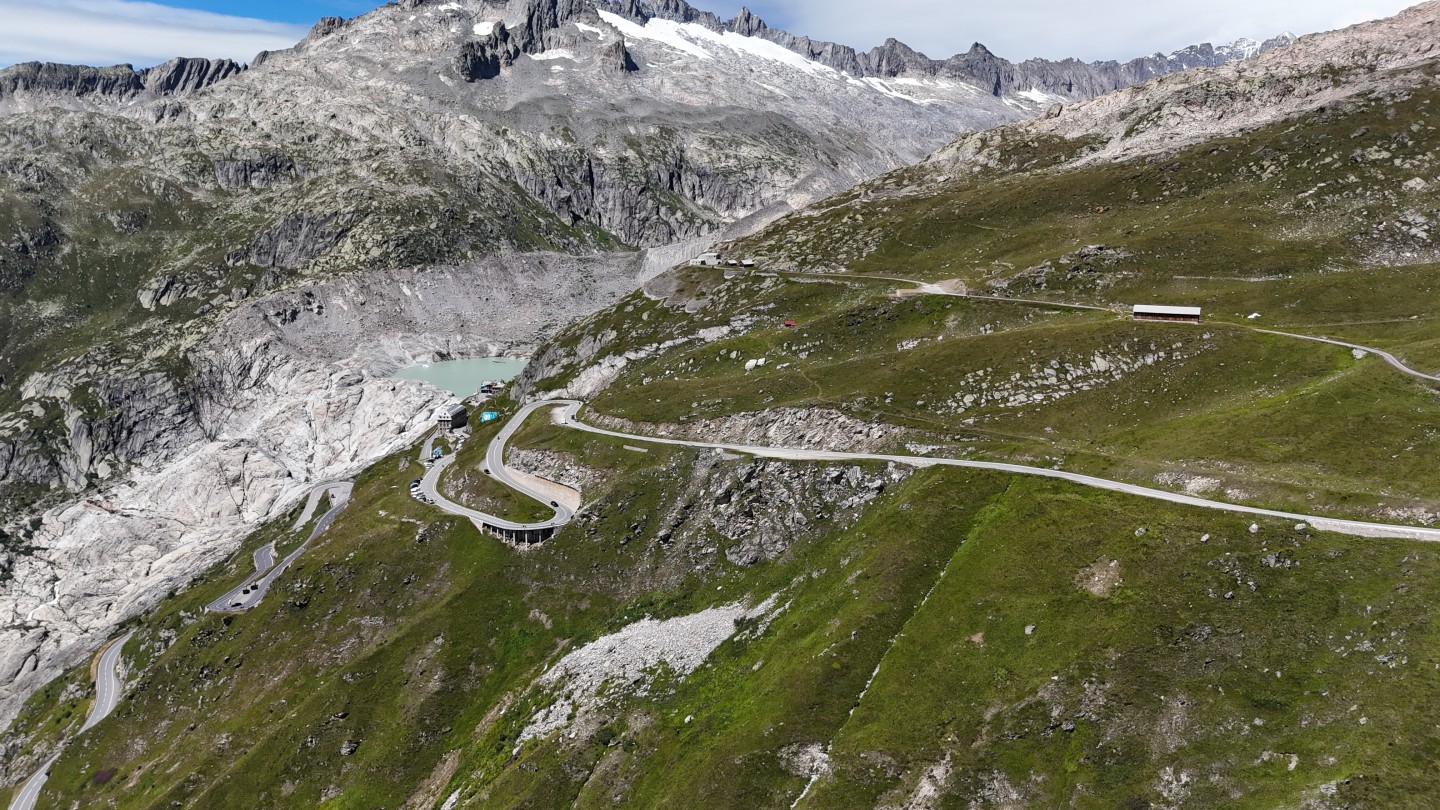
The building in the famous hairpin is Hotel Belvédère, on the Valais side below the summit. Its position makes it one of the most recognisable sights on the road, but it is not an operating hotel or restaurant. The owner's current information says it remains closed indefinitely.
Plan it as an exterior landmark. Do not arrive expecting a room, a restaurant table or public access inside. The nearby glacier visitor operation is separate from the hotel's closure, and its own opening status needs checking.
For photography, use permitted parking and a safe walking position. The familiar aerial view does not show how busy the road or parking area might be when you arrive. If you cannot stop conveniently, continue and let the visit go. A road trip loses much of its charm when a single photograph becomes a logistical dispute.
Give the surrounding landscape equal attention. The bend is memorable because of the way building, mountain and road sit together. A wider view often tells that story better than trying to fit your car into the exact frame already circulating online.
Visiting the Rhône Glacier
The glacier visitor area near Belvédère offers a different reason to stop. Here, the focus changes from the road to the ice, rock and glacial lake. Check the operator's current status for the visitor trail and ice grotto before making them central to the itinerary: the glacier changes, and so can the accessible experience.
Wear shoes suitable for a mountain path and leave a generous time allowance. This is a visit on foot, not a viewpoint you experience entirely from the car. Terrain, weather and walking ability affect how comfortable the outing will be, especially if someone in your group has limited mobility.
Use the designated visitor route and follow barriers. The glacial landscape beyond the managed area is not an extension of the attraction. A clear distinction between public visitor access and the surrounding mountain terrain makes the stop easier to plan and enjoy.
Older photographs can create expectations that no longer match the view. The interpretive material is useful precisely because it explains a changing landscape. Leave time to read it rather than treating the glacier as one more background for the car.
The other stops deserve a place in the plan
Andermatt and Realp
Use Andermatt for the practical work of the morning: breakfast, a final weather check and confirmation of your fuel or charging plan. If you are staying overnight, ask about parking arrangements before arrival, particularly with a low car or several vehicles travelling together.
Realp is where the road, car transport and heritage railway become separate choices. Know which one you intend to use. A pause before the climb gives everyone a chance to settle navigation, remove a jacket or put the camera somewhere it will not slide around at the first hairpin.
The summit
A summit stop is about appreciating the crossing rather than ticking off the altitude. Get fully clear of traffic, step out and give yourself a moment to understand the scale. Carry a layer even if the valley was warm; being comfortable makes it much easier to stay and look.
Do not assume that every attractive building offers refreshments whenever you happen to pass. If a particular restaurant is part of your plan, confirm its opening time directly. Otherwise, keep lunch anchored to a dependable stop farther along your route.
Gletsch and the Goms
Gletsch is the important western junction: Furka climbs towards Uri, Grimsel heads towards the Bernese Oberland, and the valley road continues towards Oberwald. Check your next waypoint before leaving the parking area. The choice affects the rest of the day more than any particular corner does.
If the group has had enough mountain driving, continue down into the Goms for a slower afternoon. You do not need another high pass to justify the outing. Stopping while everyone is still enjoying themselves is an underrated touring skill.
A railway day beside your driving day
The Furka heritage railway follows the historic mountain route between Realp and Oberwald. Its seasonal trains offer another perspective on terrain you have just crossed by road. Check the current timetable, running days and booking arrangements before building a day around it.
A train excursion works particularly well during a two-night stay. Drive the pass on the better-weather day and give the railway its own space in the itinerary. Trying to fit a long rail journey, glacier visit and several passes into one day usually leaves the timetable in charge of the holiday.
Make the return plan explicit if travelling one way. The heritage railway does not carry your car with you, and it is a different operation from the practical car transport through the base tunnel. Similar place names can hide quite different journeys.
Furka's James Bond connection, without the mythology
Furka appears in the 1964 film Goldfinger, with Sean Connery's Bond following Auric Goldfinger through the Swiss Alps. The appeal is easy to understand: the road provides suspense and scale before the actors do anything particularly complicated.
There is a pleasing mechanical footnote. The official James Bond account of filming says the Aston Martin burned out its clutch on the second day of the Swiss shoot. Even a DB5 with cinema's most resourceful support department could find mountain work demanding. It is a better argument for mechanical sympathy than any heroic exhaust note.
Enjoy the connection as part of the road's history. The present-day experience includes ordinary traffic, visitors and people travelling between valleys. You can borrow the sense of occasion while leaving the pursuit to the film.
A relaxed Furka itinerary and a bigger loop
One pass, properly enjoyed
Start in Andermatt with a clear forecast and sufficient range. Drive through Realp, cross Furka and pause at a suitable summit or roadside stopping area. Visit the glacier if it is operating and the conditions suit your group, then continue through Gletsch towards Oberwald for lunch or an overnight stop.
For the return, choose between the road and the car-carrying train after checking the weather, service information and vehicle eligibility. Repeating Furka gives you the opposite view, while the train can reduce driving. Neither choice needs to be made into a test of commitment.
Furka, Grimsel and Susten
The classic three-pass circuit can run from Andermatt through Realp and Furka to Gletsch, over Grimsel to Innertkirchen, then over Susten to Wassen and back via Göschenen. Enter those intermediate places so your navigation preserves the intended loop.
Allow a full day with generous breaks. A substantial glacier visit or another attraction may be better saved for a second day. Three high crossings require more concentration than their combined distance suggests, particularly when the weather or traffic changes between valleys.
Check each road separately. An open Furka tells you nothing definite about Susten, and a closure can turn a neat circuit into a much longer journey. Our Grimsel guide and Susten guide explain their stops and current planning considerations.
The right car, and the preparation that matters
In suitable conditions, an ordinary well-maintained car can make this journey. Good visibility, predictable brakes and manageable dimensions matter more than headline horsepower. If hiring, choose a car you can place confidently through a narrow bend and park without turning every stop into a negotiation.
A compact sports car makes the steering and changes in gradient feel vivid. A comfortable grand tourer makes the approach and longer holiday easier. With a classic, arrange any needed checks before departure: cooling, tyres, brake condition and reliable starting matter more here than perfect paintwork.
Very low cars need care around repaired surfaces and parking entrances. Larger vehicles need a more specific decision: TCS advises against the pass for motorhomes and lists a trailer prohibition. Check the live restrictions rather than assuming a route suitable for a small car suits every vehicle.
For an EV, verify charging options around your actual overnight and lunch stops, with a backup that remains reachable. Climbing, temperature and cabin heating can change consumption. Follow the manufacturer's guidance for descending, including any limits on regenerative braking, and keep enough reserve for a changed route.
Use the appropriate gear or downhill setting to manage the descent. If the brakes behave abnormally, stop safely and seek assistance rather than assuming a short pause fixes the cause. Most preparation is much less dramatic: water, layers, clean glass and a navigation plan that someone has actually read.
When the pass is closed: the Furka car transport
The Matterhorn Gotthard Bahn car transport connects Realp and Oberwald through the Furka base tunnel. It is a year-round alternative to the pass road, subject to the operator's timetable and any service disruption.
You load the vehicle onto a train; there is no public road through this tunnel to drive yourself. Check current departures, fares, loading instructions and limits for your vehicle, especially with unusual dimensions or low ground clearance. Include waiting and loading time in your journey plan.
This option is particularly useful when the aim is reaching the other valley. If the aim is the scenic pass, rebook the drive for appropriate conditions. Keeping those two objectives separate prevents a sensible alternative from feeling like a disappointing substitute.
Make Furka part of a Petrolbase driving escape
Explore driving tours and road rallies on Petrolbase if you would like an organised journey around the driving itself. Check whether the specific itinerary includes Furka, which vehicle you will use, how much driving each day contains and how weather changes are handled.
A good itinerary leaves space for the landscape and the people in the car. On Furka, that might mean one longer stop, an unhurried lunch and the freedom to leave another pass for tomorrow. The mountains provide the occasion. You only need to give the day enough room.
Questions fréquemment posées
Tu as des questions?

-thumb.jpg)