Road TripsSwitzerland

Grimsel Pass Driving Guide: Switzerland’s Alpine Road Icon

Drive Grimsel Pass in Switzerland: route tips, best season, viewpoints, EV planning, safety advice and why this Alpine road is a must for enthusiasts.

SHARE POST

GET STARTED
Contact us

Grimsel Pass Driving Guide: Switzerland’s Alpine Road Icon

Some roads are built to move traffic. Grimsel Pass feels like it was built to test your attention, reward your patience, and remind you why driving still matters. This is not a soft, postcard-perfect alpine cruise. It is granite, water, tunnels, dams, hairpins, changing light, thin air, and that delicious feeling when the road starts speaking directly through the steering wheel. For car enthusiasts, Grimsel Pass is one of Switzerland’s most cinematic driving roads because it combines engineering, landscape, and rhythm in a way few mountain passes can match. In this guide, you will learn when to drive it, which direction feels best, where to stop, how to prepare your car, how to approach the corners, what to combine it with, and why Grimsel is becoming even more relevant in the age of EV road trips, slow travel, climate-conscious tourism, and curated automotive experiences.

Why Grimsel Pass Feels Different

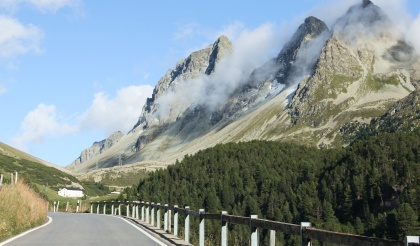
Grimsel Pass is not trying to charm you immediately. It does not open with gentle meadows and easy romance. It builds slowly. From the Bernese Oberland side, the road begins with a sense of control and restraint, climbing from the Haslital valley before the landscape starts to harden. Trees thin out. The colours change. The air sharpens. Suddenly the road is no longer just crossing the Alps — it is entering the machinery room of the mountains.

This is what makes Grimsel special. It has a raw, almost industrial beauty. Huge granite walls, hydroelectric dams, turquoise reservoirs, exposed rock, and wide alpine views create a landscape that feels part nature documentary, part engineering masterpiece, part driving simulator brought to life. It is not only a beautiful road. It is a road with presence.

For the driver, that matters. Some alpine passes are all about tight hairpins. Others are about fast sweepers or dramatic viewpoints. Grimsel is a hybrid. It has technical sections, open-flowing bends, strong elevation changes, and enough visual drama to make even a short stop feel like a scene change in a proper grand tour film.

The modern relevance of Grimsel Pass

Grimsel is more relevant now because the way people travel is changing. Car enthusiasts are no longer just looking for speed or a destination. They are looking for curated driving routes, slow-travel experiences, EV-compatible road trips, premium scenic drives, and meaningful automotive adventures that feel worth documenting and sharing.

That is exactly where Grimsel fits. It is short enough to be enjoyed in one focused drive, dramatic enough to anchor a full road trip, and perfectly positioned to connect with Furka Pass, Susten Pass, the Rhone Glacier area, Meiringen, Andermatt, and the wider Grand Tour of Switzerland. For petrolheads, EV drivers, photographers, content creators, and road-trip travellers, Grimsel is no longer just a mountain crossing. It is a high-impact experience.

Where Grimsel Pass Is Located

Grimsel Pass connects Innertkirchen in the Bernese Oberland with Gletsch in the canton of Valais. At the summit, the pass reaches around 2,164 metres above sea level, placing you deep in the high-alpine world where weather, visibility, and road conditions can change quickly.

The road is part of one of Switzerland’s greatest driving regions. From Innertkirchen, you are close to Meiringen, Susten Pass, Aare Gorge, and the road towards Interlaken. From Gletsch, you are immediately connected to the legendary Furka Pass, the Rhone Glacier viewpoint, and the road towards Oberwald and the Valais valley.

This position makes Grimsel one of the best roads for building a proper alpine driving itinerary. You can drive it as a standalone experience, but it becomes even stronger when combined with neighbouring passes. For many enthusiasts, Grimsel is the central piece in a three-pass route with Susten, Grimsel, and Furka. That combination gives you three completely different driving personalities in one day: Susten for beauty and rhythm, Grimsel for raw alpine drama, and Furka for cinematic switchbacks and iconic views.

Best Time to Drive Grimsel Pass

Grimsel Pass is a seasonal road. In normal years, it opens around late spring or early summer and remains accessible until autumn, depending on snow, avalanche risk, and maintenance work. The exact dates change every year, so the most important rule is simple: check the current pass status before you go.

The best months for most drivers are June, September, and early October. June can be spectacular because snow walls may still be visible near the road, giving the drive a dramatic expedition feeling. September is arguably the sweet spot: less tourist traffic, cooler air, golden light, and a more relaxed atmosphere. Early October can be magical, but also more unpredictable. One cold front can change the mood from dream drive to survival exercise very quickly.

Summer driving

July and August bring the most stable temperatures and the easiest planning conditions, but also the highest amount of traffic. Expect motorcycles, cyclists, camper vans, tourist coaches, hikers, photographers, and rental cars. The road is still worth driving, but the rhythm will be interrupted more often. In summer, the best strategy is to start early. Very early.

A sunrise or early-morning drive gives you cleaner roads, softer light, cooler brakes, and fewer people at the viewpoints. It also gives Grimsel the atmosphere it deserves. The mountains feel quieter. The lakes become mirrors. The granite catches the first light. Your car feels like it belongs there instead of fighting for parking space with a line of motorhomes.

Autumn driving

Autumn is for drivers who prefer atmosphere over convenience. The light gets lower, the air feels sharper, and the road becomes less crowded. The landscape takes on a colder, more serious character. This is the time when Grimsel feels most like itself: raw, quiet, exposed, and slightly intimidating.

But autumn also demands respect. Temperatures at the summit can be much lower than in the valleys. Wet leaves, early frost, fog, and sudden weather changes can turn a confident drive into a careful one. This is not a problem if you arrive with the right mindset. Grimsel rewards smoothness, not ego.

Which Direction Is Best?

You can drive Grimsel Pass in both directions, and both are excellent. But if you want the most dramatic build-up, start from Innertkirchen and drive towards Gletsch.

This direction gives the route a stronger narrative. You begin in the valley, climb through changing terrain, enter the hydroelectric landscape, pass the reservoirs, reach the summit, and then descend towards the Valais with the Furka Pass and Rhone Glacier area opening ahead. It feels like a proper alpine chapter, with a beginning, middle, and grand finale.

Driving from Gletsch towards Innertkirchen is also fantastic, especially if you are coming from Furka Pass. In that direction, Grimsel becomes a powerful continuation after one of Switzerland’s most iconic roads. You climb from the Gletsch side, reach the summit quickly, then drop into the granite-and-reservoir world towards the Bernese Oberland.

The enthusiast’s recommendation

For a full driving day, the best route is often: Meiringen or Innertkirchen → Grimsel Pass → Gletsch → Furka Pass → Andermatt. If you want the bigger loop, add Susten Pass and return towards Innertkirchen. It becomes one of the finest road-trip loops in Europe, but only if you do it with enough time. Rushing three alpine passes in one day can turn a dream route into a checklist. Grimsel deserves more than that.

The Driving Experience: What to Expect Behind the Wheel

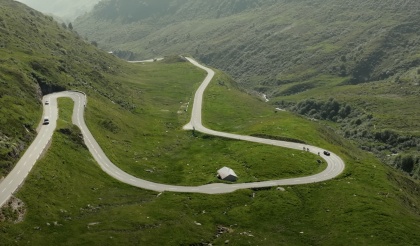
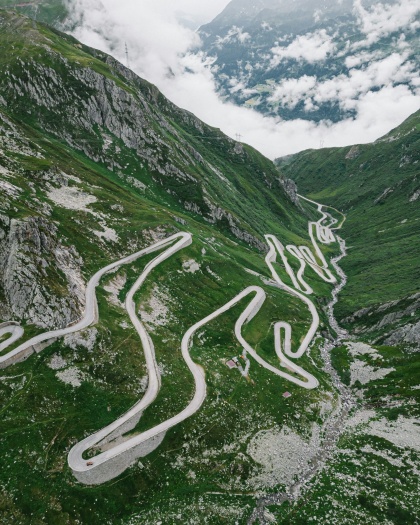
Grimsel is not the tightest pass in Switzerland, and it is not the fastest. Its strength is the way it mixes different driving sensations. One moment you are threading through more technical sections. The next, the road opens into broad bends beside a reservoir. Then a tunnel appears. Then a dam. Then a viewpoint. Then another climb. The road keeps changing its tone.

The surface is generally good, as Swiss alpine roads are famously well maintained, but never treat that as permission to relax completely. High-altitude roads live hard lives. Snow, ice, water, rockfall, maintenance vehicles, and temperature changes all leave their mark. Grip can vary, especially after rain or in shaded corners.

For sports cars

In a sports car, Grimsel is about precision and restraint. You do not need huge horsepower to enjoy it. In fact, lighter cars with good steering, strong brakes, and balanced suspension often feel more rewarding here than heavy, overpowered machines. The best moments come when you connect corners smoothly, use the gearbox properly, and let the road flow rather than attacking every straight.

Brake management matters. Long descents can punish cars that rely too much on the brake pedal. Use engine braking where possible, stay smooth, and avoid repeated heavy braking. If the pedal starts feeling longer or softer, stop safely and let the system cool. The mountain is not going anywhere.

For classic cars

Grimsel in a classic car can be unforgettable, but preparation is everything. Cooling, brakes, tyres, and fuel planning matter more than Instagram photos. Older cars often make the pass feel more alive because you are more involved in every input. You feel the gradient. You hear the engine working. You smell the warm mechanicals after a climb. It is wonderfully analogue.

But the same analogue charm comes with responsibility. Do not underestimate altitude, heat, or long climbs. Bring patience, check fluids, and give the car moments to breathe. A classic car on Grimsel is not about proving performance. It is about experiencing the road with character.

For EV drivers

Grimsel is becoming increasingly interesting for EV road trips. Switzerland’s charging network continues to grow, and alpine routes are becoming more realistic for electric cars every year. EVs also bring a unique advantage on mountain roads: instant torque on climbs and regenerative braking on descents.

That said, EV planning still matters. Start with enough charge, know where the nearest reliable charging points are, and remember that cold temperatures, spirited driving, elevation changes, and heating or cooling systems can affect range. Regeneration can recover energy on the way down, but do not build your entire plan around best-case scenarios. A proper enthusiast plans like a pilot, not like someone hoping for the best.

Key Stops and Viewpoints

Grimsel is not a road to drive without stopping. The landscape is too good, and the story of the place is too layered. Plan time for viewpoints, photos, coffee, and simply standing still for a moment. The best stops are not just about taking pictures. They help you understand where you are.

Lake Räterichsboden

Lake Räterichsboden is one of the great visual moments of the pass. The water often has that unreal alpine colour that makes every photo look edited even when it is not. With the road, rock, dam structures, and mountains around it, this is one of the best places to capture the character of Grimsel: natural beauty shaped by human engineering.

For car photography, this area can be excellent, but only stop where it is safe and allowed. Do not block traffic, do not park on blind corners, and do not treat the road like a private photoshoot location. The best automotive content is the kind that respects the place.

Grimselsee

Grimselsee feels larger, colder, and more serious. The reservoir sits in a dramatic high-alpine setting, surrounded by granite and big skies. On a clear day, it is beautiful. In moody weather, it becomes even more powerful. The scale of the water and dam infrastructure gives Grimsel its unique identity.

This is where the road feels less like a scenic route and more like a piece of national infrastructure. It reminds you that the Alps are not just a playground. They are also water storage, energy production, transport corridor, climate indicator, tourism engine, and cultural landscape all at once.

Grimsel Kulm

The summit area around Grimsel Kulm is the natural pause point. You are at roughly 2,164 metres, surrounded by wide views, changing weather, and the satisfying feeling that you have earned the stop. There is parking, food, and enough space to reset before continuing towards Gletsch or returning in the opposite direction.

This is also a good place to check your car. Look at your tyres. Smell your brakes. Listen for anything unusual. Take a moment before the descent. The top of a pass is not just a viewpoint. It is a transition between two driving phases.

Rhone Glacier and Gletsch

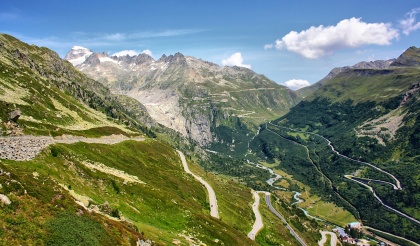
On the Valais side, the road connects you towards Gletsch and the Furka Pass area, where the Rhone Glacier landscape adds another layer of drama. This region has become symbolic for a reason: it is beautiful, but it also shows how visibly the alpine environment is changing.

For modern travellers, that adds responsibility. The future of alpine tourism will not only be about more visitors, more content, and more road trips. It will be about better behaviour, better planning, and more respect for fragile mountain environments. Grimsel is a perfect place to understand that shift.

Vehicle Preparation Before Driving Grimsel Pass

A good alpine drive starts before the first corner. Grimsel is not extreme if conditions are good, but it is still a mountain road. Your car should be ready, and so should you.

Brakes: Make sure pads, discs, and brake fluid are in good condition. Long descents can expose weak braking systems quickly.

Tyres: Check tread depth, pressure, and general condition. Tyres are your only contact with the road, and on an alpine pass that sentence becomes very real.

Fluids: Check oil, coolant, windscreen washer fluid, and any known weak points on your car. Climbing under load can punish neglected maintenance.

Fuel or charge: Do not arrive low. Fill up or charge before the pass, especially if you plan to combine Grimsel with Furka or Susten.

Navigation: Download offline maps. Mobile signal can be inconsistent in mountain regions, and relying only on live data is not smart.

Weather: Check the forecast for both sides of the pass, not only your starting point. Conditions can be completely different at altitude.

Mindset: Bring patience. You will share the road with cyclists, motorcycles, buses, tourists, and locals. A great alpine driver is not the fastest person on the mountain. It is the person who reads the road, respects others, and brings the car home cleanly.

How to Drive Grimsel Pass Properly

The best way to drive Grimsel is with rhythm. Look far ahead, brake early, turn smoothly, and leave space. Avoid the beginner mistake of charging into corners and correcting mid-bend. Alpine roads reward anticipation. The more you look ahead, the calmer everything becomes.

Use lower gears on descents to control speed and reduce brake load. This matters in every car, but especially in heavier vehicles. In an EV, use the appropriate regeneration mode, but remain aware that regen behaviour can vary depending on battery temperature and state of charge. In a manual sports car, Grimsel is a beautiful place to enjoy proper gear selection. Not for noise. Not for showing off. For control.

Respect cyclists and motorcycles

Grimsel is popular with cyclists and motorcyclists, and they are part of the alpine-road ecosystem. Give cyclists generous space. Do not squeeze past before blind corners. Be patient with motorcycles too, especially in groups. Everyone is there because the road is special. The goal is not to win the pass. The goal is to enjoy it without becoming the reason someone else has a bad day.

Do not chase content

One of the biggest modern problems on famous driving roads is that people start driving for the camera instead of the road. Grimsel is incredibly photogenic, but it is still a public mountain pass. Do not stop in dangerous places, do not hang out of cars for rolling shots, and do not turn viewpoints into private production sets. The best content comes from timing, respect, and good planning, not chaos.

Why Grimsel Matters for the Future of Automotive Travel

Grimsel Pass sits at the intersection of several major travel trends. The first is experience-led tourism. People increasingly want trips that feel personal, memorable, and story-rich. A generic hotel weekend is easy to forget. A sunrise drive over Grimsel with a coffee stop at the summit is not.

The second trend is EV-compatible adventure. As charging networks improve, electric cars are moving from city commuters to serious touring machines. Alpine passes are becoming part of the EV lifestyle conversation because they offer a unique combination of range planning, regeneration, scenic value, and high-emotion driving.

The third trend is climate-aware travel. Alpine regions are visibly changing. Glaciers are retreating, weather patterns are shifting, and mountain infrastructure faces new challenges. That does not mean enthusiasts should stop travelling. It means we need to travel more intelligently: fewer pointless trips, better-planned routes, more respect for local communities, and a stronger focus on quality over quantity.

The fourth trend is curated automotive culture. Car enthusiasts no longer only gather at static meets. They want road trips, rallies, tours, track days, driving experiences, and community-led adventures. Grimsel is exactly the type of road that can anchor this new generation of automotive travel: emotional, visual, challenging, and deeply connected to place.

Recommended Grimsel Pass Itinerary

Start in Meiringen or Innertkirchen early in the morning. Fill up with fuel or ensure your EV has enough charge. Begin the climb towards Grimsel before the main tourist flow arrives. Take your time on the first section and let the road build naturally.

Stop near Lake Räterichsboden for the first major photos. Continue towards Grimselsee and enjoy the changing landscape as the road becomes more exposed. Pause again at Grimsel Kulm for coffee, views, and a quick car check.

Descend towards Gletsch with patience and good brake management. From there, either continue to Furka Pass for the full cinematic experience or turn the day into a slower Valais exploration. If you are doing the full three-pass route, add enough time for Susten and avoid turning the day into a rushed endurance test.

For the best experience, stay overnight in the region. A two-day itinerary allows you to drive Grimsel in better light, avoid traffic, and enjoy the surrounding attractions without pressure. The road deserves that. So do you.

Final Verdict: Is Grimsel Pass Worth Driving?

Yes. Absolutely. Grimsel Pass is one of Switzerland’s essential driving roads, but not because it is the loudest, fastest, or most famous. It is essential because it gives you the full alpine experience in a concentrated, unforgettable form.

It has the engineering. It has the views. It has the corners. It has the elevation. It has the reservoirs, the granite, the weather, the drama, and the road-trip connections that make a driving route feel bigger than the distance on the map.

For the modern car enthusiast, Grimsel is more than a road to tick off. It is a reminder that driving can still be meaningful when it is done with intention. It can be about precision instead of speed, planning instead of chaos, appreciation instead of consumption, and stories instead of statistics.

Bring the right car, or the car you love. Start early. Check the pass status. Respect the mountain. Respect the people sharing it with you. Stop often enough to remember where you are. And when the road begins to carve its way through the granite, let it happen properly.

Grimsel Pass is not just a way across the Alps. It is one of the reasons you came to Switzerland in the first place.

Related Articles
Explore all