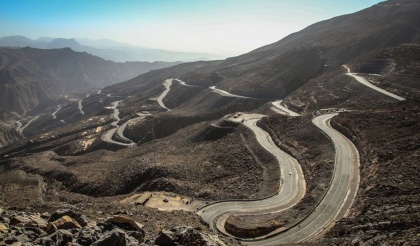
Guida alla strada della duna di Moreeb: pianificare un vero viaggio nel deserto di Liwa
Pianifica il viaggio su strada asfaltata verso la Duna di Moreeb a Liwa, dalla scelta dell’auto e dal momento giusto per la luce alle visite ai festival, alle soste notturne e alle esperienze guidate nel deserto.
At first, the drive towards Liwa looks reassuringly familiar: an air-conditioned cabin, a broad road and a navigation screen counting down the kilometres. Then the dunes grow. They begin to dwarf the roadside furniture, fill the windscreen and make the car feel like a very small object crossing a very large place. By the time you reach Moreeb Dune, the desert has rather decisively won the argument about scale.
For an enthusiast, that is the appeal. You get the pleasure of a proper road trip, a remarkable landscape and a destination with deep roots in Emirati motorsport. You can also enjoy the paved approach in an ordinary, roadworthy car. Driving to the dune and driving on the dune are separate activities, with very different requirements. This guide is about planning the first well, then choosing an organised experience if you want to explore the second.
Where Moreeb Dune is, and what you are driving towards
Moreeb Dune, also written as Tel Moreeb or Tal Moreeb, sits near Liwa Oasis in Abu Dhabi's Al Dhafra region, on the northern edge of the Rub' al Khali, the Empty Quarter. Experience Abu Dhabi describes the dune as more than 300 metres high, with a face inclined at approximately 50 degrees. Those figures explain its hill-climb reputation, although you need no statistics to appreciate its size from below.
Liwa is the gateway, but it is a region of oasis settlements rather than one conveniently compact attraction. A map pin marked simply “Liwa” may leave you some distance from your actual destination. Save the precise Moreeb Dune location, your chosen fuel stop and your accommodation separately. If a hotel describes itself as a Liwa desert resort, check its actual road distance from the dune before assuming that sunset will be a ten-minute excursion.
For geographical context, the tourism authority puts Liwa around 250 kilometres from Abu Dhabi city, approximately two and a half to three hours by car. That is a guide to reaching the oasis area, not a promise of arrival at Moreeb's parking area. Add the final approach, traffic, breaks and any detours. From Dubai, the extra distance makes an overnight stay a more appealing proposition, particularly if you want to enjoy the evening light.
The paved approach: the road is part of the attraction
Build the route around real waypoints
A common approach uses the E45 through Madinat Zayed towards Liwa, then the signed Moreeb Dune road. The 2026 UAE Tour roadbook identifies the E45, Liwa and the Moreeb turn-off along this corridor. Use current navigation for your starting point and follow local signs on arrival. Keep the route on public roads; a line crossing a blank patch on a map is no proof that it is an accessible driving route.
Once you reach the oasis settlements, take your practical break before carrying on. Fill or top up the tank, use the facilities, buy water and check how much daylight remains. This is also the moment to revise the plan if the approach took longer than expected. A desert road trip becomes much more enjoyable when the occupants are comfortable and the driver can look at the scenery without mentally calculating the remaining range every few minutes.
Expect changes in elevation, not just a ruler-straight road
The final approach has more shape than the phrase “desert road” suggests. Its climbs and descents work through substantial dunes, revealing new layers of sand as you move. The UAE Tour's route description specifically identifies these undulations around Moreeb. Do not confuse the neighbouring cycle track, used in event route planning, with a public motoring loop. Follow the signed road to the visitor area and respect any separation between vehicles, cyclists and event infrastructure.
Inside the car, the pleasure comes from the changing perspective. At one moment the sand forms a wall; a little further on, the view opens into a much larger landscape. A comfortable car with good visibility makes this easy to enjoy. Leave room for slower vehicles and sightseeing traffic, especially near access points. The road carries people going somewhere, so the satisfying rhythm is one that leaves everyone enough space to arrive comfortably.
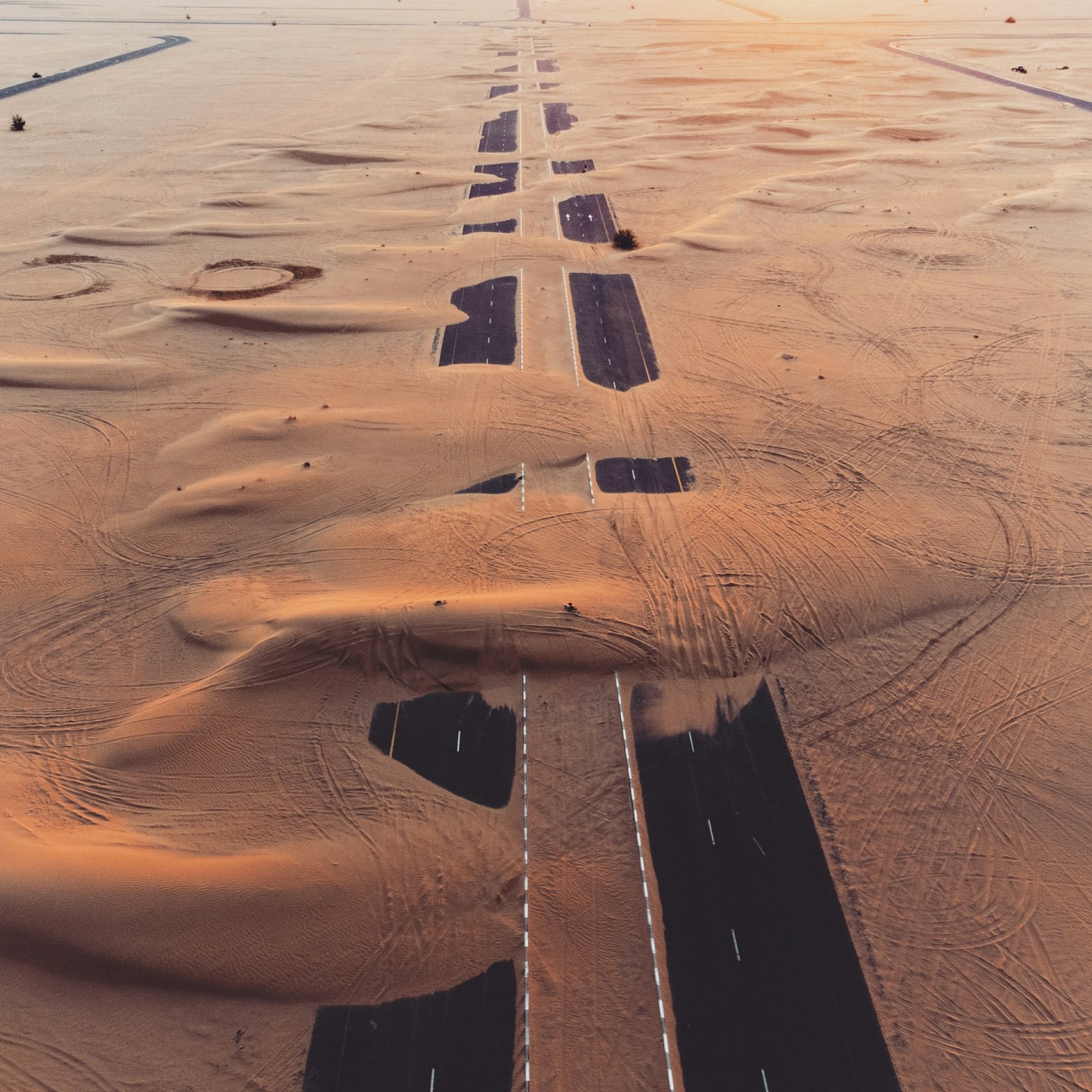
Illustrative UAE desert road, photographed in Dubai.
Choosing the right car for Moreeb
For the paved road in suitable conditions, the first requirements are dependable tyres, effective cooling, working air conditioning and enough range. A well-maintained saloon or hatchback can make a perfectly good travelling companion. You do not need to acquire a roof tent, auxiliary lights and a heroic expedition nickname to visit the dune. Choose a car you can comfortably drive for several hours, with space for passengers, drinking water and whatever luggage your overnight plan requires.
A grand tourer suits the long approach particularly well. A low sports car can use the paved route, but its limitations become relevant when entering parking areas or encountering sand at the road edge. Keep the whole vehicle on a firm, permitted surface. Before committing to an unfamiliar pull-off, assess the entrance, exit and ground clearance. Turning around later is preferable to discovering that the picturesque patch beside the road is soft enough to swallow a wheel.
An SUV adds seating height and luggage space, which can be useful for a family trip. Four-wheel drive, however, does not automatically make an unprepared excursion onto the dunes sensible. A rented road SUV may have conditions that exclude off-road use, and a capable vehicle still needs a driver who understands sand. If your trip is entirely paved, there is no reason to adjust road tyre pressures for dune driving. Follow the vehicle manufacturer's road-use recommendations.
For visitors hiring a car, confirm the permitted driver, licence documents, mileage allowance, excess and roadside-assistance coverage before departure. Mention that you intend to visit Liwa and Moreeb by paved road, so the supplier understands the actual journey. Check whether another driver can be added if you plan to share the return leg. Photograph the car's condition at collection, learn how its controls work and resolve any warning lights before the desert becomes the test environment.
When to go: light, temperature and the return journey
For a first leisure visit, our preferred planning window is the cooler part of the year, broadly November to March. Treat those months as a starting point and consult the forecast for your actual date. Comfortable conditions in Abu Dhabi do not settle the question for the whole journey. Strong wind, blowing sand or poor visibility can change the value of a scenic drive quickly. Choosing another day can preserve the experience you travelled to find.
Morning gives you useful flexibility. You can make the approach in daylight, explore without watching an approaching sunset and return earlier if anyone becomes tired. If photography is the priority, the lower sun reveals the dune contours more clearly than harsh overhead light. The exact result depends on the weather, but the principle is straightforward: allow time to wait and look. A timetable that grants the main attraction twelve minutes is an excellent way to photograph your watch.
Sunset is attractive because the dunes change colour as the light softens. It also creates a practical choice: stay within manageable reach, or accept a substantial drive after dark. Book accommodation before building your day around sunset, and verify the route from the dune to the property. “In the desert” covers a great deal of ground. If you prefer a day trip, choose a departure time from Moreeb that fits your energy and the remaining distance.
In hotter months, air conditioning does not solve everything. Stops, walks, loading the car and any unexpected delay still happen outside. Keep the programme modest, carry water for everyone and ensure children or other passengers can remain comfortable. If the forecast makes the outdoor part unappealing, a cooler-season visit will usually deliver more of what you came for. There is little point travelling several hours to spend the entire stop negotiating who must leave the cabin first.
What to do when you reach the dune
Begin with the scale. Park in an authorised area, step away from moving vehicles and look at how the dune rises above the surrounding activity. Its shape becomes much easier to understand when a car, person or piece of infrastructure provides a reference. You do not have to climb it to appreciate it. Conditions, access arrangements and your own comfort should determine how far you explore on foot, particularly when the sand is hot.
Outside organised events, the visit can be pleasantly simple: a scenic approach, a look at the dune, photographs and a relaxed return through Liwa. Do not build a plan around permanent food outlets, public toilets or a specific attraction at the base unless you have confirmed it for your date. Festival infrastructure and ordinary-day facilities are different things. Carry what you need for the stop, then make your main meal a confirmed stop in the oasis area or at your accommodation.
For photographs, find a legal parking position and work from a place separated from traffic. Include enough of the landscape to show why the car looks so small. A clean wide composition often says more than a close-up of a badge against anonymous sand. Keep people out of the carriageway and avoid creating a queue while arranging the shot. If the available stopping place is poor, leave the photograph for another location; the scenery continues beyond one particular bend.
Add Liwa's human story
The oasis deserves more attention than a fuel receipt. Abu Dhabi Culture explains that a near-surface water table supported agriculture and livestock, creating the striking contrast between date palms and orange-red dunes. Liwa also has historic and reconstructed forts associated with protecting settlements and water sources. These details give the drive a different perspective: the green patches are evidence of how people made life possible here, not decorative landscaping placed beside a tourist route.
Choose one accessible heritage stop and confirm visiting arrangements instead of compiling an ambitious list of forts. A short, well-understood visit is more rewarding than following unverified map pins across the region. Treat farms, homes and working areas as somebody else's place, and ask before photographing people. If you buy dates or stop for a meal locally, allow time for the encounter. The journey gains texture when the oasis becomes somewhere you visit rather than somewhere you pass.
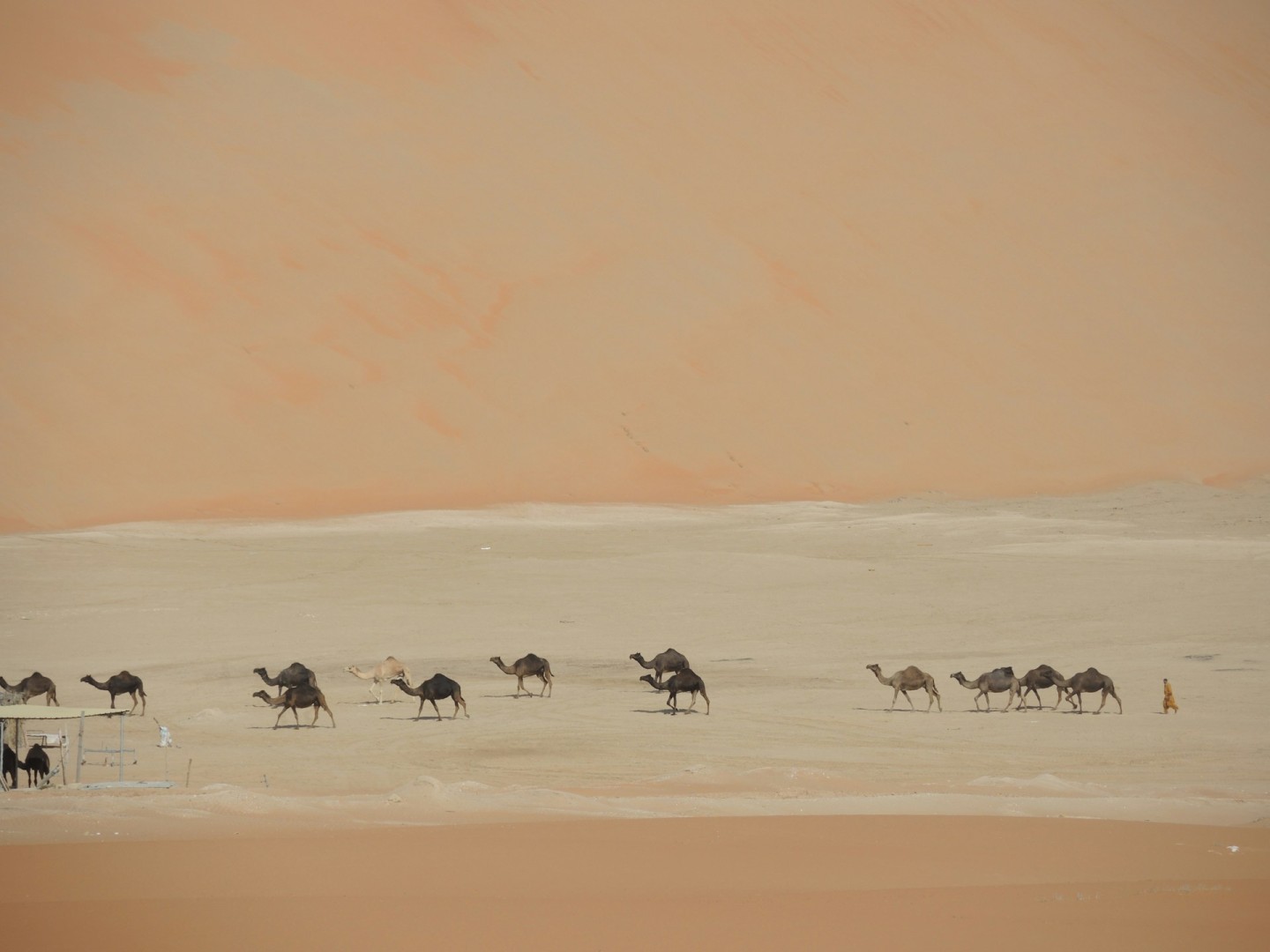
Festival visit or quiet road trip?
Moreeb's automotive identity comes into sharper focus during the Liwa International Festival, where motorsport sits alongside traditional sports, entertainment and family activities. Hill climbing gives the dune a role that few natural landmarks can match. A spectator sees specialised vehicles and organised competition, with procedures and access arrangements around them. That spectacle is worth planning for if it is your main interest, but it should not be confused with a demonstration that any road car can follow.
Check the organiser's programme for the correct edition and the specific competition you want to watch. A festival date does not mean dune racing runs continuously, and a general-access arrangement does not tell you the cost of every activity. Allow for parking, walking, waiting and the later departure that an evening programme may involve. Save the organiser's directions before arrival. If you are attending with children, choose a manageable session and agree a meeting point before splitting up.
For a quieter experience, choose a non-event date after checking the local calendar. You will be planning around landscape and daylight rather than performances and competition schedules. Neither version is inherently better. They are different reasons to make the journey, and each calls for a different itinerary. Our UAE automotive destination guide helps place Liwa alongside the country's wider circuit, car-culture and driving-experience destinations.
If you want to leave the tarmac
Arrange the off-road element separately with an established operator. Ask whether you will drive or ride as a passenger, where the activity takes place, what the vehicle is and what previous experience is expected. Confirm insurance, recovery arrangements, duration and the meeting point. A guided desert outing should have a clear description of what guests actually do. A phrase such as “desert adventure” alone tells you very little about time behind the wheel or the demands of the route.
If you are interested in learning, select a course that explicitly teaches beginners rather than booking a challenging expedition because the photographs look spectacular. If you want the views without the technical responsibility, a passenger experience may fit better. Check the operator's passenger restrictions and whether your group will have exclusive or shared transport. Keep your road-trip timing realistic around the booking; finishing an unfamiliar off-road activity and immediately beginning a long drive home can make for a tiring day.
Fuel, EV charging and the budget that matters
Work out the whole distance, including the final approach, accommodation and possible diversions. For a combustion car, plan named fuel stops before reaching the dune and retain enough margin for the return. For an EV, verify chargers with the operator rather than relying on a map icon. Check connector, access hours, payment, working status and a backup location. A hotel charger may be restricted to guests or occupied, so ask the property directly before making it essential to your itinerary.
The useful budget includes vehicle hire, mileage charges, fuel or charging, food, accommodation and any activity or event tickets. Allow something for changing the plan. For two travellers, an overnight stay may be worth more than a more prestigious rental badge because it creates time for both good light and proper rest. For a family, meal and toilet stops can matter more than shaving a few kilometres from the route. Spend on the parts that improve your actual day.
A Moreeb itinerary with room to enjoy it
For a day trip from Abu Dhabi, leave with a prepared car and a clear return plan, make a proper break in Liwa, then drive the paved approach to Moreeb. Give the dune unhurried time, add one confirmed heritage or food stop and return before the day becomes an endurance exercise. For an overnight trip, check in or confirm your arrival arrangements first, use the late afternoon for Moreeb, then leave the following morning flexible for another local stop.
If you are building a longer UAE driving holiday, give the desert and mountains separate days. Our Jebel Jais driving guide covers a very different landscape and the mountain's changing access arrangements. You can also browse Petrolbase's event and experience listings when shaping the wider trip; check the location, date and available tickets on each listing. Moreeb itself asks for a simpler pleasure: choose a good day, make time for the oasis and watch an extraordinary landscape unfold through the windscreen.
Domande frequenti
Hai domande?