Road TripsUnited Arab Emirates

Jebel Jais Driving Guide: UAE’s Best Mountain Road

Drive Jebel Jais in Ras Al Khaimah: route tips, best time, viewpoints, supercar driving advice, EV planning and UAE mountain road guide.

SHARE POST

GET STARTED
Contact us

Jebel Jais Driving Guide: UAE’s Best Mountain Road

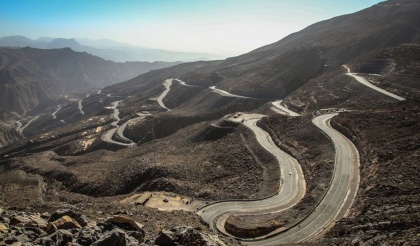
Most people think the UAE is all skyline, supercars, desert highways, and five-lane roads built for getting somewhere quickly. Then you drive to Jebel Jais, and the script changes completely. Suddenly the road starts climbing into the Hajar Mountains, the city disappears in the mirrors, the air cools, the corners tighten, and the UAE reveals a side that feels made for drivers. This is not a European alpine pass with snow walls and wooden chalets. It is sharper, drier, more cinematic, and unmistakably Middle Eastern: rock faces, wide tarmac, big elevation, desert light, and enough sweeping corners to make any enthusiast understand why this has become one of the region’s most important driving destinations. In this guide, you will learn when to drive Jebel Jais, what to expect behind the wheel, where to stop, how to prepare your car, why the road matters now, and how it fits into the future of supercar tourism, EV road trips, adventure travel, and curated automotive experiences in the UAE.

Why Jebel Jais Is More Than Just a Scenic Drive

Jebel Jais is the highest mountain in the UAE, rising to around 1,934 metres above sea level in Ras Al Khaimah. But for drivers, the number is only part of the story. The real magic is the road that climbs towards it. It is wide, smooth, well-engineered, dramatic, and surprisingly accessible. You do not need to cross a border, book a ferry, or disappear into the wilderness for days. From Dubai, it can be reached as a proper day trip. From Ras Al Khaimah city, it feels almost local. Yet once you are on the mountain road, the atmosphere changes completely.

This is one of the few places in the UAE where driving becomes more than transport. On most UAE roads, the car is a tool for covering distance. On Jebel Jais, the car becomes part of the experience. The road climbs through a raw mountain landscape with long sweepers, large-radius bends, hairpins, and panoramic viewpoints that make you want to stop every few minutes. It is the kind of route that gives a sports car a reason to exist, without demanding the extreme risk or poor surface quality often associated with remote mountain roads.

That makes Jebel Jais special. It is not just beautiful. It is usable. It combines supercar-friendly tarmac, accessible adventure tourism, cooler mountain temperatures, premium road-trip potential, and social-media-ready scenery in one place. In a region famous for automotive culture, Jebel Jais gives enthusiasts something they deeply need: a road with character.

The modern relevance of Jebel Jais

Jebel Jais is relevant now because the UAE’s automotive lifestyle is evolving. The region already has the cars. It already has the luxury hotels, the events, the racetracks, the desert experiences, and the supercar culture. What is becoming increasingly valuable is the curated driving route: a road that connects emotion, scenery, hospitality, and adventure in one high-quality experience.

This is where Jebel Jais becomes powerful. It supports the next wave of automotive tourism, supercar driving tours, EV mountain road trips, content-led travel, luxury adventure experiences, and weekend escape culture. It is not just a place people visit. It is a destination that can be packaged into experiences: sunrise drives, brand activations, private tours, car club rallies, manufacturer test drives, creator shoots, and premium road-trip itineraries.

Ras Al Khaimah has also been positioning itself strongly as an adventure destination, with attractions such as Jais Flight, Jais Sledder, viewing decks, mountain activities, hiking, and outdoor experiences. That makes the road even more important. The drive is not isolated. It is part of a larger destination ecosystem.

Where Jebel Jais Is Located

Jebel Jais is located in Ras Al Khaimah, the northernmost emirate of the UAE, close to the border with Oman. The road climbs into the Hajar Mountains and offers one of the most dramatic changes of scenery in the country. You leave behind the familiar UAE rhythm of highways, city towers, desert edges, and industrial zones, then suddenly find yourself surrounded by bare rock, deep valleys, and mountain walls that look almost prehistoric.

From Dubai, the drive to the mountain road is usually possible as a day trip, depending on traffic and starting point. From Ras Al Khaimah city, it is much closer and easier to include as part of a weekend itinerary. The route is especially attractive because it offers a very different type of UAE travel experience. Instead of another beach, brunch, mall, or desert camp, Jebel Jais gives you altitude, cooler air, and a road that actually asks something from the driver.

For international visitors, this is important. Many travellers associate the UAE with Dubai and Abu Dhabi only. Jebel Jais shows a different side of the country. It positions Ras Al Khaimah as an adventure and driving destination, not just a quieter alternative to the larger emirates.

The Dubai to Jebel Jais road-trip appeal

The Dubai to Jebel Jais route works especially well because it creates a strong contrast. You can begin in one of the most futuristic cities in the world and finish on a mountain road that feels almost geological, ancient, and stripped back. That contrast is what modern travellers love. It gives the day a story.

For car enthusiasts, the route also makes sense because it offers a realistic driving escape. You can take a sports car, grand tourer, performance SUV, EV, or even a comfortable daily driver and experience a proper mountain road without leaving the country. It is the UAE’s closest answer to the classic European mountain drive, but with its own personality.

The Ras Al Khaimah advantage

Ras Al Khaimah has a major opportunity with Jebel Jais. The road can support premium tourism, automotive events, and adventure travel in a way that feels natural. The mountain already attracts visitors for the viewing decks, zipline, sledder, hiking, and cooler temperatures. Adding curated driving experiences into that mix makes complete sense.

This is where the future becomes interesting. Jebel Jais could become a benchmark destination for Middle Eastern automotive tourism: not only a road to drive, but a platform for experiences, events, clubs, manufacturers, creators, hotels, and local tourism partners.

The Driving Experience: What to Expect Behind the Wheel

The road to Jebel Jais is one of the best paved mountain roads in the region. It is wide, generally smooth, and designed with large sweeping sections that make it enjoyable without feeling claustrophobic. Unlike some older mountain roads around the world, Jebel Jais does not feel like it was squeezed reluctantly into the landscape. It feels engineered for modern traffic, visibility, and accessibility.

That does not mean it should be treated casually. It is still a mountain road. There are elevation changes, corners, traffic, viewpoints, cyclists, tourists, and changing grip conditions. The surface can collect dust, sand, or small stones, especially after wind or weather. Temperatures can be much cooler at altitude, but the lower sections may still be hot enough to affect tyres, brakes, and driver concentration.

What makes the drive special is the rhythm. The road climbs in stages. Some sections are flowing and open, allowing a smooth grand-touring pace. Others become tighter and more technical. The views become larger as you rise, and the road starts to feel less like a route and more like an event.

For sports cars and supercars

Jebel Jais is one of the UAE’s most suitable roads for sports cars and supercars because it offers the combination these cars need: smooth tarmac, width, visibility, elevation, and dramatic scenery. It gives high-performance cars a context beyond city boulevards and valet parking.

But the best way to enjoy Jebel Jais in a performance car is not to drive aggressively. It is to drive cleanly. The road rewards smooth steering, early braking, controlled acceleration, and patience. A supercar has enough performance to turn any short straight into a problem if the driver’s ego is louder than their judgment. Keep the driving measured. Use the car’s precision, not just its power.

Brake management matters. On the climb, the engine works. On the descent, the brakes work. Heavy cars, powerful cars, and enthusiastic drivers can generate heat quickly. Use lower gears, avoid repeated hard braking, and give the car time to cool if needed. The mountain is not a racetrack. It is better than a racetrack in some ways, because it is real. That is exactly why it deserves respect.

For grand tourers

Jebel Jais may be even better in a grand tourer than in a hardcore track car. The route suits cars that can cover distance comfortably, climb confidently, and still feel special through long bends. A proper GT car turns the drive into a cinematic journey rather than a corner-by-corner attack.

This is the road for a car that can leave Dubai early, cruise north in comfort, climb the mountain with authority, stop for coffee and views, then return without punishing the driver. In that sense, Jebel Jais is not only a performance road. It is a road-trip road.

For performance SUVs

Performance SUVs are everywhere in the UAE, and Jebel Jais gives them a surprisingly good environment. The road is wide enough to handle larger vehicles, and the elevation changes make torque useful. But size and weight still matter. A heavy SUV needs more braking distance and will work its tyres harder than a lighter car.

The best approach is to enjoy the view, the torque, the comfort, and the stability without pretending the vehicle weighs half as much as it does. Smoothness is everything. A well-driven SUV can be very enjoyable on Jebel Jais. An overdriven one quickly becomes messy.

For EV drivers

Jebel Jais is becoming increasingly relevant for EV drivers. The UAE is investing heavily in future mobility, charging infrastructure, and sustainability-focused tourism. Mountain drives are a powerful way to show that EVs are not only city commuters. They can be capable, emotional road-trip machines.

EVs feel strong on the climb because of instant torque. On the descent, regenerative braking can help recover energy and reduce brake wear. But planning still matters. Heat, speed, air conditioning, elevation, passengers, and driving style all affect consumption. Start with enough charge, know your charging options before and after the drive, and avoid treating regeneration like a miracle. A smart EV road trip is planned, not improvised.

Best Time to Drive Jebel Jais

The best time to drive Jebel Jais is generally during the cooler months, from October to April. This is when the UAE becomes more comfortable for outdoor activities, road trips, photography, hiking, and mountain visits. The temperature difference at altitude can be significant, making Jebel Jais one of the best escapes from the heat.

Summer is possible, but it is not ideal for everyone. The mountain is cooler than the cities, but the lower sections, approach roads, and general UAE heat can still be intense. Cars work harder. Tyres get hotter. People get tired faster. If you drive in summer, go early in the morning or closer to sunset, and be prepared with water, sun protection, and a car in excellent mechanical condition.

Sunrise drives

Sunrise is probably the best time for enthusiasts. The roads are quieter, the light is soft, the temperatures are lower, and the mountain has a calm atmosphere before the day’s traffic builds. For photography and content creation, sunrise is also the strongest option. The desert light at that time can make the rock faces glow, giving the whole road a cinematic look.

A sunrise drive also feels more intentional. You are not just going for a random spin. You are creating a proper experience: early start, empty roads, cool air, mountain climb, viewpoint stop, coffee, and the satisfaction of having done something memorable before most people have finished breakfast.

Sunset drives

Sunset is also beautiful, but it requires more caution. The light can be spectacular, especially on the rocks and valleys, but visibility changes quickly. Shadows deepen, tourists may stop unexpectedly for photos, and descending in fading light requires attention.

If you plan a sunset drive, give yourself enough time. Do not arrive at the top too late and then rush down in the dark. The best sunset experience is calm, planned, and unrushed.

Weekdays vs weekends

Weekdays are usually better for driving. Weekends and public holidays can bring heavier traffic, more visitors, more cyclists, more motorcyclists, and more parked cars at viewpoints. The road is still enjoyable, but the rhythm changes.

If you want the cleanest drive, choose a weekday morning outside peak holiday periods. If you are organising a car club drive or branded automotive experience, traffic planning becomes essential. The road is popular for a reason, and popularity needs management.

Key Stops and Viewpoints

Jebel Jais is not a road to drive without stopping. The viewpoints are part of the experience. The higher you climb, the more the landscape opens, and the more you understand that this is not the UAE most visitors imagine.

Jais Viewing Deck Park

The Jais Viewing Deck Park is one of the key stops on the mountain. It offers panoramic views across the Hajar Mountains, deep valleys, the mountain road, and, on clear days, distant views towards the wider region. It is the natural place to pause, take photos, stretch your legs, and let the car cool after the climb.

For car enthusiasts, the viewing deck area also gives context. You can see how the road cuts through the mountain, how the corners stack, and how the landscape changes with altitude. It turns the drive into something bigger than a sequence of bends.

Jais Flight and adventure attractions

Jebel Jais is home to Jais Flight, widely promoted as the world’s longest zipline, stretching around 2.83 kilometres across the mountain landscape. This matters even if you are visiting mainly for the drive, because it shows how the mountain is becoming a multi-layered adventure destination.

The road, the zipline, the sledder, the viewing decks, and the mountain activities all support each other. For future automotive experiences, this is valuable. A driving tour can become more than a drive. It can include adventure, dining, photography, hospitality, and premium tourism elements in one itinerary.

1484 by Puro and mountain dining

Jebel Jais is also known for high-altitude dining experiences such as 1484 by Puro. For a road trip, this changes the dynamic. Instead of simply driving up, taking a photo, and leaving, visitors can build a proper half-day or full-day experience around the mountain.

This is important for automotive tourism. Great driving destinations need more than roads. They need places to stop, eat, meet, recover, and share the experience. Jebel Jais is developing exactly that kind of ecosystem.

Vehicle Preparation Before Driving Jebel Jais

Jebel Jais is well paved and accessible, but preparation still matters. A smooth road can make drivers underestimate the mountain. Do not make that mistake. Heat, elevation, braking, traffic, and long descents all affect the car.

Brakes: Make sure pads, discs, and brake fluid are in good condition. The descent can build heat, especially in heavy or powerful cars.

Tyres: Check pressure, tread, age, and condition. Hot climates are hard on tyres, and mountain roads expose weak rubber quickly.

Cooling: Important for older cars, performance cars, and modified vehicles. Long climbs in warm conditions can stress cooling systems.

Fuel or charge: Start with enough range. Do not rely on solving everything at the top.

Water: Bring drinking water for everyone in the car. This is the UAE, not the Swiss Alps. Heat management is part of the plan.

Navigation: Download your route and check live conditions before leaving. Road access, attractions, and facilities can vary.

Mindset: Bring patience. You will share the road with tourists, families, cyclists, motorcyclists, photographers, and local traffic.

How to Drive Jebel Jais Properly

The best way to drive Jebel Jais is with smooth confidence. Look far ahead, brake early, keep clean lines, and resist the temptation to show off. The road is wide and inviting, which can create a false sense of safety. But it is still a public mountain road, not a private test track.

The biggest mistake is overdriving. A powerful car can reach silly speeds very quickly, especially on the wider sections. That does not make the drive better. The best Jebel Jais drive feels controlled, flowing, and composed. You should finish the road feeling energised, not relieved.

Respect cyclists and motorcyclists

Jebel Jais is popular with cyclists and motorcyclists. Give cyclists proper space, especially on climbs where they may be working hard and moving more slowly. Be patient before overtaking. Wait for visibility. Do not squeeze past just because your car is faster.

With motorcycles, avoid turning the road into a competition. Different vehicles use the road differently, and everyone is there for the same reason: the road is special. A good driver adds safety and flow to the environment, not tension.

Use the descent intelligently

The descent is where many drivers make mistakes. Gravity makes the car faster than expected. Brakes heat up. Tyres work harder. Passengers may become uncomfortable. Use lower gears where appropriate, manage speed early, and avoid repeated heavy braking.

In an EV, use regenerative braking intelligently, but remain aware that regen behaviour can vary depending on battery state and temperature. In a manual or automatic combustion car, use engine braking to help control speed. Smooth is fast. Smooth is safe. Smooth is professional.

Do not chase content at the wrong moment

Jebel Jais is extremely content-friendly. The road, rock faces, supercars, sunrise light, and viewpoints make it perfect for photography and video. But that also creates risk. Do not stop in dangerous places, do not block the road, do not hang out of moving cars, and do not use blind corners as shooting locations.

The best content comes from planning. Choose safe viewpoints, go early, use proper parking areas, and respect everyone else using the road. A clean sunrise photo taken safely will always beat chaotic content that makes the community look irresponsible.

Why Jebel Jais Matters for the Future of Automotive Tourism

Jebel Jais could become one of the most important automotive-tourism destinations in the Middle East. The ingredients are already there: a strong car culture, a smooth mountain road, adventure attractions, premium hospitality, proximity to Dubai, and a destination authority actively building Ras Al Khaimah as an outdoor and adventure hub.

This matters because the future of automotive culture is not only about ownership. It is about access, experiences, communities, and storytelling. Many people may not buy a supercar, but they might book a supercar drive. They may not join a motorsport event, but they might join a curated sunrise road trip. They may not know Ras Al Khaimah well, but a mountain driving experience could give them a reason to go.

That is where Jebel Jais becomes more than a road. It becomes a stage. A stage for car clubs, manufacturers, creators, driving tour companies, luxury hotels, tourism boards, EV brands, and adventure operators.

Supercar tourism and premium driving experiences

The UAE already has one of the strongest supercar cultures in the world. But supercars need experiences that go beyond being seen. Jebel Jais gives owners, renters, and enthusiasts a place to actually enjoy the machines in a scenic, structured, and memorable way.

This creates opportunities for guided drives, concierge road trips, manufacturer events, test-drive programmes, photography tours, and luxury weekend packages. The road has the right emotional value. It just needs the right curation.

EV performance and sustainable road trips

EVs are becoming part of the performance conversation. Instant torque, quiet cabins, regenerative braking, and advanced driver technology make them highly capable on mountain roads. Jebel Jais can become a strong showcase for electric touring in the UAE.

The key will be charging confidence, route education, and experience design. Drivers need to know where to charge, how elevation affects range, how heat affects efficiency, and how to build a relaxed itinerary. Done properly, an EV drive to Jebel Jais can feel futuristic without losing the emotion of the road.

Adventure travel and destination branding

Ras Al Khaimah is building a reputation around adventure, and Jebel Jais is central to that identity. The mountain road connects perfectly with that brand. It is adventurous without being inaccessible, dramatic without being unsafe when treated properly, and premium without feeling artificial.

For destination marketing, this is valuable. Jebel Jais can appeal to families, couples, cyclists, hikers, thrill-seekers, photographers, car enthusiasts, EV drivers, and luxury travellers. Few destinations can speak to that many audiences through one mountain.

Recommended Jebel Jais Itinerary

For the best experience, start early. If you are coming from Dubai, leave before the main traffic builds. Aim to reach the mountain road around sunrise or early morning. This gives you cooler temperatures, quieter conditions, and better light for photography.

Drive the climb smoothly, without rushing. Stop at safe viewpoints along the way, but avoid blocking the road or stopping in unsafe areas. Continue towards the viewing deck area and allow time to enjoy the scenery. If you want to extend the experience, combine the drive with breakfast, coffee, Jais Sledder, Jais Flight, or a mountain dining stop.

For car clubs, keep the group size manageable, brief drivers before the climb, set a calm pace, and use planned stops. For supercar drives, include brake-cooling time and avoid repeated high-speed acceleration. For EV drivers, start charged and plan the return route before beginning the climb.

If you want to turn it into a weekend, stay in Ras Al Khaimah and drive the road early the next morning. This is often better than rushing from Dubai and back in one day. The mountain feels more special when it is not treated as a quick tick-box activity.

Final Verdict: Is Jebel Jais Worth Driving?

Yes. Jebel Jais is absolutely worth driving, especially if you are a car enthusiast in the UAE or visiting the region with an interest in road trips, supercars, EVs, or scenic driving. It is one of the few roads in the country that feels like a true destination for drivers.

It has the height, the views, the smooth tarmac, the corners, the adventure attractions, the cooler air, and the accessibility that make it stand out. It is dramatic without being too remote, exciting without being unreasonable, and flexible enough to work for everything from a sunrise sports car run to a family mountain escape.

Most importantly, Jebel Jais shows a different side of the UAE. Beyond the skyline and the desert highway, there is a mountain road that feels alive, modern, and full of potential. Drive it properly, and it becomes more than a route. It becomes a reminder that the best automotive experiences are not always found on racetracks. Sometimes they are carved into rock, waiting above the heat, with the whole country stretching out below.

Jebel Jais is not just the UAE’s highest mountain road. It is the road that proves the region’s driving culture has a future beyond the city.

Related Articles
Explore all