Guide de conduite à Jebel Jais : accès, routes de montagne et une journée bien remplie
Planifiez une excursion en voiture au Jebel Jais avec des vérifications d’accès à jour, des durées réalistes, des conseils pour voiture et véhicule électrique, des points de vue, des options de restauration en montagne et un itinéraire qui laisse le temps d’en profiter.
The UAE does a good line in roads with an enormous skyline at the end of them. Jebel Jais reverses the arrangement. Drive towards the Hajar Mountains in Ras Al Khaimah and the buildings begin to disappear, replaced by rock faces, deep valleys and a road that climbs into a much larger view. The entertainment comes from seeing the landscape unfold, feeling the car settle through a sequence of bends and finding somewhere worth switching the engine off.
For an enthusiast visiting from Europe, this makes an appealing addition to a UAE trip: familiar mountain-road pleasure in an entirely different setting. You can enjoy the paved climb in a normal car, build the day around a meal or an adventure activity, or simply take time at the viewpoints. The first planning task, however, is to establish what is accessible on your date. Mountain access and attraction opening times need separate checks.
Check access before planning the climb
Access update, checked 10 September 2026: recent official Jebel Jais messages displayed on the destination website refer to a temporary pause and a future reopening when the weather cools. They do not provide a confirmed reopening date. Although a general FAQ still describes year-round access, that should not be treated as confirmation that the mountain road or your chosen venue is currently open. Confirm directly with Visit Jebel Jais or RAK Leisure before setting out.
Ask three practical questions: is the public approach open to your intended destination, are the relevant parking or viewing areas accessible, and is the attraction or restaurant accepting visitors that day? If a booking is involved, retain the confirmation and arrival instructions. Older reports about free access, entry permits or a viewing-deck ticket can describe different operating periods. Use the current instructions for your journey instead of assuming an old arrangement still applies.
The itinerary below describes how to enjoy the route once access is confirmed. It is also worth having a second plan in Ras Al Khaimah, especially if the mountain is only one day of a longer holiday. A closed gate need not waste a day if you have already chosen a coast, heritage or city alternative. Resist the temptation to follow an unfamiliar track around a restriction; a navigation suggestion does not override a closure.
Where Jebel Jais is, and how much time to allow
Jebel Jais forms part of the Hajar Mountains in Ras Al Khaimah, towards the northern end of the UAE. The destination's official material gives the mountain's elevation as 1,934 metres. That is a mountain figure, not the height to which every visitor drives. Your destination may be a viewing area, restaurant, adventure centre or trail meeting point, each with its own approach. Save the exact place you intend to visit rather than navigating vaguely towards the summit.
The official FAQ estimates approximately two hours from Dubai and about 45 minutes from Ras Al Khaimah city. Treat those as broad orientation: the starting point, endpoint, traffic and stops can change the journey considerably. A hotel on Al Marjan Island is not the same starting point as central Ras Al Khaimah. Check your actual route before choosing an activity slot, then add enough time for parking, walking and the organiser's required check-in.
From Dubai, the motorway approach gives you a useful transition before the climb. Follow current navigation north and let the passenger handle destination changes. Once the road enters the mountains, your attention is better spent outside the windscreen. The paved visitor route is best planned as an out-and-back trip; do not assume that continuing beyond the high attractions creates a scenic loop or an onward crossing into Oman. Plan the descent along the authorised route you used to arrive.
What the road feels like
The approach and lower climb
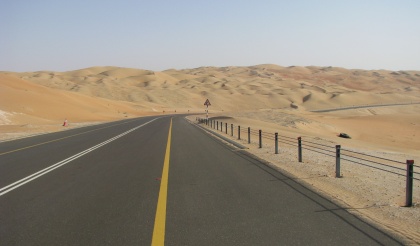
The scenery changes before the road becomes particularly demanding. Buildings and wider plains give way to bare slopes and rock formations, and the mountain starts to provide reference points that a desert motorway lacks. Use this transition to settle into a calmer pace. If you are driving a rental car, you should already know the indicator controls, gear selector and how to clear the windscreen. A mountain bend is a poor place to discover the entertainment system has hidden the navigation.
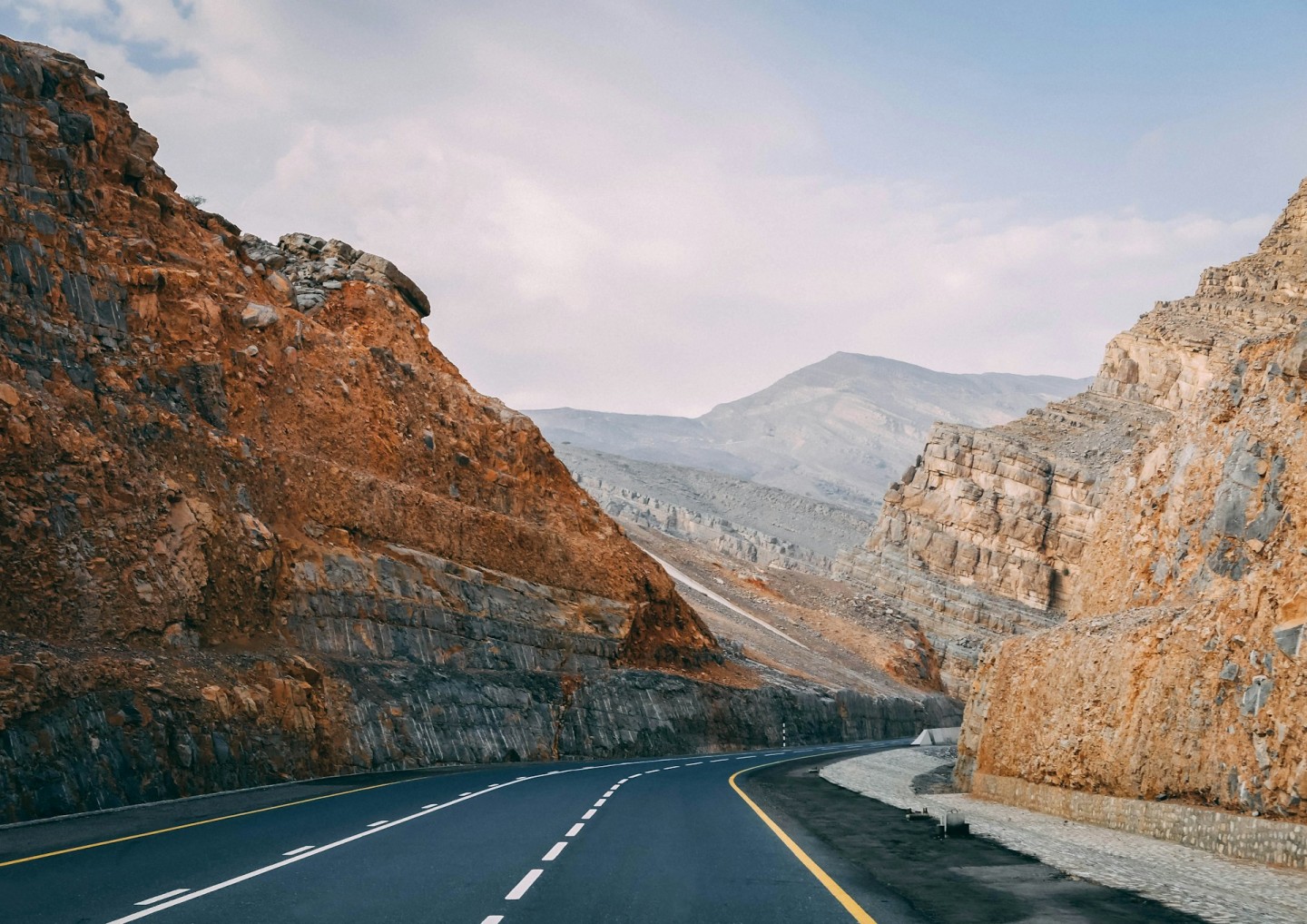
As the climb develops, the road's appeal comes from its changing direction and elevation. Longer curves give way to tighter sections, while the same landscape appears from progressively higher angles. Smooth steering and a pace that keeps passengers comfortable make the experience more satisfying. Stay within your lane and obey the posted limits. There is no requirement to imitate an onboard lap video to appreciate why somebody bothered bringing a good car to the mountains.
The high sections and the view back
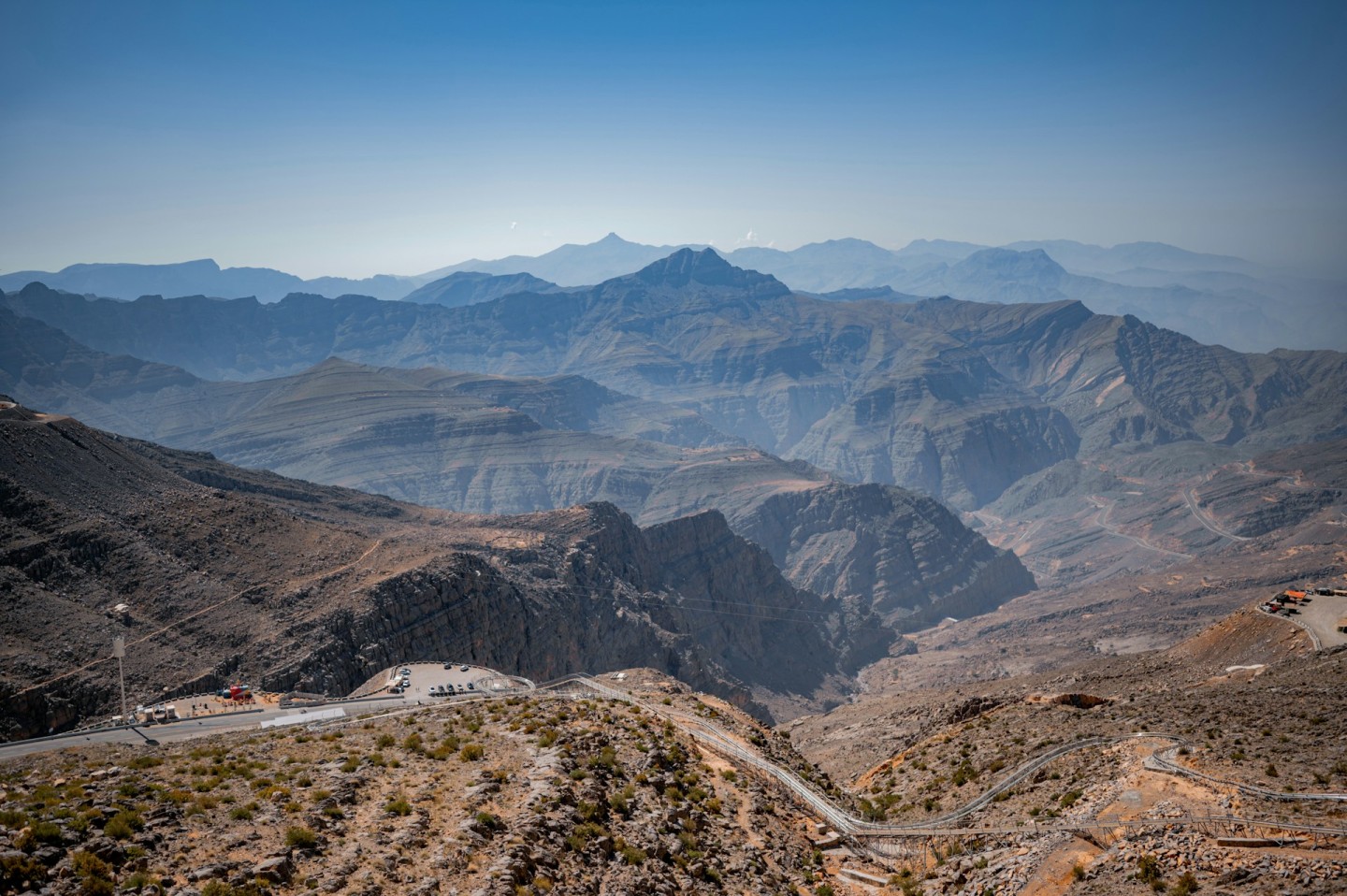
Higher up, it becomes tempting to keep looking sideways. That is your cue to use a designated stopping area, not to divide your attention between a corner and a panorama. From a proper viewpoint, you can trace sections of the climb and understand the scale of the surrounding valleys. The road becomes part of the landscape rather than merely the route through it. Allow several short stops if that suits your group, while keeping any booked appointment in mind.
Expect other visitors to have different priorities. Some will be cycling, some heading to work, others taking children to an attraction. Motorcyclists and drivers may approach the same section at different speeds. Leave time and room for that variety, especially near parking entrances. A clear stretch is a pleasant bonus rather than something an itinerary can promise. The day works better when you enjoy the road that is actually there, including the people sharing it.
Which car should you take?
A normal, roadworthy car is suitable for the paved visitor road when it is open and conditions permit; the destination's official guidance says a 4x4 is not required. Prioritise sound tyres and brakes, reliable cooling and seating that will remain comfortable for the whole trip. If you already have a sensible hire car, upgrading purely for the climb is optional. A mountain road can make an ordinary car interesting without requiring it to become an extraordinary car.
A sports car adds steering feel and a sense of occasion. A grand tourer brings more comfort for the motorway journey and luggage. A taller SUV can offer a good view and useful passenger space, although extra mass should encourage a measured descent. None of these choices changes the status of the road. The most enjoyable car is one you understand and can drive smoothly, with passengers who still want to join the next trip.
For a low car, inspect parking entrances before committing and avoid rough shoulders. For an older or modified car, resolve cooling, tyre or brake concerns before departure. Check tyre pressures according to the vehicle's recommendations and loading, rather than improvising a setting for “mountain grip”. A heavily loaded family car and a two-person sports car may need different preparation. Follow the handbook, secure luggage and make sure loose items cannot slide towards the driver's pedals.
Hiring a performance car
If the car itself is part of the holiday, ask the supplier whether the intended road, all drivers and the planned distance are covered. Confirm licence documentation, age requirements, the insurance excess, mileage charges and breakdown support. Request written clarification where terms are unclear. Check the car carefully at collection, photograph its condition and report faults immediately. An impressive badge does not compensate for tired tyres, an unexplained warning light or an agreement you have not understood.
Make the descent part of the plan
The climb gives the engine work to do; on the way down, controlling speed becomes more important. Use the braking and gear-selection guidance for your vehicle, and avoid coasting in neutral. Choose a pace that does not require constant heavy braking. If the car displays a temperature or brake warning, or its behaviour changes, stop safely when possible and follow the handbook or assistance provider's advice. Continuing because the hotel is “only downhill” is no solution.
Give passengers a say in the pace and stopping schedule. Mountain-road discomfort can turn a beautifully planned day into a silent negotiation with a paper bag. Smooth changes of speed, fewer abrupt inputs and a proper break can make a substantial difference to how the trip feels. If a second insured driver will take over, change drivers in a suitable parking area. The best handover includes the route, any booking details and how the car behaved on the climb.
EVs: account for the climb and keep a return margin
In an electric car, plan the whole journey using your vehicle's route tools and current charger information. Elevation, temperature, air conditioning, passengers and speed all influence the estimate. The descent may recover some energy through regeneration, but it does not refund the entire climb. Regeneration can also vary with battery condition and charge level. Keep enough range for the return and a diversion, and make sure you understand the car's braking behaviour before entering the mountain section.
Verify your intended charging stop with its operator, including connector, access and payment. If you intend to charge at a hotel, ask whether the facility is available to your booking and whether access needs arranging. Do not make an unverified mountain charger the only way home. The simplest plan is often to arrive in the wider Ras Al Khaimah area with ample charge, complete the climb and descent comfortably, then use a confirmed charging option afterwards.
Choose the right time and weather
The official destination guidance recommends October to April for more comfortable outdoor conditions. That is a seasonal starting point, subject to the current access position. Altitude can bring cooler air than the coast, so pack a layer even if your hotel departure feels warm. Mountain conditions deserve their own forecast check. Look for wind, rain or visibility warnings, and leave space in the holiday to move the drive rather than treating one date as non-negotiable.
A daylight first visit makes the geography and stopping places easier to understand. Morning can suit a relaxed climb followed by a meal or activity, provided the relevant areas are open. Sunrise requires more planning because reaching your viewpoint may involve driving unfamiliar roads in darkness. Check the actual sunrise time, access arrangements and the parking location. It is better to arrive after sunrise and enjoy the day than make the early departure the most stressful part of it.
Sunset offers attractive light across the rock faces, but the descent then becomes an evening drive. Choose that deliberately. Check the sunset for your date, allow time to reach the viewpoint and decide whether you are comfortable descending after dark. Weekends and holidays may require extra patience around popular stops. If your priority is an unhurried introduction, choose a day with fewer commitments and avoid scheduling a long onward journey immediately after the mountain.
Where to stop, eat and add an activity
Jais Viewing Deck Park
The Viewing Deck Park is an obvious anchor for a scenic visit. The official description identifies seven decks with binoculars and views over roads, valleys and the wider landscape. Treat it as a destination with its own admission and operating arrangements. Check those alongside mountain access before departure, rather than assuming a road reopening guarantees the park is operating. Once there, use the designated parking, stretch your legs and give yourself time to look beyond the first photograph.
1484 by Puro
The restaurant takes its name from its elevation, 1,484 metres above sea level, and offers a meal with the mountain landscape as part of the setting. It can give the day a satisfying midpoint: drive, pause, eat, then descend without rushing. The official restaurant information says a reservation is required for access. Confirm that the venue is operating, then check the current menu, minimum-spend terms, arrival instructions and cancellation policy for your date before committing.
Build the drive around the reservation rather than hoping to squeeze a table into an already full schedule. Allow for slower traffic and time to find the correct entrance. Tell the restaurant if you are delayed and keep a simpler food option in mind if the booking changes. Anyone driving afterwards should choose accordingly when ordering. The pleasure of the stop is the opportunity to relax and look at the landscape, with the return drive still comfortably ahead.
Jais Flight and Jais Sledder
Jais Flight is the mountain's headline zipline, officially described as 2.83 kilometres long. Jais Sledder provides a different experience on a mountain toboggan track. Both can add variety if your group wants more than viewpoints, but neither should be assumed available simply because the destination appears in a search result. Check current operation, participant requirements, clothing, arrival time and the weather policy directly with the activity operator. These requirements can differ between attractions and booking options.
For a mixed group, choose one activity that suits the people attending rather than filling the itinerary with every attraction name. Establish what non-participants can do while others take part and how long the complete visit requires, including registration and waiting. Families should check child eligibility before making promises in the car. A leisurely mountain lunch and one well-chosen activity can make a better day than several reservations connected by anxious glances at the clock.
A practical day trip, once access is confirmed
Begin with a full route check and a comfortable departure from Dubai or your Ras Al Khaimah base. Make any fuel or charging stop before the climb, then follow the authorised road to a planned viewpoint. Give the ascent enough time to remain a drive you enjoy rather than transport to a booking. Follow with your confirmed meal or activity, leave a buffer afterwards and descend while the driver is still fresh. Keep the evening programme light.
If you prefer a weekend, spend the first night in Ras Al Khaimah and make the mountain the following day's main outing. Verify the hotel's actual location, since the emirate covers a substantial area and coast-based properties have different approach times. A local overnight stay can remove the pressure of a long motorway journey before and after the climb. It also gives you a useful alternative if the mountain remains closed or the forecast changes.
Travelling with a car club or friends
Send everyone the same destination pins and agree meeting times before leaving. Keep the group manageable, choose parking that can accommodate it and allow drivers to travel independently between stops. Nobody should need to hurry to preserve a perfect convoy. Confirm restaurant capacity and tell any activity operator the true group size. If you want help organising the wider trip, explore Petrolbase's driving tours and road rallies, checking each listing's actual country, itinerary and requirements.
Give the drive a place in your UAE trip
Jebel Jais works because it changes the shape of a UAE holiday. It gives car enthusiasts a destination beyond city streets, while offering enough landscape, food and activity choices for companions who do not discuss steering feel over breakfast. Keep the UAE automotive destination guide handy when choosing the rest of your journey, and make confirmed dates and locations the framework. The mountain deserves its own time, not a hurried gap between two distant attractions.
For a contrasting road trip, our Moreeb Dune driving guide explores Liwa's paved desert approach, oasis stops and motorsport heritage. Put the two on different days and you begin to see how varied the country becomes through a windscreen. For Jebel Jais, start with confirmed access, choose a car you enjoy and leave room for the stops. The lasting memory should be the view you finally had time to take in.
Questions fréquemment posées
Tu as des questions?