How to Start Drifting: The Complete Beginner's Guide
Want to learn drifting but don't know where to start? Discover how drift courses work, what car you need, beginner costs, essential skills and your safest path into drifting.
Last updated: 15 August 2026
Watching an experienced driver hold a car sideways can make drifting look almost effortless. The reality is very different. Drifting combines vehicle balance, steering, throttle control, timing and an understanding of what happens when a car deliberately moves beyond normal rear-tyre grip.
The good news is that you do not need to be a racing driver, own a highly modified drift car or arrive with years of experience to start learning.
For most beginners, the smartest route into drifting is surprisingly simple: understand the fundamentals, take a professionally instructed beginner course, learn on a controlled low-grip surface and only then decide how far you want to take the hobby.
This guide explains what drifting actually is, whether you need a rear-wheel-drive car, what happens during your first drift course, how much learning can cost, what equipment you need and how to progress from your first controlled slide into more advanced driving.
What Is Drifting?
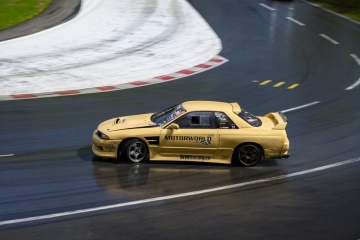
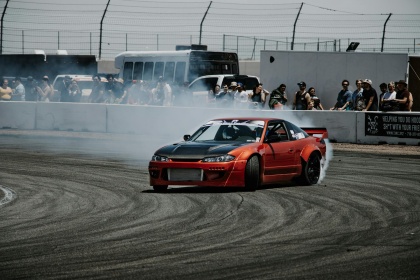
Drifting is a form of controlled oversteer. The rear tyres lose enough traction for the car to rotate beyond the direction it would normally follow through a corner, while the driver deliberately manages the slide using steering, throttle and vehicle balance.
The important word is controlled.
Simply losing rear traction is not the same as being able to drift. A beginner may initially experience oversteer as something unexpected that needs to be corrected. A skilled drift driver deliberately creates that situation and then manages it.
This is what makes drifting so interesting as a driving skill. You are learning to remain comfortable while the car is operating outside the normal state of grip.
Drifting is not simply doing a burnout
A burnout primarily involves spinning the driven wheels while the vehicle remains relatively stationary or moves in a predictable direction.
Drifting requires the vehicle to rotate and travel through a corner or course while the driver manages the slide.
Drifting is not simply losing control
A spin usually represents the point where the driver can no longer successfully manage the rotation of the car.
Drifting is the opposite. The goal is to understand and control that rotation.
Where Should You Learn to Drift?
The first rule is simple: learn on a closed course or dedicated driving area, not on public roads.
Drifting deliberately reduces the normal stability of the vehicle. You need space, predictable surroundings and an environment designed for mistakes.
A professional drift course gives you exactly that.
Instead of worrying about oncoming traffic, pedestrians, curbs, parked vehicles or unexpected road conditions, you can concentrate on understanding what the car is doing.
A beginner course also introduces the technique progressively. You are not expected to arrive and immediately perform long continuous drifts.
The goal of your first day is much simpler:
Understand oversteer.
Feel how the car rotates.
Learn how to react.
Repeat the movement.
Gradually become more consistent.
Do You Need Your Own Drift Car to Start?
No.
And for many beginners, buying a drift car before taking their first course is actually the wrong order.
You may discover that you love drifting and want to build a car around the hobby. You may also discover that you prefer attending several professionally organized experiences each year without maintaining another vehicle.
Both are perfectly reasonable.
Many drift schools and experience organizers offer suitable rental cars. This allows you to learn using a vehicle already prepared for the activity without immediately worrying about modifications, tyres, mechanical preparation or transporting a dedicated drift car.
For example, selected GRIP&DRIFT courses in Switzerland offer optional BMW and Nissan drift-car rentals alongside beginner training.
For your first experience, this can be the simplest solution:
Book the course.
Rent the car.
Learn the fundamentals.
Then decide whether owning a drift car makes sense.
Do You Need a Rear-Wheel-Drive Car to Drift?
Rear-wheel drive is the traditional and most familiar layout associated with drifting, and it is an excellent format for learning because power is delivered to the rear wheels while the front wheels primarily handle steering.
That creates a relatively intuitive relationship between throttle, rear-wheel traction and steering.
However, rear-wheel drive is not the only drivetrain capable of controlled oversteer. Modern all-wheel-drive performance cars can also be drifted, although their behaviour and the techniques required can differ substantially.
For a complete beginner, the drivetrain debate is less important than people sometimes make it.
The better question is:
Which car does my instructor recommend for learning?
If a professional drift school provides a suitable rear-wheel-drive training car, use it. Learn the principles first. You can explore different drivetrains later.
Manual or Automatic: Which Is Better for Learning?
You do not necessarily need a manual gearbox to learn drifting.
Modern automatic and dual-clutch performance cars can be used very effectively for controlled oversteer, while traditional drift cars are often manual.
A manual transmission gives the driver more direct involvement and eventually allows access to additional techniques, but it also introduces another task for a complete beginner to manage.
If your first drift school offers a well-prepared automatic car, there is no reason to reject the experience simply because it is not manual.
Your first objective is not mastering every possible drift technique.
Your first objective is understanding car control.
What Do You Learn at a Beginner Drift Course?
Different schools structure their programs differently, but strong beginner courses normally introduce drifting progressively rather than immediately asking participants to connect multiple corners.
Understanding vehicle balance
Before learning to hold a drift, you need to understand how the car reacts when weight moves between the front and rear axles and from one side of the vehicle to the other.
Acceleration, braking, steering and changes in direction all affect the available grip at each tyre.
This is one reason drifting can improve your broader understanding of vehicle dynamics. You begin noticing how your inputs affect the entire car rather than thinking only about where the steering wheel is pointing.
Recognising oversteer
One of the first important sensations is recognising the moment when the rear of the vehicle begins rotating more than it normally would.
At first, this can feel dramatic.
With repetition, the sensation becomes more familiar and your reactions become calmer.
Counter-steering
Counter-steering is one of the fundamental concepts behind controlled drifting. As the rear of the car rotates, the steering angle is used to help balance and manage the direction of travel.
The difficult part for beginners is not understanding the idea intellectually. It is developing the timing and sensitivity required to perform the movement naturally.
That comes from repetition.
Throttle control
The accelerator is not simply an on/off switch.
Once the car is sliding, changes in throttle can influence wheel speed, rear traction, rotation and the overall balance of the car.
Beginners gradually learn that smooth, measured inputs often create more control than aggressive reactions.
Ending the drift cleanly
Starting a slide gets most of the attention on social media.
Finishing one properly is equally important.
A controlled drift should eventually return the vehicle to normal grip and direction smoothly rather than ending in an uncontrolled spin or abrupt correction.
Why Many Beginners Learn on Wet or Low-Grip Surfaces
You may notice that many beginner drift courses use watered asphalt, skid surfaces or other deliberately low-grip environments.
There is a good reason.
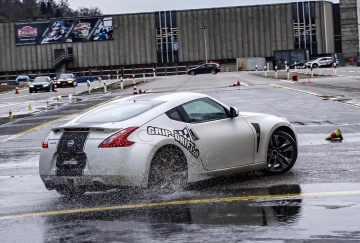
Reducing available grip allows the car to begin sliding at lower speeds. That gives the driver more time to feel what is happening and react.
It can also reduce tyre wear compared with repeatedly practicing the same exercises on dry asphalt.
This creates an excellent learning environment because the objective of a beginner course is not maximum speed or maximum smoke.
The objective is maximum understanding.
As your confidence grows, you can progress into environments with more grip, higher speeds and more complex combinations.
How to Start Drifting: A Beginner’s Roadmap
If you are starting from zero, this is the progression we recommend.
Step 1: Learn what drifting actually involves
Understand the basic concepts of oversteer, counter-steering, throttle control and weight transfer before arriving at the venue.
You do not need to become an expert through YouTube videos. You simply want enough context to understand the language your instructor will use.
Step 2: Book a beginner drift course
Look specifically for an experience marked beginner or newcomer.
Do not choose an unrestricted open-drift day simply because it looks more exciting. Open sessions are often designed for drivers who can already control the car sideways.
A structured course gives you instruction, progression and a safer environment for mistakes.
Step 3: Rent a suitable car if necessary
If the organizer offers prepared rental vehicles, consider using one for your first session.
This removes several unnecessary variables and allows you to concentrate on learning.
Step 4: Focus on consistency rather than angle
Your first successful controlled slide may not look dramatic.
That does not matter.
A small drift that you understand and repeat consistently is much more valuable than one spectacular slide you cannot reproduce.
Step 5: Repeat the fundamentals
Drifting is heavily dependent on timing and feel. Those qualities develop through repetition.
The second session often feels very different from the first because your brain already understands what the initial loss of rear grip feels like.
Step 6: Move into advanced training
Once you can consistently initiate, hold and finish a basic drift, advanced coaching can introduce more complex exercises, changes of direction, transitions and combinations.
Step 7: Decide how serious you want to become
At this stage, you can make a much better decision about whether to continue renting cars, attend occasional drift days or purchase and prepare your own vehicle.
How Much Does It Cost to Start Drifting?
There is no single answer because drifting can range from an occasional driving experience to a serious motorsport hobby involving a dedicated car, trailer, tyres, workshop space and competition costs.
For a beginner, however, the entry cost can be much lower than building a drift car from scratch.
A professionally instructed beginner course can allow you to experience the sport without making a major financial commitment.
As one current example, beginner drift training in Sennwald currently starts from CHF 280, with rental drift cars available separately.
Your real starting budget should therefore consider:
Course fee
Vehicle rental if required
Travel to the venue
Fuel
Tyres if using your own car
Insurance or damage excess
Food or accommodation where necessary
If you are completely new, spending money on instruction before spending money on modifications is usually the smarter progression.
Should You Buy a Drift Car?
Eventually, maybe.
But you do not need one to call yourself interested in drifting.
Buying a dedicated car can make sense if you begin attending drift days regularly and want more control over vehicle setup, maintenance and progression.
It also introduces significant responsibilities.
A drift car consumes tyres and fuel, requires mechanical maintenance and may need transportation depending on its modifications and registration status. Components such as suspension, cooling, differential, steering and safety equipment can all become part of the project.
That project can be enormously rewarding for the right enthusiast.
It can also become much more expensive than expected.
Take a few courses first. Speak to instructors and experienced drivers. Learn which cars are actually reliable and easy to support in your region.
Then buy with knowledge rather than excitement alone.
What Makes a Good Beginner Drift Car?
If you eventually decide to buy a car, beginners generally benefit more from a predictable and manageable vehicle than from chasing maximum horsepower.
Useful characteristics can include:
Predictable handling
Rear-wheel drive
Good parts availability
Affordable consumables
Reliable cooling
Simple mechanical layout
Enough power to learn without becoming intimidating
This is one reason older BMWs and certain Japanese rear-wheel-drive cars appear so frequently in grassroots drifting.
But the ideal car depends heavily on your country, parts availability, workshop access and budget.
There is no universal “best first drift car.”
Do You Need Lots of Horsepower to Drift?
No.
Huge power can make spectacular drifting possible, but it is not a prerequisite for learning vehicle control.
In fact, excessive power can make a beginner’s job more difficult because small throttle movements can create much larger changes in wheel speed and vehicle rotation.
A manageable car on a low-grip training surface can teach you far more about balance and technique than simply relying on horsepower to overwhelm the rear tyres.
Power becomes more relevant as speed, grip and the complexity of the course increase.
What Should You Wear to Your First Drift Course?
Always follow the organizer’s specific requirements, but beginners generally benefit from simple, practical clothing.
Closed shoes: Wear comfortable shoes that provide good pedal feel.
Comfortable clothing: Avoid anything that restricts movement inside the car.
Weather protection: Drift days often involve significant time outside, so dress for the forecast.
Driving licence: Bring a valid licence if required by the organizer.
Water: Concentrated driving can be tiring, particularly during longer sessions.
If helmets or other safety equipment are required, confirm whether they are provided or need to be brought with you.
What If You Want to Use Your Own Car?
Check the organizer’s technical requirements before booking.
A vehicle that feels perfectly acceptable for normal road driving may still need attention before repeated low-grip training or drift use.
At minimum, the car should be mechanically sound and free from fluid leaks.
Pay particular attention to:
Tyres and tyre pressures
Brake condition
Engine oil
Coolant
Power steering system where applicable
Wheel condition
Loose items inside the cabin
Ask the organizer what they recommend rather than preparing the car based only on advice from social media.
Common Beginner Mistakes
Trying to learn on public roads
This introduces completely unnecessary risk. Drift on a dedicated course where mistakes are expected and the environment is prepared for them.
Buying a project car before taking a course
You may spend thousands building a car before understanding what you actually need.
Focusing on smoke instead of control
Big tyre smoke looks dramatic. It does not automatically represent good technique.
Using too much aggression
Beginners often assume everything needs to happen faster and harder. Good instructors teach precision, timing and smoothness.
Being afraid of spinning
You are learning a technique that deliberately brings the car closer to the limit of rear grip. Mistakes are part of the process in a controlled environment.
The objective is to understand why the mistake happened and improve on the next attempt.
Comparing yourself with experienced drivers
Someone linking an entire course may have spent years developing that ability.
Your first goal is one controlled, repeatable slide.
How Long Does It Take to Learn Drifting?
You can understand the basic concept quickly.
Developing consistency takes longer.
Many beginners can experience their first meaningful controlled slides during a professionally instructed session, but becoming comfortable with different corners, surfaces, speeds and transitions requires repetition.
Think about drifting in stages.
Stage 1: understand oversteer.
Stage 2: recognise and react to the slide.
Stage 3: deliberately initiate and hold a basic drift.
Stage 4: repeat it consistently.
Stage 5: connect different movements and corners.
Stage 6: adapt to different vehicles, grip levels and layouts.
The goal is not to rush through those stages. Each one creates the foundation for the next.
What Comes After Your First Drift Course?
If you finish your first session wanting more, you have several directions to explore.
Take another beginner session
There is nothing wrong with repeating the same level. Repetition often produces a much bigger improvement than immediately attempting advanced exercises.
Move to advanced coaching
Once the fundamentals become consistent, advanced courses can introduce more complex car control and transitions.
Attend an open drift day
Open sessions provide more freedom but generally expect drivers to already possess basic drift control. Check the experience requirements carefully before booking.
Try different cars
Different wheelbases, power levels, tyres, differentials and drivetrains can dramatically change how a car behaves.
Learning that adaptability is part of becoming a stronger driver.
Explore competitive drifting
Competition introduces an entirely different discipline involving defined lines, angles, zones, judging and eventually tandem driving.
There is no need to move into competition simply because you enjoy drifting recreationally, but it offers a clear progression for drivers who want to take the sport further.
Where Can You Learn to Drift in Switzerland?
If you are based in Switzerland, Grande Turismo currently features professionally instructed beginner options in locations including Sennwald and Cazis.
Sennwald offers beginner and advanced training with GRIP&DRIFT, with optional rental drift cars for participants who do not have a suitable vehicle.
Cazis offers another structured beginner environment in Graubünden.
Switzerland also has passenger experiences in Tuggen and Seelisberg for enthusiasts who want to experience drifting before deciding whether they want to learn themselves.
→ Explore drifting experiences on Grande Turismo
Your Simplest Route Into Drifting
Drifting can become an expensive and technically demanding hobby if you want it to.
But starting does not need to be complicated.
You do not need to buy a competition car.
You do not need 500 horsepower.
You do not need a workshop full of spare wheels.
You do not need previous motorsport experience.
You need the right environment, professional instruction, a suitable vehicle and enough patience to learn progressively.
Your first objective should not be looking impressive.
It should be understanding the car.
Book a beginner course. Learn how oversteer feels. Understand counter-steering. Develop smooth throttle control. Repeat the exercises until your reactions become calmer.
Then decide what comes next.
Final Verdict: What Is the Best Way to Start Drifting?
The best way to start drifting is not by buying a drift car or attempting to teach yourself on public roads.
Start with a professionally instructed beginner drift course on a closed, controlled surface.
This gives you access to the right environment, instructors who can identify your mistakes and, in many cases, a suitable rental vehicle that removes the need for an immediate investment.
Once you understand how the car behaves, you can decide whether you want to take another course, move into advanced training, attend open drift days or begin building a car of your own.
Drifting becomes far less mysterious once you experience that first controlled slide.
Then the challenge changes.
It is no longer about making the car go sideways.
It is about learning how to make it happen deliberately, smoothly and consistently.
Start with control. Speed, angle and smoke can come later.
Frequently Questions People Ask
Do you have any questions?




-thumb.jpg)