Road TripsSwitzerland

Oberalp Pass Driving Guide: Switzerland’s Accessible Alpine Gem

Drive Oberalp Pass in Switzerland: route tips, best season, viewpoints, EV planning, Rhine source, lighthouse, safety advice and alpine itinerary.

SHARE POST

GET STARTED
Contact us

Oberalp Pass Driving Guide: Switzerland’s Accessible Alpine Gem

Not every great alpine road needs to feel like a final boss level. Some roads win you over because they are dramatic without being exhausting, beautiful without being intimidating, and technical enough to make a driver smile without turning the day into a survival exercise. That is Oberalp Pass. Sitting between Andermatt and Disentis/Mustér, this high mountain road is one of Switzerland’s most accessible alpine gems: a road with big views, flowing corners, a railway running beside it, a lighthouse at over 2,000 metres, and the symbolic source of the Rhine nearby. For car enthusiasts, Oberalp is the perfect bridge between serious Alpine driving and relaxed road-trip culture. In this guide, you will learn when to drive it, which direction is best, where to stop, how to prepare your car, how to combine it with other passes, and why Oberalp is becoming increasingly relevant in the age of EV road trips, slow travel, content-led tourism, and curated automotive adventures.

Why Oberalp Pass Deserves More Attention

Oberalp Pass is often treated as the supporting act. Drivers talk about Furka. They talk about Grimsel. They talk about Susten. They talk about Gotthard and the Tremola. Oberalp quietly sits nearby, connecting Andermatt with the Surselva region, and waits for people who understand that not every great road needs to shout.

That is exactly why Oberalp works. It is not the most extreme pass in Switzerland. It is not the most famous. It does not have the same cinematic mythology as Furka or the raw engineering drama of Grimsel. But it has something incredibly valuable: balance.

Oberalp is scenic, usable, enjoyable, and approachable. The road has proper alpine character, but it is not constantly trying to punish the driver. It gives you elevation, rhythm, views, railway scenes, lakes, villages, and enough corners to make the journey feel special. It is the kind of pass you can recommend to a first-time alpine road-tripper and still enjoy as an experienced driver.

In a world where automotive travel is becoming more experience-led, Oberalp is exactly the kind of road that deserves a bigger place in the conversation. It fits the new style of enthusiast travel: not just speed, not just noise, not just chasing the most famous location, but building a route that feels memorable, accessible, photogenic, and meaningful.

The modern relevance of Oberalp Pass

Oberalp is relevant now because the definition of a great driving road is changing. Enthusiasts are no longer looking only for maximum difficulty. They are looking for curated road-trip routes, EV-compatible alpine drives, slow-travel experiences, content-worthy landscapes, and routes that combine driving pleasure with culture, nature, and sustainability.

Oberalp fits this perfectly. It connects two very different sides of Switzerland: the more rugged, strategic road-trip base of Andermatt and the Romansh-influenced Surselva region around Disentis/Mustér. It is part of a wider alpine network, but it can also stand alone as a relaxed and highly rewarding drive.

It also has one of the most unusual landmarks in the Alps: a lighthouse near the summit, symbolising the source of the Rhine. That detail alone turns Oberalp from a simple road into a story. And in modern tourism, story matters. People do not just want to drive somewhere. They want a reason to remember it.

Where Oberalp Pass Is Located

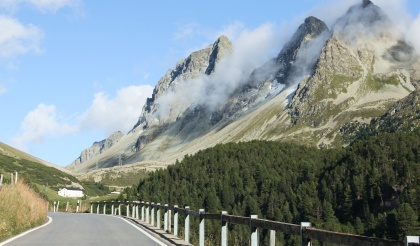
Oberalp Pass connects Andermatt in the canton of Uri with Disentis/Mustér in the canton of Graubünden. The summit sits at around 2,046 metres above sea level, making it a proper high-alpine route, but one that usually feels less intimidating than some of Switzerland’s sharper and more dramatic passes.

Its location is strategically excellent. From Andermatt, you are already in one of the best driving regions in Switzerland. Gotthard Pass, Furka Pass, Susten Pass, Grimsel Pass, and Nufenen Pass are all within route-building distance. Oberalp gives you an east-west connection that opens the door towards Graubünden, the Rhine source region, Disentis/Mustér, and eventually the wider road network towards Chur, Flims, Laax, and beyond.

This makes Oberalp more than a scenic road. It is a connector. It can be the first pass of the day, the final relaxed stage after a bigger loop, or the road that turns a simple Andermatt weekend into a proper cross-regional alpine tour.

The Andermatt advantage

Andermatt is one of the best bases for driving in Switzerland. It sits like a command centre for alpine road trips. From here, you can choose between multiple passes depending on weather, time, traffic, and mood. Oberalp is one of the easiest and most rewarding options because it starts directly from the Andermatt area and immediately gives you that high-mountain feeling.

This is especially useful for travellers who want a flexible driving day. If Furka is too busy, Gotthard is closed, or Grimsel feels like too much for the available time, Oberalp can be the perfect alternative. It still feels special, but it is less demanding to plan.

The Graubünden connection

On the eastern side, Oberalp leads towards Disentis/Mustér and the Surselva region. This side of Switzerland has a different personality. The language, villages, landscapes, and rhythm feel distinct from central Switzerland. The road becomes part of a cultural transition, not just a driving route.

For a longer itinerary, this is important. Oberalp can be the bridge between the famous central Swiss passes and the deeper Graubünden road-trip world. That makes it ideal for enthusiasts who want to go beyond the obvious routes and discover a Switzerland that feels more layered.

The Driving Experience: What Makes Oberalp Special

Oberalp is a driver’s road, but it is not a road that constantly demands maximum concentration. That is part of its charm. The road has a smoother, more open rhythm than many tighter passes. It climbs and descends with a mix of curves, straights, open views, and village sections, giving the driver time to enjoy the landscape rather than simply survive the next hairpin.

Compared with more intense alpine passes, Oberalp feels more relaxed. That does not mean boring. It means usable. You can settle into a rhythm. The road gives you space to breathe. You can enjoy the steering, the changing views, the railway lines, the mountain air, and the feeling of crossing a proper pass without being constantly on edge.

For many car enthusiasts, this makes Oberalp one of the most enjoyable roads in the region. It is not always the road that creates the biggest adrenaline spike. It is the road that creates the best mood.

For sports cars

In a sports car, Oberalp rewards flow. You do not need extreme power. A balanced car with good steering, strong brakes, and enough suspension comfort will feel excellent. Lightweight cars, roadsters, modern hot hatches, grand tourers, and older analogue sports cars all make sense here.

The road is particularly good for drivers who enjoy precision rather than aggression. Smooth inputs matter. Brake early, look ahead, carry clean lines, and let the car move naturally through the road. Oberalp is not about attacking every corner. It is about connecting them.

For grand tourers

Oberalp may be even better in a grand tourer than in an extreme sports car. The road suits cars that can cover distance comfortably while still feeling special through the corners. Think of the experience as less “mountain stage” and more “proper alpine travel”.

A good GT car turns Oberalp into a beautifully composed journey: enough performance to enjoy the climb, enough comfort to stay relaxed, enough luggage space for a weekend, and enough presence to make every stop feel like part of the story.

For classic cars

Classic cars work beautifully on Oberalp because the pass is dramatic without being too brutal. The gradients, altitude, and changing weather still require preparation, but the road is generally more forgiving than very tight or rough alpine routes.

As always, check cooling, brakes, tyres, oil, and fuel before starting. Older cars often make Oberalp feel more alive because the road has enough variation to keep the driver engaged without overwhelming the machine. You can enjoy the sound, the smells, the gear changes, and the mechanical connection without feeling like the car is being tortured.

For EV drivers

Oberalp is a strong route for EV road trips. Switzerland’s charging infrastructure and the growing popularity of electric touring make high-alpine drives increasingly realistic for electric cars. Oberalp offers the right mix of elevation, destination value, and route flexibility.

EVs feel particularly strong on climbs because of instant torque. On descents, regenerative braking can recover energy and reduce brake wear. But planning still matters. Cold temperatures, spirited driving, passengers, heating, air conditioning, roof boxes, and elevation changes can all affect range. The smart EV driver treats Oberalp not as a range anxiety problem, but as a route-planning exercise.

Best Time to Drive Oberalp Pass

Oberalp Pass is seasonal for road traffic. In winter, the road is usually closed and the pass becomes part of the mountain and ski landscape. The railway remains an important connection, but the driving experience belongs mainly to the warmer months.

In most years, the best driving period is from late spring or early summer through autumn, depending on snow, roadworks, and weather. The exact opening and closing dates change every year, so always check current road conditions before leaving. This is not optional. It is part of responsible alpine driving.

Late spring and early summer

Late spring and early summer can be spectacular. Snow may still sit beside the road, the air feels clean, and the landscape has that dramatic fresh-from-winter look. This is a great time for photography and for drivers who want strong alpine atmosphere without peak-season traffic.

However, early season driving requires flexibility. Temperatures at the summit can be much lower than in the valley. Meltwater, gravel, road-cleaning work, and changing conditions can all affect grip. If you are driving a low sports car or a classic, take it easy until you understand the surface.

July and August

Summer brings the easiest planning conditions and the most stable weather, but also more traffic. Expect motorcycles, cyclists, camper vans, families, hikers, and tourists. Oberalp is accessible and popular, so do not expect an empty road in the middle of a sunny weekend.

The best strategy is simple: start early. A morning drive gives you better light, quieter roads, cooler brakes, and a more peaceful atmosphere. It also gives you time to continue towards Disentis/Mustér, return to Andermatt, or combine the route with another pass.

September and early October

September may be the best month for Oberalp. The crowds ease, the light becomes warmer, and the road often remains in good condition. Early October can be beautiful too, but the weather becomes less predictable. Cold mornings, fog, wet sections, and early snow risk become part of the planning.

Autumn gives Oberalp a more mature character. The route feels less like a summer tourist drive and more like a final alpine escape before winter closes the chapter.

Best Direction to Drive Oberalp Pass

Both directions are enjoyable, but they feel different. Driving from Andermatt towards Disentis/Mustér gives you the classic feeling of leaving one of Switzerland’s great alpine driving hubs and heading into Graubünden. The road climbs quickly from Andermatt and brings you into the open summit landscape before gradually dropping towards the Surselva region.

Driving from Disentis/Mustér towards Andermatt gives the route a stronger “arrival” feeling. You climb from the Graubünden side, reach the summit, pass the lighthouse and lake area, then descend towards Andermatt, where the bigger pass network opens around you. This direction works well if you are coming from Chur, Flims, Laax, or eastern Switzerland.

The enthusiast’s recommendation

For a first drive, start in Andermatt and drive towards Disentis/Mustér. This direction makes Oberalp feel like a gateway into a different Switzerland. You begin in a famous driving base, climb into the high-alpine zone, pass the symbolic Rhine source area, and then drop into Graubünden’s softer but deeply characterful landscape.

If you want a compact loop, combine Oberalp with Gotthard Pass or Furka Pass, depending on the season and road conditions. If you want a larger road trip, continue towards Graubünden and build a multi-day itinerary around the eastern Swiss Alps.

Key Stops and Viewpoints

Oberalp is not only about the road. The stops give the drive its personality. This is where the pass becomes more than tarmac and altitude. It becomes a story about rivers, railways, tourism, and the way Switzerland turns geography into experience.

Oberalpsee

Near the summit, Oberalpsee is one of the natural highlights of the route. The lake gives the pass a calm centre point. Depending on the weather, it can look peaceful, moody, cinematic, or almost surreal. On a still day, the reflections make it a great photography stop.

This is a good place to pause, stretch your legs, and let the drive breathe. The lake area also helps explain why Oberalp feels less aggressive than some other passes. It has high-alpine drama, but also moments of softness.

The Oberalp Pass lighthouse

The lighthouse near the summit is one of the most unexpected sights in the Swiss Alps. A lighthouse at over 2,000 metres sounds like a joke until you understand the symbolism. It represents the Rhine, one of Europe’s most important rivers, whose source is close to the pass.

For a road trip, this is gold. It gives Oberalp a memorable identity. You are not just stopping at another viewpoint. You are standing near a symbol that connects the mountain source of the Rhine with its long journey across Europe towards the sea. That is exactly the kind of detail that turns a good drive into a story worth telling.

Andermatt

Andermatt is the ideal base before or after the drive. It has hotels, restaurants, fuel, charging options, and direct access to several legendary alpine roads. If you want to make Oberalp part of a proper driving weekend, Andermatt is the obvious place to start or finish.

The village has also become increasingly associated with premium tourism and alpine lifestyle, which makes it relevant for the future of curated automotive experiences. It is not only a place to pass through. It is a place to anchor a route.

Disentis/Mustér

On the Graubünden side, Disentis/Mustér offers a completely different mood. It is calmer, more regional, and strongly connected to the Surselva identity. This is a good stop for food, coffee, or an overnight stay if you want to continue deeper into Graubünden.

For drivers who usually focus only on the famous central Swiss passes, Disentis/Mustér is a reminder that Switzerland’s road-trip culture is much wider than the usual icons. Oberalp opens that door.

Vehicle Preparation Before Driving Oberalp Pass

Oberalp is accessible, but it is still an alpine pass. Preparation matters. A road does not need to be extreme to expose weak brakes, old tyres, poor cooling, or lazy planning.

Brakes: Check pads, discs, and brake fluid. Descents can build heat, especially in heavier cars or fully loaded vehicles.

Tyres: Check tread, pressure, and age. Alpine roads can move from dry to damp quickly, especially in shaded areas.

Cooling: Important for classics, older cars, and performance vehicles. Long climbs put more load on the engine.

Fuel or charge: Start with enough range. Do not assume you can solve everything at the summit.

Offline maps: Download your route. Mountain signal can be inconsistent, and detours or closures can change the plan.

Weather: Check both sides of the pass and the summit area. Andermatt, Oberalp, and Disentis/Mustér can have different conditions.

Mindset: Bring patience. You will share the road with cyclists, motorcycles, camper vans, locals, tourists, and sometimes agricultural or maintenance vehicles.

How to Drive Oberalp Pass Properly

The best way to drive Oberalp is smoothly. This is not a road for drama. It is a road for rhythm. Look far ahead, brake early, keep inputs clean, and let the car flow across the mountain rather than trying to force the pace.

Because Oberalp is more accessible than some other passes, it can attract a wide mix of road users. That means you need to stay alert. A camper van may slow suddenly for a photo. A cyclist may appear around a bend. A motorcycle group may close quickly from behind. A local driver may know the road far better than you. Stay humble.

Use the gearbox intelligently

On descents, use lower gears to manage speed and reduce brake load. In an automatic car, use manual mode or downhill assist if appropriate. In an EV, use regenerative braking, but do not rely on it blindly. Regen behaviour can vary depending on battery temperature and state of charge.

Good alpine driving should feel calm. If the drive feels frantic, you are probably overdriving. Oberalp rewards the driver who knows how to carry momentum without turning every corner into a performance.

Respect cyclists and motorcyclists

Oberalp is popular with cyclists and motorcyclists. Give cyclists space, especially on climbs where their line may move slightly with effort and gradient. Be patient before overtaking. Wait for visibility. Leave more room than you think you need.

With motorcycles, avoid turning the road into a competition. Everyone is there to enjoy the pass. The best drivers make the road feel safer and better for everyone.

Do not chase content at the wrong moment

Oberalp is highly photogenic, especially around the lake, railway, and lighthouse area. But that does not mean the road is a private photoshoot location. Stop only where it is safe and legal. Do not block traffic, do not park on blind sections, and do not create problems for other road users.

The best automotive content comes from preparation, timing, and respect. Sunrise light, a clean car, a safe parking area, and a calm plan will always beat chaos.

Why Oberalp Matters for the Future of Automotive Travel

Oberalp is exactly the kind of road that shows where automotive travel is going. The future is not only about the most extreme roads or the loudest cars. It is about meaningful mobility: routes that combine driving pleasure, infrastructure, nature, culture, sustainability, and storytelling.

That makes Oberalp surprisingly forward-thinking. It has the railway connection, the road, the winter-summer seasonal contrast, the Rhine source symbolism, the EV road-trip potential, and the accessibility that makes it relevant to a wider audience than hardcore drivers alone.

For Grande Turismo, this is the kind of destination that fits perfectly into the future of automotive experiences. It can support driving tours, content trips, brand activations, EV road-trip guides, classic car weekends, and curated alpine itineraries. Oberalp is not just a road. It is a platform for experiences.

EV road trips and charging confidence

EV road trips are moving from niche to normal. As charging networks improve and hotels add charging options, alpine travel becomes easier for electric drivers. Oberalp is a strong candidate for EV-friendly route planning because it connects established tourism regions and can be combined with other passes in flexible ways.

The key is education. Many drivers still overestimate the difficulty of alpine EV travel or underestimate the importance of planning. Oberalp can become a perfect example of how to do it properly: start charged, understand elevation, use regeneration intelligently, and plan stops around the experience rather than panic.

Slow travel and accessible adventure

Oberalp is also important because it makes alpine driving feel accessible. Not every traveller wants a full day of intense hairpins. Some want a beautiful route they can enjoy with a partner, family, friends, or a mixed group of cars. Oberalp offers that.

This matters socially because automotive culture has to become more inclusive and more responsible. Roads like Oberalp can bring people into the world of driving experiences without making them feel like they need race-driver confidence. It is an ideal gateway pass.

Infrastructure, rail and road storytelling

Few passes show the relationship between rail and road as clearly as Oberalp. The Matterhorn Gotthard Railway runs through this landscape and gives the pass a distinctive identity. For travellers, this creates a rare multi-mobility story: cars, trains, cyclists, hikers, skiers, and EVs all using the same alpine corridor in different seasons and different ways.

That is the future of destination content. Not just “here is a road”, but “here is how a place moves”. Oberalp is a living example of alpine mobility as a system.

Recommended Oberalp Pass Itinerary

For a simple and rewarding drive, start in Andermatt. Check the road status, weather, fuel or charge level, and traffic conditions before leaving. Begin the climb towards Oberalp Pass in the morning, ideally before peak tourist movement.

Stop near the Oberalpsee and lighthouse area. Take your time. This is the emotional centre of the pass. Continue towards Disentis/Mustér, where you can stop for coffee, lunch, or a longer break. From there, either return over Oberalp in the opposite direction or continue deeper into Graubünden.

For a stronger driving day, combine Oberalp with Gotthard Pass or Furka Pass, depending on conditions. For a more relaxed weekend, stay overnight in Andermatt or Disentis/Mustér and build the route around good light, good food, and enough time to enjoy the road properly.

For EV drivers, plan charging in Andermatt, Disentis/Mustér, or along the wider route depending on your car and itinerary. For classic car drivers, keep the day simple, allow cooling stops, and avoid rushing. Oberalp is best when you give it space.

Final Verdict: Is Oberalp Pass Worth Driving?

Yes. Oberalp Pass is absolutely worth driving, especially if you want a Swiss alpine road that feels rewarding without being overwhelming. It is scenic, accessible, flexible, and full of character. It may not have the same global fame as Furka or Gotthard, but that is part of its appeal.

Oberalp is the road you drive when you want the Alps without unnecessary drama. It gives you curves, views, elevation, culture, railway scenes, lake stops, the lighthouse, and the symbolic source of the Rhine nearby. It is practical enough for a relaxed road trip and special enough for a proper enthusiast itinerary.

Bring the right car, or simply bring the car you love. Start early. Check the conditions. Respect the road. Stop at the lake. Look at the lighthouse and remember that you are standing near the beginning of one of Europe’s great rivers. Then continue the drive with the calm satisfaction that you chose one of Switzerland’s most underrated alpine gems.

Oberalp Pass is not the loudest road in Switzerland. It is the road that proves accessibility, beauty, and driving pleasure can still make a perfect alpine story.

Related Articles
Explore all