Albula Pass Driving Guide: Switzerland’s Hidden Alpine Masterpiece
Drive Albula Pass in Switzerland with route tips, viewpoints, best season, car preparation, EV advice and the perfect Graubünden road-trip itinerary.
Albula Pass Driving Guide: Switzerland’s Hidden Alpine Masterpiece
Switzerland has no shortage of famous mountain roads, but fame can become a problem. The legendary passes attract traffic, tour buses, hurried photographers and drivers more interested in collecting names than experiencing places. Albula Pass offers something rarer: a high-alpine road that still feels personal. It climbs through forests, stone villages and railway country before breaking into a wild landscape of exposed rock, open valleys and sweeping bends at 2,312 metres. There is no theatrical souvenir shop atmosphere and no single viewpoint carrying the entire experience. Albula works differently. It builds slowly, corner by corner, until you realise that the road, railway and landscape have merged into one extraordinary piece of Swiss engineering. In this guide, you will learn when to drive it, which direction works best, where to stop, how to prepare your car, how to combine it with other Graubünden roads and why Albula is becoming increasingly relevant in the age of slow travel, electric touring and curated automotive experiences.
Why Albula Pass Is One of Switzerland’s Most Rewarding Roads
Albula Pass does not arrive with the aggressive visual drama of Furka or the monumental infrastructure of Gotthard. It does not need to. Its appeal comes from contrast and progression. The northern approach begins in a landscape that feels inhabited, cultivated and deeply connected to railway history. You pass traditional villages, forests and the famous Albula railway corridor before the valley becomes narrower and the road starts working harder.
Then the scenery changes. Trees begin to disappear. The mountains move closer. Meadows give way to exposed rock, small lakes and high-alpine terrain. The road becomes more isolated, and the sense of travelling between two distinct worlds becomes stronger with every kilometre.
This transformation is the real magic of Albula. It is not simply a collection of hairpins. It is a complete driving narrative. The road takes you from the historic Albula Valley to the wide, polished atmosphere of the Engadin, crossing one of the most beautiful and culturally significant landscapes in Graubünden.
For enthusiasts, that creates a deeper experience than a road designed only around speed. Albula combines technical driving, heritage infrastructure, cinematic scenery, low-density tourism and cross-regional road-trip potential. It feels like a road worth understanding, not merely consuming.
The modern relevance of Albula Pass
Albula is becoming more relevant because automotive travel is moving away from simple destination collecting. Enthusiasts increasingly want story-driven routes, low-impact road trips, EV-compatible alpine journeys, heritage experiences and roads that connect driving with culture.
The pass is perfectly positioned for that shift. It runs beside one of the world’s most celebrated mountain railway landscapes, connects the Albula Valley with the Engadin and offers a driving experience that can be combined with historic villages, hiking, railway museums, photography, local food and longer touring routes.
This matters for the future of automotive tourism. The most valuable road-trip destinations will not necessarily be the fastest or most dramatic. They will be the places capable of building an entire experience around the road. Albula already has that ecosystem. The railway, villages, lake, pass, hiking routes and Engadin connection give it depth that many more famous roads cannot match.
Where Albula Pass Is Located
Albula Pass is located in the canton of Graubünden in eastern Switzerland. The road connects the Albula Valley, including Bergün and Preda, with La Punt Chamues-ch in the Upper Engadin. The summit reaches approximately 2,312 metres above sea level.
The location makes Albula strategically important for road-trip planning. From the western side, drivers can approach through Thusis, Tiefencastel, Filisur and Bergün. From the Engadin side, the route connects naturally with St. Moritz, Samedan, Pontresina, the Maloja Pass, Bernina Pass and Julier Pass.
This means Albula can function in several ways. It can be a destination drive from Zurich or central Switzerland, a scenic connection into the Engadin, one stage of a multi-pass Graubünden itinerary or the central feature of an overnight automotive escape.
Its relative isolation is part of the appeal. Albula is not a major year-round transit artery. Drivers who need a faster, more dependable connection often use Julier Pass or alternative routes. Albula therefore retains a stronger recreational character during the summer season.
The Albula Valley approach
The western approach is rich in atmosphere. Filisur, Bergün and Preda create a sequence of places that feel closely tied to the mountains and railway. Instead of jumping immediately into exposed alpine scenery, the road allows the journey to develop gradually.
Bergün is especially worth exploring. Its traditional buildings, narrow streets and railway heritage make it more than a fuel or coffee stop. It gives the road historical context. The climb from this side then follows the broader story of people overcoming difficult terrain through road and rail engineering.
The Engadin approach
From La Punt, the road rises out of the Upper Engadin and quickly begins to feel more remote. This side offers wider initial views and a different emotional rhythm. You leave the polished Engadin valley behind and climb towards a pass that feels quieter, rougher and more elemental.
The eastern approach works particularly well for drivers staying around St. Moritz, Pontresina or Samedan. Albula can be driven as an early-morning excursion before returning through Julier Pass, creating a varied loop without forcing the day into an endurance challenge.
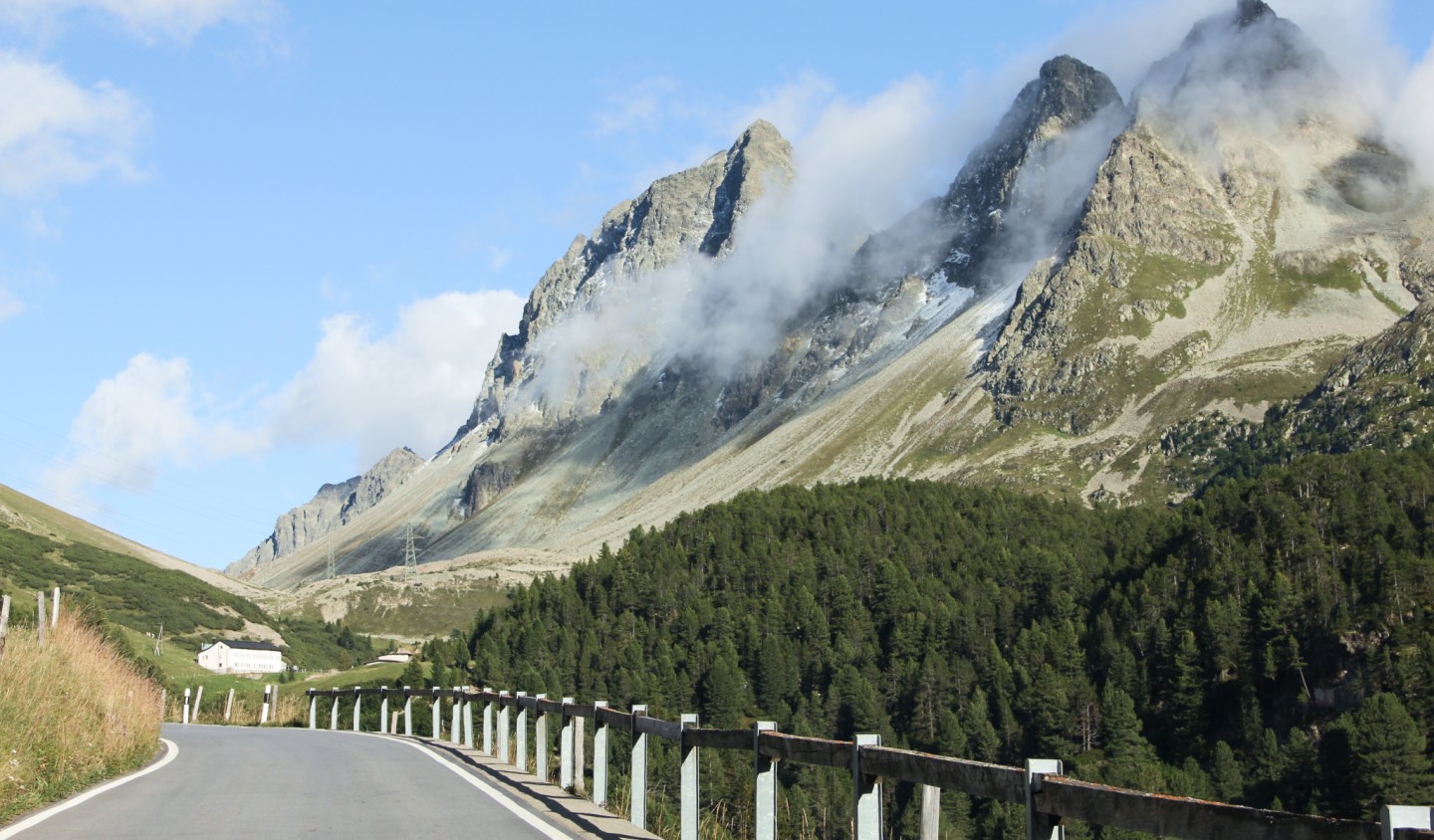
Photo: Martingarten, licensed under CC BY-SA 4.0.
The Driving Experience: What Albula Feels Like Behind the Wheel
Albula Pass is not one continuous type of road. That is one of its greatest strengths. It combines compact village sections, forested climbs, narrower technical passages, open sweepers, exposed high-alpine sections and a flowing descent towards the Engadin.
The road often feels more intimate than Switzerland’s major passes. Some sections are relatively narrow, and the landscape can sit close to the tarmac. You need to pay attention to sightlines, approaching vehicles, cyclists and changing surface conditions. This is not a pass to drive lazily while admiring the scenery through the side window.
At the same time, Albula is not relentlessly difficult. The rhythm opens and closes naturally. Technical corners are followed by sections where the car can settle. Views appear suddenly rather than being permanently displayed. The result is an engaging road that keeps the driver involved without becoming exhausting.
The best pace is smooth and deliberate. Albula rewards drivers who read the terrain, preserve momentum and leave enough margin for the unexpected. It punishes impatience, especially on blind corners and narrower sections.
For sports cars
A well-balanced sports car feels superb on Albula. Power is less important than steering, braking confidence, visibility and suspension control. Lightweight roadsters, compact coupés, analogue sports cars and modern performance cars with sensible dimensions all suit the route.
Very low or extremely stiff cars can still make the journey, but they may not deliver the best experience. Alpine roads are living infrastructure. Surfaces can be repaired, patched or affected by winter damage. A car with some suspension travel often feels more composed and enjoyable than a track-focused machine.
A manual gearbox adds another layer of involvement. Albula gives you enough changes in gradient and corner radius to make gear selection meaningful. The satisfaction comes from getting the sequence right, not from accelerating as hard as possible between bends.
For grand tourers
Albula is naturally suited to grand touring. The pass is part of a wider journey rather than an isolated playground, and a comfortable performance car fits that character beautifully.
A proper grand tourer allows you to leave Zurich, cross Graubünden, drive Albula, continue into the Engadin and arrive without feeling punished. It makes the entire route enjoyable, not only the most technical sections. This is especially valuable if you are travelling with a partner, luggage or camera equipment.
For classic cars
Classic cars and Albula belong together. The railway landscape, stone villages, narrow road and slower natural rhythm create an atmosphere that suits older machinery perfectly.
Preparation remains essential. Check coolant, oil, tyres, brakes and fuel before starting. Long climbs expose weak cooling systems, while descents can reveal tired brake fluid or worn pads. Give the car time to recover at the summit and avoid treating every climb like a historic rally stage.
The reward is significant. In a classic car, every gradient feels more pronounced, every gear change matters and every mechanical sound becomes part of the landscape. Albula turns the journey into a conversation between road and machine.
For EV drivers
Albula Pass is increasingly relevant for electric road trips. Modern EVs combine instant climbing torque with regenerative braking, quiet cabins and increasingly capable touring range. That makes mountain travel both practical and surprisingly engaging.
However, elevation, temperature, speed, climate control and driving style all influence consumption. Begin with enough charge and identify reliable charging options in the wider region rather than expecting the summit to solve poor planning.
Regeneration can recover energy during the descent, but it should not be treated as unlimited. Regenerative performance may change when the battery is cold, warm or close to full. The driver should remain ready to use the conventional brakes and manage speed intelligently.
Albula is a strong example of how heritage roads and future mobility can coexist. You can drive a silent electric car beside a railway line opened more than a century ago, experiencing two different generations of engineering in the same landscape.
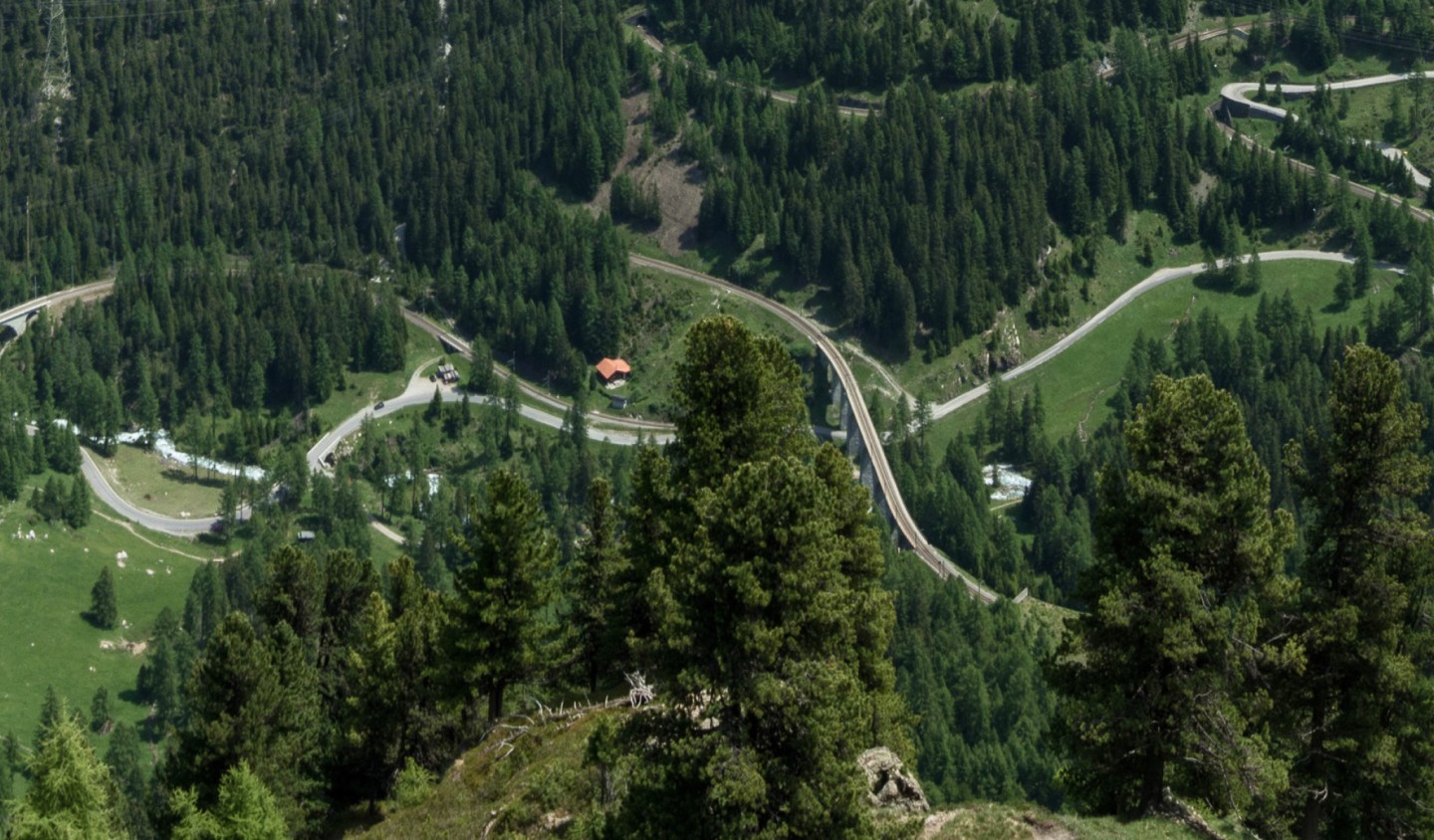
Photo: “Albula viaducts of the Albula line with pass road” by Martingarten, licensed under CC BY-SA 4.0.
The Albula Railway: When Road and Rail Share the Same Story
Few driving roads are so closely connected to a railway. The Albula line of the Rhaetian Railway is part of the UNESCO World Heritage landscape shared with the Bernina line. Its viaducts, tunnels, bridges and mountain routing represent one of Europe’s great engineering achievements.
For the driver, the railway adds movement and context. A red train may appear across the valley, enter a tunnel and reappear at a completely different elevation. The road and railway seem to chase each other through the landscape, each solving the same geographical problem in a different way.
This changes how Albula feels. You are not simply driving through untouched nature. You are moving through a carefully constructed cultural landscape where engineering has been designed to work with the mountains rather than flatten them.
Why the railway matters to the driving experience
The railway gives Albula a distinctive identity. Many alpine passes have impressive scenery, but few have a parallel story this strong. The train adds colour, scale and movement to the valley. It also makes the region attractive to travellers who may not be primarily interested in cars.
This creates an opportunity for mixed-interest road trips. One person can enjoy the driving road while another explores railway history, hiking routes or photography. The destination becomes more inclusive without diluting its automotive appeal.
Railway heritage as sustainable tourism
The railway also introduces a valuable sustainability dimension. Visitors do not always need to experience the region exclusively by car. A longer itinerary can combine driving, rail travel, walking and local accommodation.
This multimodal approach is likely to become increasingly important. The future of automotive tourism is not about pretending cars exist separately from society. It is about designing better journeys: fewer rushed kilometres, longer stays, more local value and a deeper relationship with each destination.
Best Time to Drive Albula Pass
Albula Pass is a seasonal road. It closes during winter and normally reopens after snow clearance when conditions permit. Exact dates vary from year to year, so always check the official road status shortly before travelling.
In winter, the pass road does not simply become an unused strip of asphalt. Part of the wider route around Preda and Bergün becomes associated with one of Switzerland’s famous toboggan experiences. This seasonal transformation shows how differently alpine infrastructure can be used throughout the year.
For driving, the main season generally runs from early or mid-summer into autumn. Conditions, maintenance and late snowfall can affect access even outside the deepest winter months.
June and early summer
Early summer can deliver some of the most dramatic scenery. Snow may remain beside the upper road, waterfalls carry more meltwater and the landscape feels fresh after winter.
It is also a period that requires caution. Gravel, damp sections, cold temperatures and ongoing maintenance may affect the road. The summit can feel completely different from the valley, even on a warm day.
Check the pass status before leaving and avoid building an inflexible itinerary around an assumed opening date. In the Alps, the weather makes the final decision.
July and August
Mid-summer provides the most dependable conditions, but it also attracts more visitors, cyclists, motorcycles and touring vehicles. Albula rarely feels as commercialised as the most famous Swiss passes, yet sunny weekends can still become busy.
Early morning is the best strategy. You gain quieter roads, softer light and cooler temperatures. The railway landscape is particularly beautiful when morning light begins reaching the valley and the roads are still calm.
September and early October
September may offer the best overall balance. Tourist traffic begins to decrease, the air becomes cooler and the light gains more depth. The surrounding landscape starts changing colour, giving the route a richer, more cinematic atmosphere.
Early October can be exceptional but less predictable. Frost, fog, early snow and shorter daylight hours require more planning. Check conditions carefully and carry appropriate clothing even when the lower valleys feel mild.
Which Direction Is Best?
Albula Pass is excellent in both directions, but the experiences are not identical. Driving from Bergün and Preda towards La Punt creates the strongest narrative. The route begins within the railway landscape, climbs through forest and narrowing terrain, reaches the exposed summit and then opens towards the Upper Engadin.
This direction makes the road feel like a gradual escape from civilisation into the high Alps. The scenery becomes increasingly dramatic, and arrival in the Engadin feels like a genuine transition.
Driving from La Punt towards Bergün is equally rewarding from a technical perspective. The climb begins more openly, reaches the pass relatively quickly and then descends through increasingly complex terrain towards Preda and Bergün. The railway story becomes more visible as the journey develops.
The enthusiast’s recommendation
For a first visit, begin in Filisur or Bergün and drive east towards La Punt. Stop at Lake Palpuogna, continue towards the summit and descend into the Engadin. Stay for lunch or overnight in the region, then return through Julier Pass.
This creates a complete loop with two very different roads. Albula provides intimacy, heritage and technical variety. Julier offers a broader and more efficient return route with its own dramatic landscape.
Key Stops Along the Albula Pass
The best Albula experience includes several stops. This is not a road to drive once without leaving the car. The surrounding destinations explain why the pass matters and give the journey its emotional depth.
Bergün
Bergün is one of the most attractive historic villages in Graubünden. Its traditional Engadin-style buildings, decorated façades and railway connection make it an ideal starting point.
Stop for coffee, walk through the centre and allow the road trip to slow down before the climb. The village also offers access to railway-focused attractions and a deeper understanding of the Albula line.
Preda
Preda sits higher in the valley and feels closely connected to the railway and mountain environment. It marks the point where the journey becomes more serious and the landscape begins tightening around the route.
In winter, the Preda–Bergün corridor is famous for tobogganing. In summer, it becomes part of the gateway towards hiking routes, railway engineering and the pass itself.
Lake Palpuogna
Lake Palpuogna is one of the most beautiful stops in the region. Surrounded by forest and mountains, the clear water can reflect the landscape with almost suspicious perfection.
This is not a roadside photo you should rush. Park appropriately, walk to the lake and allow enough time to enjoy it. The stop changes the rhythm of the journey and provides a calm counterpoint to the driving experience.
Albula summit
The summit at 2,312 metres feels remote and understated. There is no need for oversized attractions. The altitude, exposed landscape and sense of having crossed the mountain are enough.
Use the stop to check the car, particularly after an enthusiastic climb. Pay attention to brake smell, tyre condition and fluid temperatures. Put on another layer of clothing before assuming the valley weather applies at the top.
La Punt Chamues-ch
La Punt marks the Engadin end of the pass and offers access to one of Switzerland’s most prestigious touring regions. From here, you can continue towards St. Moritz, Samedan, Pontresina or neighbouring alpine routes.
It is also a good place to pause and decide whether the day should continue. Albula often leaves drivers tempted to add another pass, but a strong road trip is measured by quality, not the number of names collected.
Vehicle Preparation Before Driving Albula Pass
Albula is not an extreme expedition, but it remains a high-alpine road. Preparation protects both the experience and the car.
Brakes: Check pads, discs and brake fluid. Long descents generate heat, particularly in heavy vehicles.
Tyres: Inspect pressure, tread depth, sidewalls and age. Grip can vary between sunny, shaded and damp sections.
Cooling system: Long climbs expose weak coolant systems, especially in classics and older performance cars.
Fuel or charge: Begin with enough range for the entire route and any planned detour. Do not depend on finding a solution at the summit.
Weather protection: Carry warm clothing and rain protection. Conditions above 2,000 metres can change quickly.
Offline navigation: Save the route and alternative roads before leaving. Mobile coverage should never be your only plan.
Road status: Check the official Graubünden road information before departure. Seasonal closure, roadworks or temporary restrictions can change the itinerary.
How to Drive Albula Pass Properly
Albula rewards observation. Look beyond the next corner, identify escape space and adapt your speed to the visible road rather than the road you imagine is ahead.
Some sections feel wide and open, while others narrow suddenly. Do not allow confidence gained on one part of the route to determine your pace on the next. The road changes character repeatedly.
Control the descent
Use lower gears to manage speed and reduce brake load. In an automatic car, select an appropriate manual gear or downhill mode. In an EV, use regeneration intelligently but remain prepared for its behaviour to change.
Repeated late braking creates heat and destroys rhythm. A good alpine descent should feel calm, controlled and almost uneventful from the passenger seat.
Respect cyclists and motorcycles
Albula is popular with cyclists because of its elevation, scenery and connection to major cycling routes. Give them generous space and wait for proper visibility before overtaking.
Motorcycles may approach quickly, but that does not create an obligation to increase your pace. Hold a predictable line and allow others to pass only where it is safe.
Share the road with local traffic
Residents, service vehicles, postal buses and agricultural traffic use alpine roads for practical reasons. Not everyone is participating in your scenic drive.
Be patient, avoid stopping in passing places and never block access for photography. Enthusiast driving only remains welcome when enthusiasts behave responsibly.
Do not turn the road into a content studio
Albula is exceptionally photogenic, especially around the railway, lake and upper pass. That does not make every corner a safe shooting location.
Use designated parking areas, scout locations on foot and avoid standing in the carriageway. The best automotive content is planned around safety and light, not improvised around traffic.
Why Albula Matters for the Future of Automotive Travel
Albula Pass represents a more mature form of car culture. It proves that a driving destination can be exciting without depending on excessive speed, noise or spectacle.
The road combines heritage engineering, electric mobility, multimodal tourism, local culture and environmentally sensitive travel. It invites drivers to stay longer, understand more and consume less aggressively.
This model has wider industry potential. Automotive brands, hotels, tourism organisations and event companies increasingly need experiences that align performance with responsibility. Albula provides a natural setting for EV launches, classic-car tours, photography journeys, small-group rallies and premium driving weekends.
EV touring and regenerative mountain driving
Electric cars are changing the character of alpine road trips. Instant torque makes climbs effortless, while regenerative braking adds a new strategic element to descents.
Albula could become a benchmark route for showing that electric touring can still feel emotional. The silence makes the natural environment more present, while the railway connection creates a powerful contrast between historic and contemporary mobility.
Slow travel and destination value
Slow travel does not mean driving slowly every second. It means travelling with intention. Instead of crossing five passes in one rushed day, visitors can spend time in Bergün, explore railway history, walk around Lake Palpuogna and stay overnight in the Engadin.
This approach creates more value for local communities and a better experience for travellers. It also reduces the pressure to treat public roads like temporary racetracks.
Climate resilience and seasonal infrastructure
High-alpine roads face increasing pressure from changing weather patterns, freeze-thaw cycles, heavy precipitation and complex maintenance requirements. Albula’s seasonal closure is a reminder that mountain infrastructure remains dependent on natural conditions.
Future road tourism will require better real-time information, more flexible planning and stronger respect for closures. Technology can help through live road-status platforms, predictive maintenance and smarter navigation, but the mountains will always retain the final authority.
Recommended Albula Pass Road-Trip Itinerary
Begin in Filisur or Bergün early in the morning. Explore the village, refuel or charge where appropriate and check the latest pass status before starting the climb.
Continue through Preda and stop near Lake Palpuogna. Allow enough time to walk, take photographs and experience the landscape away from the car.
Resume the climb towards the Albula summit. Drive smoothly, expect cyclists and remain cautious on narrower sections. Pause at the summit for views and a quick vehicle check.
Descend towards La Punt Chamues-ch and continue into the Upper Engadin. Stop for lunch in La Punt, Samedan or St. Moritz, depending on the character you want from the day.
For the return journey, take Julier Pass towards Tiefencastel. This creates a varied loop and avoids simply repeating the same road. An overnight stay in Bergün or the Engadin turns the route into a more relaxed premium experience.
Final Verdict: Is Albula Pass Worth Driving?
Yes. Albula Pass is one of Switzerland’s most complete driving roads, precisely because it does not rely on one dramatic feature.
It has technical sections, flowing bends, railway heritage, traditional villages, a clear alpine lake, exposed summit scenery and a genuine transition between two distinct regions. It feels remote without becoming inaccessible and challenging without becoming theatrical.
Albula is particularly rewarding for enthusiasts who have moved beyond chasing only the most famous roads. It offers a richer kind of experience: one where the journey, landscape, engineering and local culture carry equal importance.
Bring a well-prepared car. Start early. Check the road status. Stop in Bergün. Walk to Lake Palpuogna. Watch for the red railway trains across the valley. Give cyclists room. Let the brakes cool when necessary. Most importantly, resist the urge to rush.
Albula Pass is not merely a road into the Engadin. It is a moving conversation between landscape, railway and car—and one of the finest hidden driving experiences in Switzerland.
-thumb.jpg)