Furka Pass Driving Guide: Best Route, Tips & Stops
Drive Furka Pass in Switzerland with our complete guide for car enthusiasts. Discover the best route, top stops, driving tips, photo spots, and alpine road trip advice.
Furka Pass Driving Guide: Switzerland’s Most Cinematic Alpine Road
Some roads take you somewhere. Furka Pass makes you remember why you drive. It is not just another Swiss mountain pass with pretty views and a few hairpins. It is a full alpine experience: steep climbs, old-school switchbacks, glacier views, cinematic corners, James Bond energy, and that rare feeling that the car, the road, and the landscape are all speaking the same language. For car enthusiasts, Furka Pass is one of the most iconic driving roads in Europe, and in 2026 it feels more relevant than ever. Alpine road trips are becoming more curated, more electric, more experience-driven, and more crowded, which means timing, preparation, and route planning matter. In this guide, you will learn when to drive Furka Pass, which route to take, where to stop, what to expect behind the wheel, and how to turn a simple mountain drive into a proper automotive memory.
Why Furka Pass Still Matters in 2026
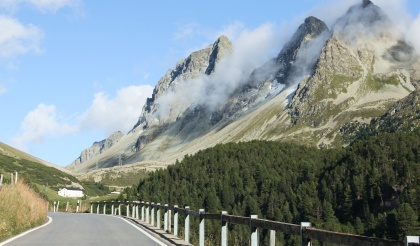
Furka Pass has always had a special place in the imagination of drivers. It connects the canton of Uri with Valais, climbing to 2,429 metres above sea level, and it does it with the kind of drama modern roads rarely offer anymore. There are faster roads in Switzerland. There are wider roads. There are routes with smoother surfaces and easier overtaking. But Furka has something different: character.
This is a road that feels analogue in the best possible way. The corners arrive with rhythm. The stone walls sit close to the edge of the road. The gradients make you work with the engine, brakes, and steering instead of simply cruising. The view changes constantly: dark tunnels, exposed cliff sections, wide alpine bowls, glacier landscapes, and sharp hairpins that look almost too perfect to be real.
But Furka Pass is not only relevant because it is beautiful. It is relevant because the way people experience cars is changing. The future of driving is not only about speed anymore. It is about curated road trips, emotional mobility, slow travel, electric grand touring, content-worthy landscapes, and meaningful experiences. In that world, Furka Pass is no longer just a road. It is a destination.
For Grande Turismo, this is exactly the kind of route that defines the future of automotive tourism. Drivers are not only looking for tracks and tickets. They are looking for roads that feel special, moments that feel cinematic, and experiences that justify taking the car out for more than a short Sunday drive.
The Furka Pass Experience
Driving Furka Pass is not about attacking every corner. It is about flow. The road rewards smooth inputs, patience, and timing. You climb, pause, look around, descend, and then immediately want to turn back and do it again from the other direction.
The pass is fully paved and generally suitable for normal road cars, sports cars, classic cars, GT cars, motorcycles, and modern EVs. But it is still an alpine pass, which means it demands respect. Weather can change quickly. Visibility can disappear. Buses can appear around tight bends. Cyclists, tourists, photographers, camper vans, and motorcycles all share the same ribbon of tarmac.
That complexity is part of the experience. Furka Pass feels alive. It is not a closed road. It is not a sterile driving facility. It is a real mountain route, with real conditions, real consequences, and real rewards.
At its best, Furka Pass gives you everything a driver wants: elevation, rhythm, scenery, history, danger in the distance, and beauty everywhere.
Best Time to Drive Furka Pass
Furka Pass is usually open only during the warmer months, often from late May or June until October, depending on snow and weather conditions. This is not a road where you simply trust your calendar. You check the pass status before going, especially early or late in the season.
The best driving window is usually from late June to early October. By then, the snow has normally cleared, the surface is more predictable, and the road is fully alive. July and August bring the most stable weather, but also the most traffic. September is often the sweet spot: cooler air, fewer tourists, beautiful light, and a more relaxed atmosphere.
Early Morning
If you want the purest driving experience, go early. Very early. The road before the tourist traffic wakes up feels completely different. The air is cold, the light is soft, and the mountains still feel quiet. This is when Furka Pass becomes a driver’s road rather than a sightseeing route.
Early morning is also the best time for photography. The shadows give the road more depth, the viewpoints are less crowded, and the famous sections near Hotel Belvédère feel almost cinematic.
Late Afternoon
Late afternoon is another strong option. The light becomes warmer, traffic starts to thin out, and the road takes on a more dramatic mood. If you are planning content, a car shoot, or a more emotional drive, this is often the moment when the pass looks its best.
The only risk is weather. In the mountains, late-day clouds can build quickly. If visibility drops, slow down and treat the pass with respect. Furka is beautiful, but it does not forgive arrogance.
Avoid Peak Tourist Hours
The least enjoyable time is usually late morning to mid-afternoon in high season. This is when you are most likely to meet camper vans, buses, cyclists, groups of tourists stopping in awkward places, and drivers who are more focused on the view than the road.
If your goal is a relaxed scenic drive, this can still be fine. But if your goal is rhythm, flow, and clean sections of road, plan around the crowds.
Best Route Options for Furka Pass
Furka Pass can be driven as a standalone route, but it becomes much more powerful when combined with nearby passes. This region is one of the best driving playgrounds in Switzerland because several legendary roads sit close together.
Route 1: Andermatt to Gletsch
This is the classic Furka Pass route. Starting from Andermatt, you drive towards Realp and begin the climb into one of Switzerland’s most iconic alpine landscapes. The road rises steadily, the corners tighten, and the views open up as you approach the higher sections.
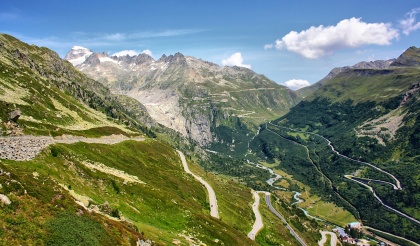
This direction gives you a beautiful build-up. You leave the valley, climb into the mountains, pass dramatic viewpoints, and eventually reach the famous area around Hotel Belvédère and the Rhône Glacier. From there, the descent towards Gletsch is one of the most visually impressive parts of the drive.
This is the route to choose if you want the full cinematic Furka experience in the most natural order.
Route 2: Gletsch to Andermatt
Driving Furka from Gletsch to Andermatt gives the road a different personality. The climb feels more immediate, the hairpins come quickly, and the views behind you become more dramatic as you gain elevation.
This direction is excellent if you are combining Furka with Grimsel Pass or Nufenen Pass. It also gives you a strong final descent towards Realp and Andermatt, making it ideal for drivers who want to end the route in a town with fuel, food, hotels, and other pass options.
Route 3: The Big Three Alpine Loop
For serious driving enthusiasts, Furka Pass is best experienced as part of a larger alpine loop with Grimsel Pass and Susten Pass. This is one of Switzerland’s most legendary driving combinations. It gives you three different road personalities in one day.
Furka is dramatic and cinematic. Grimsel is wide, flowing, and almost grand in scale. Susten is smooth, fast, and beautifully engineered. Together, they create one of the finest road trip experiences in Europe.
This is not a route to rush. Start early, plan fuel stops, take proper breaks, and give yourself time to enjoy the scenery. The mistake many drivers make is trying to “complete” the loop. The better approach is to experience it.
What Makes Furka Pass Special for Car Enthusiasts
Many mountain roads are beautiful, but not all of them are enjoyable to drive. Some are too narrow. Some are too crowded. Some have poor visibility or inconsistent surfaces. Furka Pass sits in a rare category where the road is visually spectacular and mechanically engaging.
The Hairpins
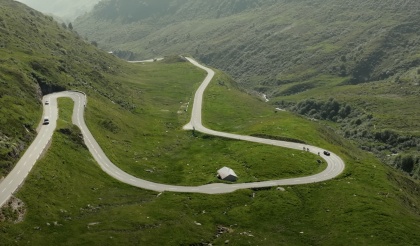
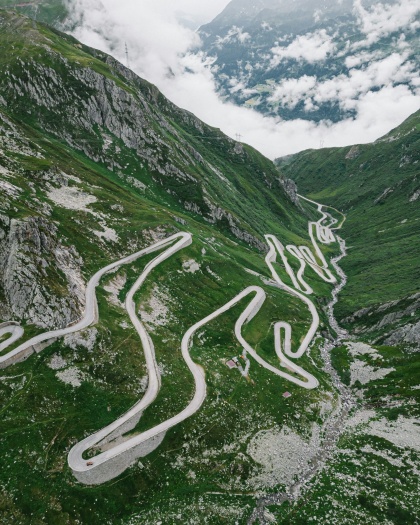
Furka Pass has several famous hairpin sections, especially near Realp, Hotel Belvédère, and the descent towards Gletsch. These corners are not just scenic; they define the driving rhythm of the road.
In a lightweight sports car, the hairpins feel technical and rewarding. In a GT car, they become a test of patience, brake control, and throttle discipline. In a classic car, they feel like stepping back into another era of motoring. In an EV, they highlight instant torque, regenerative braking, and the strange silence of modern performance in an ancient landscape.
The key is not aggression. The key is smoothness. Furka rewards drivers who look ahead, position the car correctly, and let the road come to them.
The Scenery
The view is part of the driving experience. This is not background decoration. On Furka Pass, the scenery changes how you feel behind the wheel. The exposed sections make the road feel more dramatic. The glacier views make the experience feel bigger than the car. The stone walls and old buildings add texture and history.
This is why Furka Pass works so well for automotive storytelling. A car on this road does not just look parked in front of a mountain. It looks like it belongs to a journey.
The Atmosphere
Some roads feel engineered. Furka feels discovered. Even though it is famous, it still has moments that feel raw, remote, and slightly old-world. The abandoned Hotel Belvédère, the glacier landscape, the narrow cliffside sections, and the old pass road energy all create a sense of theatre.
It is one of the few roads where even a slow drive feels exciting.
Key Stops on Furka Pass
A great Furka Pass drive is not only about staying in motion. The stops are part of the experience. They give context to the road and turn the route into a proper memory.
Hotel Belvédère
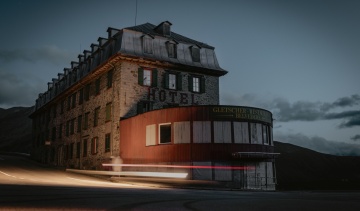
The Hotel Belvédère is one of the most recognisable buildings in Swiss automotive culture. Sitting on a dramatic bend near the Rhône Glacier, it became famous partly because of its appearance in the James Bond film Goldfinger, but its appeal goes beyond cinema.
Even though the hotel is no longer operating, the building remains an icon. It gives Furka Pass a sense of mystery and nostalgia. Park safely nearby, take your photos, and enjoy the view, but remember that this area can get busy. Do not stop in a dangerous position just for a picture. The road is still active, and visibility can be limited.
Rhône Glacier Area
The Rhône Glacier is one of the major natural highlights of the pass. It also adds a deeper meaning to the drive. Alpine glaciers are changing rapidly, and seeing one up close makes the landscape feel both powerful and fragile.
This is where Furka Pass becomes more than a driving road. It becomes a reminder that alpine tourism, climate change, mobility, and preservation are now connected. The future of road trips will not only be about where we can drive, but how responsibly we experience these places.
Gletsch
Gletsch is a small but important stop if you are linking Furka with Grimsel or heading deeper into Valais. It has that classic alpine junction feeling: roads splitting towards different adventures, motorcycles arriving, drivers checking maps, and the smell of warm brakes in the air.
It is a good place to reset before choosing your next pass.
Realp
Realp is a useful stop on the Uri side of the pass. It is often the gateway to the climb if you are coming from Andermatt. Use it as a practical checkpoint: fuel, navigation, weather, and timing.
From Realp, the road starts to become serious. This is where you stop thinking about emails and start thinking about apexes.
Driving Tips for Furka Pass
Furka Pass is not difficult in perfect conditions, but it can become demanding quickly. The best drivers are not the fastest ones here. They are the ones who understand the rhythm, respect the environment, and leave margin.
Respect the Brakes
Long alpine descents generate heat. Even modern performance cars can feel the strain if driven without mechanical sympathy. Use engine braking where appropriate, avoid riding the brakes, and give the car time to cool if needed.
If your brake pedal starts to feel soft, do not ignore it. Pull over safely and let the system recover. Furka is not a place to discover brake fade halfway down a descent.
Watch for Buses and Cyclists
Swiss PostBuses and tourist coaches use alpine roads with confidence, but they need space. On narrow sections, be patient. Do not force a gap. Do not assume the next corner is clear.
Cyclists are also common, especially in summer. Many are climbing slowly and may move unpredictably when the gradient changes. Give them room. A great drive does not require making someone else uncomfortable.
Use the Pull-Offs Properly
Furka Pass has several places where you can stop safely, but not every scenic view is a parking space. Avoid stopping in corners, on blind crests, or on narrow sections. This matters even more if you are travelling in a group.
If you are planning photography, scout proper locations and keep the cars fully off the road. The best content is never worth creating a dangerous situation.
Drive Below Your Limit
This is the most important rule. Furka Pass is not a race track. There is no runoff, no marshal, no gravel trap, and no second chance if you misjudge a corner. Drive at a pace that feels enjoyable but calm. The road is spectacular enough without trying to prove anything.
Best Cars for Furka Pass
Almost any well-maintained car can drive Furka Pass, but some cars feel especially suited to it.
Lightweight Sports Cars
Cars like a Porsche Boxster, Alpine A110, Mazda MX-5, Lotus Elise, Toyota GR86, or older 911 feel completely at home here. They are light, responsive, and easy to place. Furka rewards agility more than raw power.
Grand Tourers
A proper GT car also makes sense. Think Aston Martin Vantage, Porsche 911, BMW M4, Mercedes-AMG GT, Ferrari Roma, or Bentley Continental GT. These cars turn Furka into a more cinematic experience. You are not chasing lap times. You are crossing the Alps with style.
Classic Cars
Furka Pass and classic cars are a perfect match, but preparation matters. Cooling, brakes, tyres, and steering should all be in good condition. The experience can be magical, but only if the car is ready for altitude, gradients, and slow traffic.
Electric Performance Cars
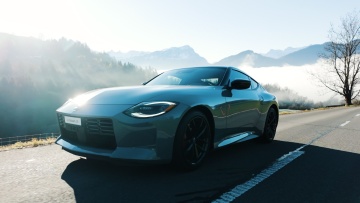
EVs are becoming more relevant for alpine road trips. Switzerland has a strong charging infrastructure, and electric cars can be surprisingly enjoyable on mountain passes thanks to instant torque and regenerative braking. The experience is different, but not worse. It is quieter, smoother, and more futuristic.
The key is planning. Check charging stops before you go, especially if combining multiple passes. Cold temperatures, elevation, spirited driving, and climate control can all affect range.
Furka Pass in the Age of Electric Grand Touring
One of the most interesting changes in automotive tourism is the rise of electric grand touring. For decades, dream road trips were built around petrol engines, exhaust notes, and fuel stops. That world is still alive, but a new one is emerging.
Switzerland is becoming one of the most EV-friendly road trip countries in Europe. Charging networks, premium hotels with chargers, electric rental options, and route-planning apps are making alpine EV travel more realistic. For Furka Pass, this creates a new type of driving experience.
An EV on Furka is almost surreal. You climb in near silence, hear more of the tyres, the wind, and the road surface, and then recover energy on the descent. It feels technical, modern, and strangely peaceful. For some enthusiasts, that will never replace the emotional pull of a combustion engine. For others, it is the beginning of a new chapter.
The bigger point is this: the future of automotive travel will not be one single format. It will include classics, supercars, EVs, motorcycles, restomods, hybrids, and curated driving communities. Furka Pass can host all of them, as long as the experience remains respectful.
Why Furka Pass Is Becoming a Content Destination
Modern road trips are not only driven. They are documented. Furka Pass is one of the most photogenic roads in Europe, which makes it a magnet for automotive photographers, creators, clubs, and brands.
The road has everything content needs: altitude, curves, texture, iconic landmarks, dramatic weather, and a strong sense of place. A car photographed on Furka does not need much explanation. The setting tells the story.
This matters because automotive events are becoming more experience-led. People no longer want only a meeting point and a route. They want a story. They want a reason to join. They want professional photos, curated stops, roadbooks, group energy, and moments that feel worth remembering.
That is why Furka Pass is not just a road for individual drivers. It is a natural location for premium driving tours, private car clubs, brand activations, EV road trips, supercar rallies, classic car weekends, and creator-led automotive experiences.
Responsible Driving on Furka Pass
Furka Pass is popular, and popularity brings pressure. More cars, more tourists, more cyclists, more motorcycles, and more content creators mean the road needs respect.
Responsible driving is not boring. It is what keeps roads like this open, enjoyable, and welcome to enthusiasts. Loud exhausts in villages, dangerous overtakes, blocking viewpoints, or treating public roads like private stages damages the reputation of the entire car community.
The future of automotive enthusiasm depends on showing that car culture can be passionate and respectful at the same time.
Keep Noise Under Control
Enjoy the sound of your car, but do not abuse it in villages, tunnels, or crowded viewpoints. Alpine regions are not theme parks. People live there, work there, and share the road with visitors.
Do Not Turn the Pass Into a Race
Furka Pass is a public road. The goal is not to be the fastest. The goal is to have a memorable drive and arrive safely. There is no honour in making the road unsafe for others.
Support Local Places
Stop for coffee, lunch, fuel, or a hotel stay in the region. Automotive tourism has real economic value when drivers support local businesses. This is how car culture becomes part of sustainable tourism rather than just passing traffic.
Practical Checklist Before Driving Furka Pass
Check pass status: Furka Pass has seasonal closures and can be affected by snow, weather, or roadworks. Always check before departure.
Plan fuel or charging: Do not arrive at the pass with low range. Mountain routes can consume more energy than expected.
Bring layers: Even in summer, temperatures at altitude can be much colder than in the valleys.
Start early: If driving enjoyment matters, early morning is your best friend.
Respect other road users: Buses, cyclists, motorcycles, tourists, and locals all share the same road.
Plan photo stops safely: Never stop in blind corners or block traffic for content.
Keep your schedule flexible: The best alpine drives leave space for weather, traffic, and spontaneous stops.
Final Thoughts
Furka Pass is one of those roads that reminds you why driving still matters. Not commuting. Not moving from A to B. Driving. The kind where you wake up early, check the weather, choose the right car, and feel the anticipation before the first climb even begins.
It is cinematic without trying. Technical without being intimidating. Famous without losing all of its magic. And in a world where automotive experiences are becoming more digital, more electric, and more curated, Furka Pass remains beautifully physical.
You feel the gradient. You smell the brakes. You hear the tyres change tone through the corners. You watch the light move across the mountains. You stop, look back at the road, and understand why this place keeps pulling drivers from all over the world.
Furka Pass is not just one of Switzerland’s best roads. It is one of Europe’s great automotive experiences.