Road TripsSwitzerland

Gotthard Pass Driving Guide: Switzerland’s Historic Alpine Icon

Drive Gotthard Pass in Switzerland: Tremola road, route tips, best season, viewpoints, EV planning, safety advice and alpine driving history.

SHARE POST

GET STARTED
Contact us

Gotthard Pass Driving Guide: Switzerland’s Historic Alpine Icon

Some mountain roads impress you with speed. Gotthard Pass impresses you with weight. Not physical weight, although the granite, tunnels, cobblestones, and hairpins certainly have plenty of that. It impresses you with historical weight. You feel it in the old Tremola road, in the stone walls, in the switchbacks stacked above Airolo, and in the strange sensation that you are not simply driving across the Alps — you are driving through one of Europe’s most important corridors of movement, trade, engineering, and culture. For car enthusiasts, Gotthard Pass is not just another scenic Swiss road. It is a living museum with a steering wheel. In this guide, you will learn the best route, when to drive it, why the Tremola matters, how to plan the journey, what to expect behind the wheel, and why Gotthard is becoming even more relevant in the future of EV road trips, slow travel, infrastructure tourism, and curated automotive experiences.

Why Gotthard Pass Is More Than Just a Mountain Road

Gotthard Pass is one of those places where Switzerland stops being a postcard and becomes a machine. A beautiful machine, yes, but still a machine. Roads, railways, tunnels, military history, trade routes, tourism, mountain villages, and modern mobility all meet here. This is not just a pass. It is a national artery.

For centuries, the Gotthard route has connected northern and southern Europe. It has carried traders, armies, travellers, postal coaches, engineers, railway builders, tunnel workers, truck drivers, tourists, motorcyclists, cyclists, and now EV road-trippers looking for the perfect blend of heritage and technology. Few roads in Europe contain that much layered meaning.

That is exactly why Gotthard feels different from other Swiss passes. Furka is cinematic. Susten is elegant. Grimsel is raw. Nufenen is high and serious. Gotthard is historic. It is the road that makes you slow down mentally, even when the tarmac gets interesting. You are not only looking at corners. You are looking at the evolution of mobility.

The modern relevance of Gotthard Pass

Gotthard Pass is especially relevant now because automotive travel is changing. Car enthusiasts are no longer searching only for speed, noise, and horsepower. They are searching for story-driven routes, heritage driving experiences, EV-compatible road trips, slow-travel itineraries, and roads that feel meaningful enough to become a destination by themselves.

Gotthard delivers all of that. It has the historic Tremola road, the modern pass road, the famous Gotthard tunnel, dramatic alpine scenery, and a strategic location between German-speaking Switzerland and Ticino. It can be driven as a short pass experience, as part of the Grand Tour of Switzerland, or as one chapter in a bigger alpine road trip.

At the same time, the wider Gotthard region is becoming a symbol of future mobility. The construction of the second Gotthard road tunnel, expected to enter service around 2030, shows how important this corridor remains for Swiss and European transport. That makes the old pass road even more interesting. While the future of mobility is being carved through the mountain, the past is still waiting above it, paved in stone and wrapped in hairpins.

Where Gotthard Pass Is Located

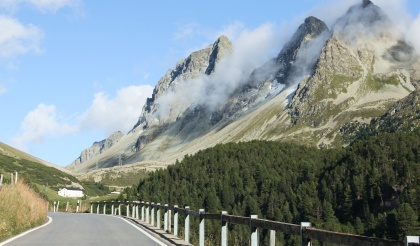
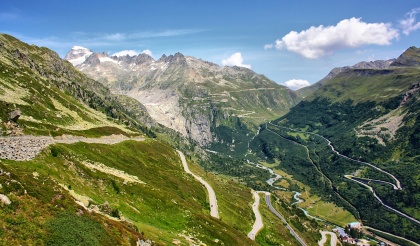
Gotthard Pass connects Andermatt in the canton of Uri with Airolo in Ticino. The summit sits at around 2,106 metres above sea level, making it a proper alpine crossing, but not an extreme one compared with some of Switzerland’s highest passes.

Its location is one of its biggest strengths. From the north, Andermatt acts almost like a base camp for Swiss driving roads. From here, you can connect Gotthard with Furka Pass, Oberalp Pass, Susten Pass, Grimsel Pass, Nufenen Pass, and the wider central Alpine network. From the south, Airolo opens the door to Ticino, with its warmer climate, Italian language, palm-lined lakes, espresso stops, and completely different atmosphere.

This north-south contrast is part of the magic. You can leave the more rugged, German-speaking alpine world in the morning and arrive in Ticino feeling like you have crossed into another country, even though you are still in Switzerland. That transition is not just geographical. It is cultural, architectural, emotional, and even culinary.

The Two Faces of Gotthard: Tremola vs Modern Pass Road

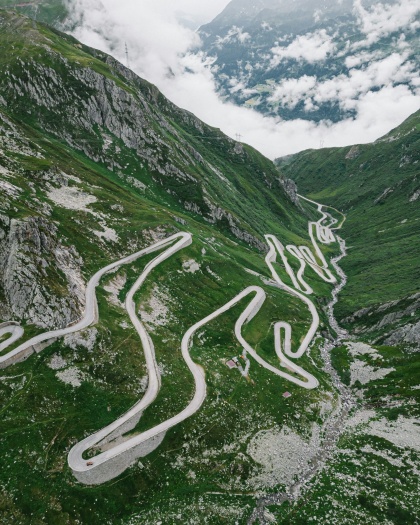
The Gotthard experience is really two experiences in one. There is the modern pass road, which is smoother, wider, faster, and more practical. Then there is the Tremola, the historic cobbled road that climbs from Airolo towards the pass with a series of beautifully stacked hairpins.

If you are a driving enthusiast, the Tremola is the reason you came. It is one of the most iconic road sections in Switzerland and one of the most atmospheric in Europe. The road surface, the stone walls, the tight bends, the rhythm, the views down towards Airolo — everything feels like it belongs to another era.

But it is important to understand what the Tremola is and what it is not. It is not a fast road. It is not a place to chase lap times, make noise, or pretend you are on a closed rally stage. The cobblestone surface changes the entire driving experience. Grip is different. Braking distances can be longer. The car moves differently. The steering feels more alive, but also less precise than on perfect tarmac. That is the point.

The Tremola road experience

Driving the Tremola is like switching from digital to analogue. Modern roads often try to remove imperfections. The Tremola celebrates them. The surface talks. The car vibrates. The tyres hum differently. The hairpins arrive with a sense of theatre rather than aggression.

In a classic car, the Tremola is almost unbeatable. You feel connected to the era in which driving required more patience, more mechanical sympathy, and more respect for the road. In a modern sports car, it is still brilliant, but you need the right mindset. A stiff suspension setup can make the cobbles feel busy. A very low car may require caution. A heavy performance SUV may feel less graceful than expected.

The best car for the Tremola is not necessarily the most powerful one. It is the car that makes you enjoy the details. Good steering, good visibility, manageable size, and a sense of character matter more than straight-line speed. A lightweight roadster, an air-cooled Porsche, a classic Alfa Romeo, a small hot hatch, or a well-balanced touring car can feel more at home here than a 700-horsepower monster.

The modern Gotthard pass road

The modern pass road is the better option if you want a smoother, more predictable drive. It is wider, easier on the car, and more comfortable for daily drivers, EVs, touring cars, and people who simply want the scenic crossing without the cobbled drama.

That does not make it boring. The modern road still has strong alpine character, wide views, changing elevation, and enough corners to keep the driver engaged. It simply feels more like a road built for movement, while the Tremola feels like a road built for memory.

For the complete experience, drive both if conditions allow. Use one direction for the Tremola and the other for the modern road. That gives you the contrast: history and practicality, cobbles and tarmac, old Switzerland and modern Switzerland.

Best Time to Drive Gotthard Pass

Gotthard Pass is seasonal. The tunnel operates year-round, but the pass road normally opens in late spring or early summer and closes again in autumn, depending on snow and weather conditions. In many years, the main pass road is available roughly from May or June until October or November. The Tremola can open later than the main road because of snow clearing, surface conditions, and maintenance needs.

The most important rule is simple: check the current road status before you go. Do not assume the pass is open because the weather is sunny in Zurich, Lucerne, Lugano, or Milan. Alpine roads live by their own rules. A road can be dry in the valley and closed higher up. Weather, rockfall, overnight restrictions, snow, fog, and roadworks can all affect access.

June and early summer

Early summer can be spectacular. Snow may still sit beside the road, the air feels fresh, and the mountains have that dramatic post-winter clarity. This is a great time for photography and for travellers who want the feeling of entering the high Alps without the peak summer crowds.

However, early summer also requires flexibility. The Tremola may not always be open immediately when the main pass road opens. Conditions can still be cold at the summit. If you are driving a performance car on summer tyres, check temperatures carefully. If you are driving a classic car, pay attention to cooling and brakes after the winter storage season.

July and August

July and August offer the most reliable weather and the easiest planning conditions, but also the most traffic. Expect motorcycles, cyclists, camper vans, rental cars, tourist buses, and plenty of people stopping for photos. This is not necessarily a problem, but it changes the rhythm of the drive.

In peak summer, start early. Sunrise or early morning is the sweet spot. The road is quieter, the light is better, the air is cooler, and the Tremola feels more special. By late morning, the pass can become more crowded, especially on weekends and during holiday periods.

September and early October

For many enthusiasts, September is the best month. The summer crowds begin to fade, the light becomes warmer, and the road still usually offers good conditions. Early October can also be brilliant, with crisp air and a more atmospheric landscape, but the risk of cold weather and sudden changes increases.

Autumn on Gotthard has a different personality. It feels more serious, less touristic, and more emotional. The road becomes less about summer freedom and more about the final great drives before winter takes back the mountain.

Best Direction to Drive Gotthard Pass

If you want the most iconic experience, drive from Airolo up the Tremola towards the Gotthard summit. This direction gives you the classic view of the hairpins climbing above Ticino. The road stacks itself beautifully, and every bend feels like another layer in the story.

Starting from Airolo also creates a wonderful cultural transition. You leave the warmer, Italian-speaking side and climb into the rougher, colder alpine world. The road becomes older, tighter, and more dramatic as you rise. It feels like entering a time capsule.

Driving from Andermatt towards Airolo is also excellent, especially if you are linking Gotthard with Furka or Oberalp. In that direction, the descent into Ticino is satisfying and scenic, but the Tremola’s hairpin drama is often more visually powerful when climbed rather than descended.

The enthusiast’s recommended route

For a focused Gotthard experience, start in Airolo, climb the Tremola, stop at the Gotthard summit, then descend towards Andermatt on the modern road. After that, continue towards Furka Pass, Oberalp Pass, or return depending on your route.

For a full driving day, consider this itinerary: Andermatt → Furka Pass → Nufenen Pass → Airolo → Tremola → Gotthard Pass → Andermatt. This is a serious alpine loop with different road characters, big views, and plenty of driving variety. Do not rush it. The point is not to collect passes like badges. The point is to experience them properly.

What to Expect Behind the Wheel

Gotthard Pass is not a single driving mood. It changes depending on which road you choose. The Tremola is slow, textured, technical, and historic. The modern road is smoother, more flowing, and easier to drive with confidence. Together, they create one of the most complete driving experiences in Switzerland.

The Tremola demands patience. The road surface is cobbled, the corners are tight, and the best pace is a respectful one. You should drive it like you are handling something valuable. Because you are. This is not just infrastructure. It is heritage.

The modern pass road allows a more relaxed rhythm. You can enjoy the steering, the scenery, and the elevation changes without worrying as much about the surface. But even here, it remains a public alpine road. Cyclists, motorcyclists, buses, hikers, and tourists are all part of the environment.

For sports cars

In a sports car, Gotthard is about choosing the right road for the right experience. On the modern road, a sports car feels composed and satisfying. On the Tremola, it becomes more about delicacy. Very stiff cars can feel nervous on the cobbles, while cars with a bit of suspension travel and good steering feedback often feel more enjoyable.

A manual gearbox adds a lot to the experience. The climb rewards good gear choice, smooth throttle inputs, and calm braking. This is not a road where you need maximum attack. It is a road where you enjoy being part of the machine.

For classic cars

Gotthard is one of the best passes in Switzerland for classic cars because the setting matches the character. The Tremola feels made for older machines. The slower pace, the mechanical sounds, the surface texture, and the historical atmosphere all work together beautifully.

Preparation is essential. Check cooling, brakes, tyres, oil, and fuel before starting. Older cars can handle alpine passes perfectly well when maintained properly, but they do not enjoy neglect. Give the car time. Stop at the top. Let it cool. Take photos. Listen to the ticking metal. That is part of the experience.

For EV drivers

Gotthard is increasingly relevant for EV road trips. Switzerland has one of the most mature charging environments in Europe, and the Grand Tour of Switzerland has become strongly associated with electric travel. Gotthard fits perfectly into that future because it combines range planning, elevation change, regeneration, and destination value.

EVs are excellent on climbs because of instant torque, and they can recover energy on descents through regenerative braking. But do not treat regeneration as magic. Cold temperatures, high speed, heavy acceleration, heating, air conditioning, passengers, and elevation all affect consumption. Plan charging before the pass, especially if you are combining Gotthard with Furka, Nufenen, or a longer Ticino route.

Key Stops and Viewpoints

Gotthard is not a road to drive without stopping. The stops are part of the experience because they help you understand the scale and history of the place. Plan time for viewpoints, photos, coffee, and simply standing still for a moment.

Airolo

Airolo is the natural starting point for the Tremola climb. It sits at the southern foot of the pass and gives you that distinct Ticino feeling before the road begins to climb. This is a good place to fuel up, charge, check the weather, and reset before starting the alpine section.

If you are coming from Lugano, Bellinzona, or the wider Ticino region, Airolo feels like the gateway from Mediterranean Switzerland into high Alpine Switzerland. The change happens quickly. One moment the atmosphere feels southern. A few kilometres later, you are climbing into stone, wind, and mountain history.

The Tremola hairpins

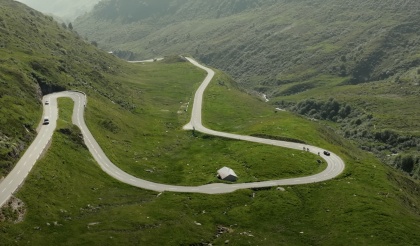
The Tremola hairpins are the visual signature of Gotthard Pass. This is where the road becomes unforgettable. The switchbacks are beautifully arranged, the stonework gives the route a unique identity, and the views back towards the valley create one of the best automotive photography settings in Switzerland.

Stop only where it is safe and legal. Do not block the road for photos, and do not park on blind corners. The Tremola is narrow in places, and it deserves respect. The best images come from patience, not from creating problems for everyone else.

Gotthard summit

The summit area is the natural pause point. Here, the road, history, and landscape come together. You will find places to stop, eat, walk, and take in the atmosphere. It is also the right moment to check your car after the climb.

Look at the tyres. Smell the brakes. Check temperatures. If you are in a classic or performance car, this short pause is not just romantic. It is sensible. Alpine driving is mechanical work, and good drivers listen to their cars.

Andermatt

Andermatt is one of Switzerland’s great driving bases. From here, you can build multiple routes across some of the country’s best passes. It also offers hotels, restaurants, fuel, charging options, and access to other alpine roads.

If you want to turn Gotthard into a proper weekend, Andermatt is one of the best places to stay. Start early, drive before the crowds, return for lunch, and then choose another pass in the afternoon if conditions are good.

Vehicle Preparation Before Driving Gotthard Pass

Gotthard is accessible, but it is still an alpine road. Preparation matters. The pass can expose weak brakes, old tyres, low fluids, poor planning, and overconfident driving very quickly.

Brakes: Make sure pads, discs, and brake fluid are in good condition. Descents can build heat quickly, especially in heavier cars.

Tyres: Check pressure, tread depth, and age. On the Tremola, tyre condition matters because the cobbled surface behaves differently from normal tarmac.

Cooling: Long climbs can stress older cooling systems. This is especially important for classic cars and high-performance vehicles.

Ground clearance: If your car is very low, approach the Tremola with caution. The cobbles and road transitions may not be friendly to extreme setups.

Fuel or charge: Start with enough range. Do not rely on the summit to solve poor planning.

Offline maps: Download your route. Mountain signal can be inconsistent, and road closures or detours can change your plan.

Weather: Check conditions on both sides of the pass and at altitude. The weather in Airolo, Andermatt, and the summit can be very different.

How to Drive Gotthard Pass Properly

The best way to drive Gotthard is with respect. On the Tremola, slow down and enjoy the detail. Let the car breathe. Feel the surface. Do not fight the road. The point is not to dominate it. The point is to experience it.

On the modern road, maintain smooth inputs and look far ahead. Alpine driving rewards anticipation. Brake early, turn calmly, and accelerate only when you can see clearly. Never assume the next corner is empty. Cyclists, motorcycles, animals, stopped cars, and tourists can appear quickly.

Use the gearbox intelligently

Whether you are driving a manual, automatic, hybrid, or EV, control your speed intelligently on descents. In a manual car, use lower gears to reduce brake load. In an automatic, use manual mode or downhill assist where appropriate. In an EV, use regeneration but remain ready to brake normally when needed.

A common mistake is braking too late and too often. That overheats brakes and makes the drive less smooth. Good alpine driving feels calm from the passenger seat. If your passenger is grabbing the door handle, you are probably doing it wrong.

Respect cyclists and motorcyclists

Gotthard is popular with cyclists and motorcyclists. Give cyclists space, especially on the Tremola where the road can be narrow and the surface can make lines less predictable. With motorcycles, avoid sudden moves and do not turn the road into a competition.

Everyone is there for the same reason: the road is special. The best drivers make the road better for everyone sharing it.

Do not drive for the camera

Gotthard is incredibly photogenic, and that creates a modern problem. Too many people start driving for content instead of safety. Do not stop in stupid places, do not block traffic, and do not stage rolling shots on blind sections. The road is not a private film set.

The strongest content comes from good timing, good light, and good behaviour. A respectful photo at sunrise will always look better than chaos in the middle of the day.

Why Gotthard Matters for the Future of Automotive Travel

Gotthard Pass is becoming more important, not less. In a world where mobility is changing fast, it represents the full timeline of travel: historic road, modern road, road tunnel, railway tunnel, and future infrastructure investment all in one corridor.

This makes Gotthard a perfect symbol for the next era of automotive culture. The future will not be only about combustion versus electric, old versus new, or speed versus sustainability. The future will be about meaning. Why do we drive? Where do we drive? What stories do these roads carry? How can car culture become more responsible without becoming boring?

Gotthard answers those questions better than most places. You can drive a classic car over the Tremola in the morning, charge an EV in the region in the afternoon, read about tunnel engineering, and finish the day in Ticino with dinner. That is not just mobility. That is culture.

Infrastructure tourism

Infrastructure is becoming part of the travel experience. People are increasingly interested in tunnels, bridges, dams, railways, charging networks, and the engineering behind movement. Gotthard is one of the best places in Europe to explore that trend because the road and tunnel systems are not hidden background elements. They are the story.

The second Gotthard road tunnel project reinforces this relevance. While the new tunnel is designed for future traffic management and refurbishment of the existing tube, the old pass road remains the emotional route. One solves mobility. The other creates memory.

EV road trips and charging confidence

EV travel is moving from novelty to normality. Drivers are becoming more confident with range planning, hotel charging, rapid chargers, and regenerative braking. Mountain routes like Gotthard are ideal for showing how electric touring can become enjoyable rather than stressful.

The key is planning. EV drivers should not simply copy old petrol-road-trip habits. They should think in terms of charging windows, overnight stops, elevation, temperature, and route density. Done properly, an EV drive over Gotthard can feel futuristic without losing the romance of the road.

Slow travel and premium driving experiences

Gotthard also fits the rise of slow travel. That might sound strange for a driving road, but it makes perfect sense. Slow travel does not mean moving slowly all the time. It means travelling with intention. Less rushing. More depth. More local context. More respect.

A proper Gotthard trip is not about blasting over the pass and disappearing. It is about understanding the Tremola, stopping at the summit, exploring Andermatt or Airolo, connecting the route with Ticino, and treating the road as an experience rather than a shortcut.

Recommended Gotthard Pass Itinerary

For the best one-day experience, start in Andermatt or Airolo, depending on your direction. If you want the most iconic Tremola experience, begin in Airolo and climb towards the summit. Start early to avoid traffic and get the best light.

Drive the Tremola slowly and deliberately. Stop only where safe. Continue to the Gotthard summit for coffee, photos, and a short walk. Then descend towards Andermatt on the modern road for contrast.

If you have more time, connect the drive with Furka Pass, Oberalp Pass, or Nufenen Pass. For a two-day trip, stay overnight in Andermatt or Ticino. This gives you time to enjoy the pass without turning the day into a rushed checklist.

For EV drivers, plan charging before starting the loop and consider overnight charging if staying in the region. For classic car drivers, plan shorter stages, more stops, and avoid the hottest part of the day if your car has known cooling limitations.

Final Verdict: Is Gotthard Pass Worth Driving?

Yes. Gotthard Pass is absolutely worth driving, but not because it is the fastest or most dramatic road in Switzerland. It is worth driving because it has something many roads do not have: soul.

The Tremola alone makes the journey special. Add the summit, the modern pass road, the Andermatt connection, the Ticino contrast, and the wider Gotthard story, and you have one of the most complete driving experiences in the Alps.

This is a road for people who care about more than horsepower. It is for drivers who love history, mechanical feel, road design, alpine culture, and the feeling of moving through a landscape that has shaped Europe for centuries.

Bring the right mindset. Check the road status. Start early. Respect the cobbles. Respect cyclists. Stop at the summit. Take the long way if you can. And when the Tremola begins to climb above Airolo, do not rush it.

Gotthard Pass is not just a road across Switzerland. It is Switzerland explaining itself through hairpins, stone, tunnels, and time.

Related Articles
Explore all