Susten Pass Driving Guide: Route, Stops and the Perfect Alpine Day
Plan a proper Susten Pass drive, from the Gadmen valley to Wassen: road character, glacier walks, 2027 access updates and ways to build a memorable Alpine day.
Susten is the sort of road that makes you adjust the day's plans. You arrive expecting a mountain crossing, then discover that the crossing is the activity: a valley opening ahead, a bridge tracing the hillside, a tunnel cutting briefly through the rock and another bend revealing an entirely different view. The destination begins to feel rather beside the point.
For an enthusiast, its attraction is the variety. There are tighter turns and open sections, villages and exposed upper slopes, carefully engineered structures and a landscape that remains much larger than the road. You can appreciate all of it without needing an exotic car or a heroic approach to the accelerator.
This guide explains the actual route, the best ways to build a day around it and the details that matter when a beautiful idea meets a real mountain. That includes seasonal access, a 2026 bridge-work notice and why the famous three-pass loop deserves more thought than simply adding three names to your navigation.
First, get Susten's geography right
The Susten Pass road links Innertkirchen in the canton of Bern with Wassen in the canton of Uri. The published crossing is about 46 kilometres, with the road reaching approximately 2,224 metres at the summit tunnel. On the Bernese side, you travel through the Gadmen valley; on the Uri side, the Meien valley leads towards the Reuss valley at Wassen.
Andermatt is a useful base for a wider Alpine trip, but it is not the eastern endpoint of Susten. From Andermatt, the approach runs down through the Schöllenen area and Göschenen to Wassen, where you turn towards the pass. Equally, Meiringen lies near Innertkirchen and works as a base without being the pass road's western terminus.
This distinction becomes important when planning your day. A map estimate for Wassen to Innertkirchen does not include breakfast in Andermatt, the approach drive, lunch, photo stops or a glacier walk. For a first visit, reserve a half-day for Susten itself if you want several comfortable pauses. Add the journey from your accommodation separately.
Use the summit and the correct valley junctions as navigation waypoints. Otherwise a device optimising the journey between two distant hotels may sensibly avoid the very road you came to drive.
A road designed around the car, with a much older backstory
The modern Susten road took shape in the late 1930s and 1940s, designed for motor traffic rather than merely squeezing cars onto a narrow mule track. But the crossing itself is older: earlier trade routes and strategic military concerns shaped its history long before the modern carriageway arrived.
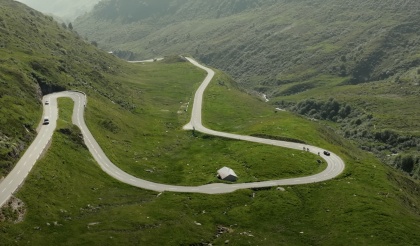
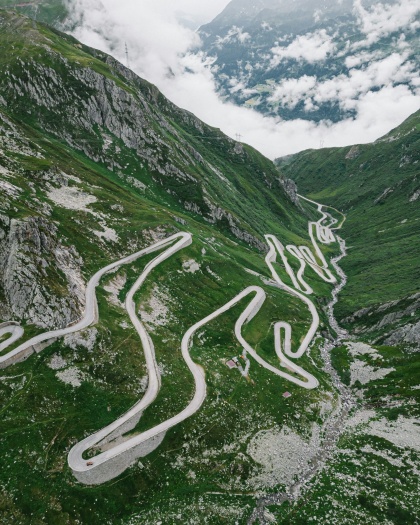
That combination helps explain the experience. There is a deliberate quality to the road's alignment, yet it still belongs to a demanding landscape. Engineering solves one problem at a time: a bridge carries traffic across a hollow, a tunnel avoids an awkward face of rock, and another bend gains the height that the valley will not give away for free.
Notice those transitions as you travel. They are more interesting than declaring every corner perfect. Susten's reputation does not guarantee identical surfacing, visibility or width throughout the route. The reward is understanding how the road moves through its surroundings and adjusting your driving to each section.
When to go, and what to check in 2026
Susten closes in winter and is often among the later Swiss passes to reopen. June should be treated as a possibility, not a booking guarantee. For 2026, Uri announced the seasonal reopening for 12 June at noon. A separate weather-related closure at the end of June, followed by reopening on 2 July, illustrates why even a summer itinerary needs a fresh check.
Before setting off, read the Susten pass-status information and any current cantonal notices. Check the weather for the mountain and both approaches, rather than relying on a pleasant forecast in your starting town. An accessible lower valley is not proof that the summit crossing is available.
Uri also announced work at the Untere Rässeggbach bridge, planned to continue until mid-October 2026 with alternating traffic controlled by lights. Consult the cantonal works notice alongside live road information when planning your journey. Allow flexibility instead of promising yourself a completely uninterrupted run.
For a first trip, choose a clear day within the confirmed open season. September can offer lovely light and enough time for a generous itinerary, although cold weather can still arrive. July and August provide long days, but you will share the route with plenty of other people who had exactly the same excellent idea.
Leaving early can help you avoid a compressed schedule. It does not make darkness, wet surfaces or poor visibility desirable. A calm departure after breakfast is often a better start than an ambitious sunrise mission that leaves everyone cold, hungry and already behind schedule.
Which direction makes the better drive?
Innertkirchen to Wassen: build towards the glacier landscape
For a first crossing, this is our recommendation when your accommodation makes it convenient. The western approach gives you the Gadmen valley, a developing sequence of bends and the Steingletscher area before the summit tunnel. It creates a satisfying progression from lived-in valley to open mountain country.
It also places a substantial walking or lunch stop before the tunnel. You can decide at Steingletscher whether you have time for a longer excursion, then continue over the summit and descend through the Meien valley. The practical advantage is simple: your main activity is not left until the end of a tiring day.
Wassen to Innertkirchen: save the western reveal
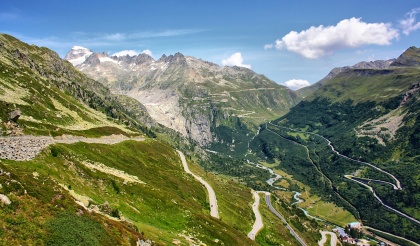
From Wassen, the route climbs through the Meien valley towards the summit. Crossing the short tunnel then introduces the Bernese side and the unfolding views towards the Gadmen valley and Steingletscher. If you enjoy a marked change of scenery midway through the drive, this direction makes an excellent case for itself.
It also suits a trip based in Andermatt or arriving along the Gotthard corridor. Finish around Innertkirchen or Meiringen, where you can make the next day's plan without immediately adding another summit. There is no need to drive a lengthy positioning route merely to follow someone else's preferred direction.
Drive Susten in five distinct stages
1. Innertkirchen: choose the right mountain
Innertkirchen is where the routes towards Susten and Grimsel separate. Stop for any last practical tasks before leaving the junction behind: navigation, food for a walk, fuel or a planned charging session. It is much easier to solve a small omission here than to discover it after everyone has become attached to a remote summit picnic.
As you head towards the Gadmen valley, let the lower road set a comfortable pace. This part of the trip should feel like arriving in a place, not waiting for the interesting bit to start. The contrast with the upper road is part of what makes the crossing memorable.
2. Gadmen: give the valley some attention
Gadmen's village buildings and mountain setting provide a useful pause before the higher climb. If your group wants a coffee or a stroll, this is the kind of stop that prevents a driving holiday from becoming an uninterrupted view through a windscreen.
It is also where the wider valley offers tempting distractions. Decide whether you are crossing Susten today or using it to reach a longer mountain activity. Both are good plans; trying to do both without changing the timetable is where the trouble begins.
3. The climb towards Steingletscher
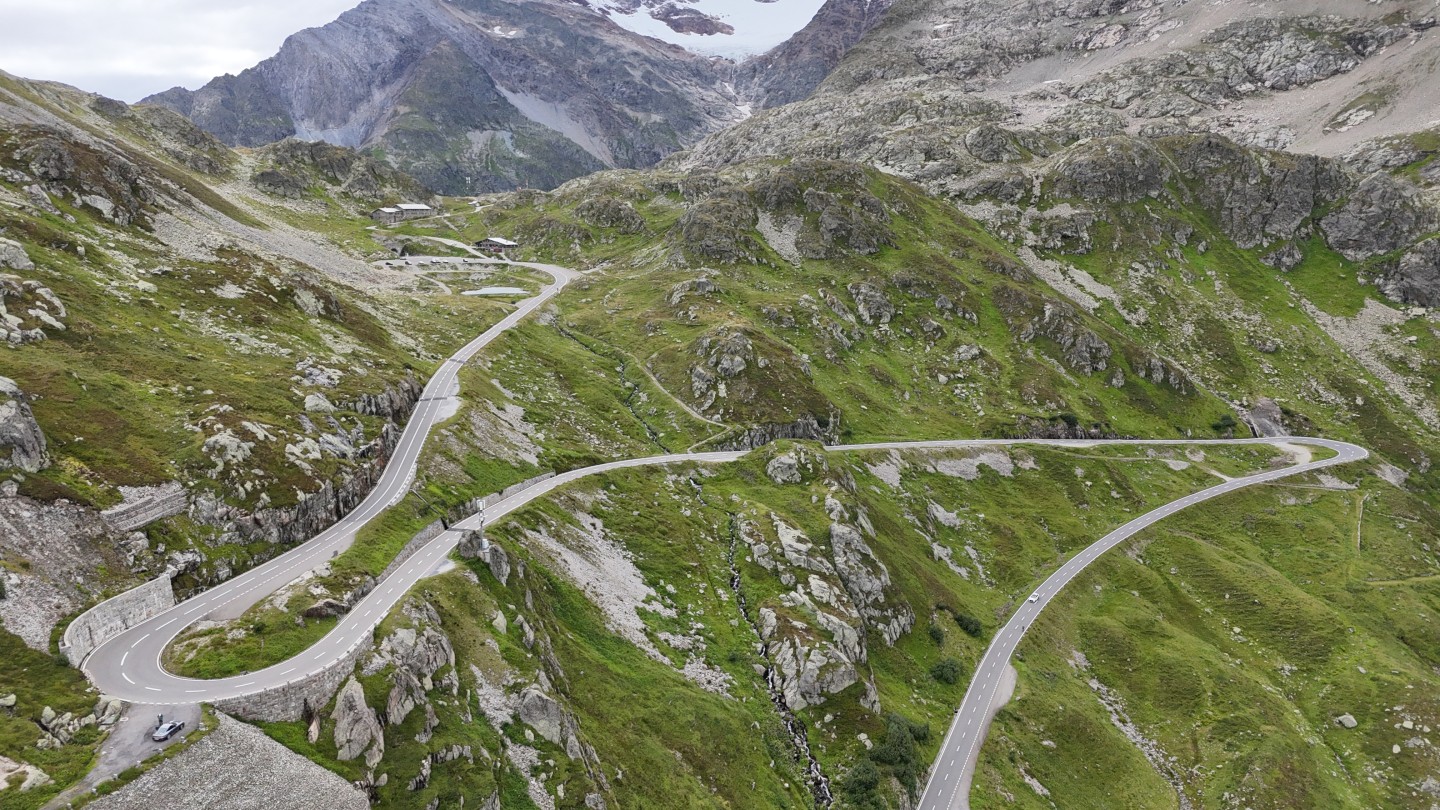
Above Gadmen, the road works harder to gain height. Its changing bends, bridges and rocky sections give the driver plenty to process while the scenery grows more open. Keep a comfortable margin through the tighter sections and let any traffic ahead settle into its own rhythm.
This is where a responsive, reasonably compact car can feel particularly satisfying. You notice small changes in steering load and gradient, choose a suitable gear and place the car accurately within your lane. The enjoyment comes from the relationship between those actions, rather than from the number appearing on a display.
4. Steingletscher and the summit tunnel
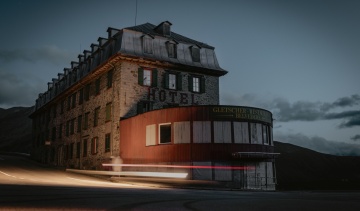
The Steingletscher area is one of the route's main reasons to stop. The hotel and Alpine centre provide a recognisable starting point for exploring the surrounding mountain landscape. Higher up, the road continues towards the summit tunnel, which carries the crossing beneath the ridge.
On the Bernese side of the tunnel there is a main parking area, with Susten Hospiz above the road. Treat the summit as a chance to reset before the descent. A short walk within your group's ability can reveal more of the landscape than repeatedly moving the car between nearby spaces.
5. Meien valley to Wassen
The Uri side introduces a different valley perspective, leading down towards Wassen and the Gotthard transport corridor. Take the descent as its own driving phase. The car, traffic and visibility may ask for a different pace from the one that felt natural on the climb.
At Wassen, you return to a junction with several possible continuations. Travelling towards Andermatt involves Göschenen and the Schöllenen approach; continuing north is a different journey. This is a sensible place to reassess the day before navigation quietly persuades you that another hour or two cannot possibly hurt.
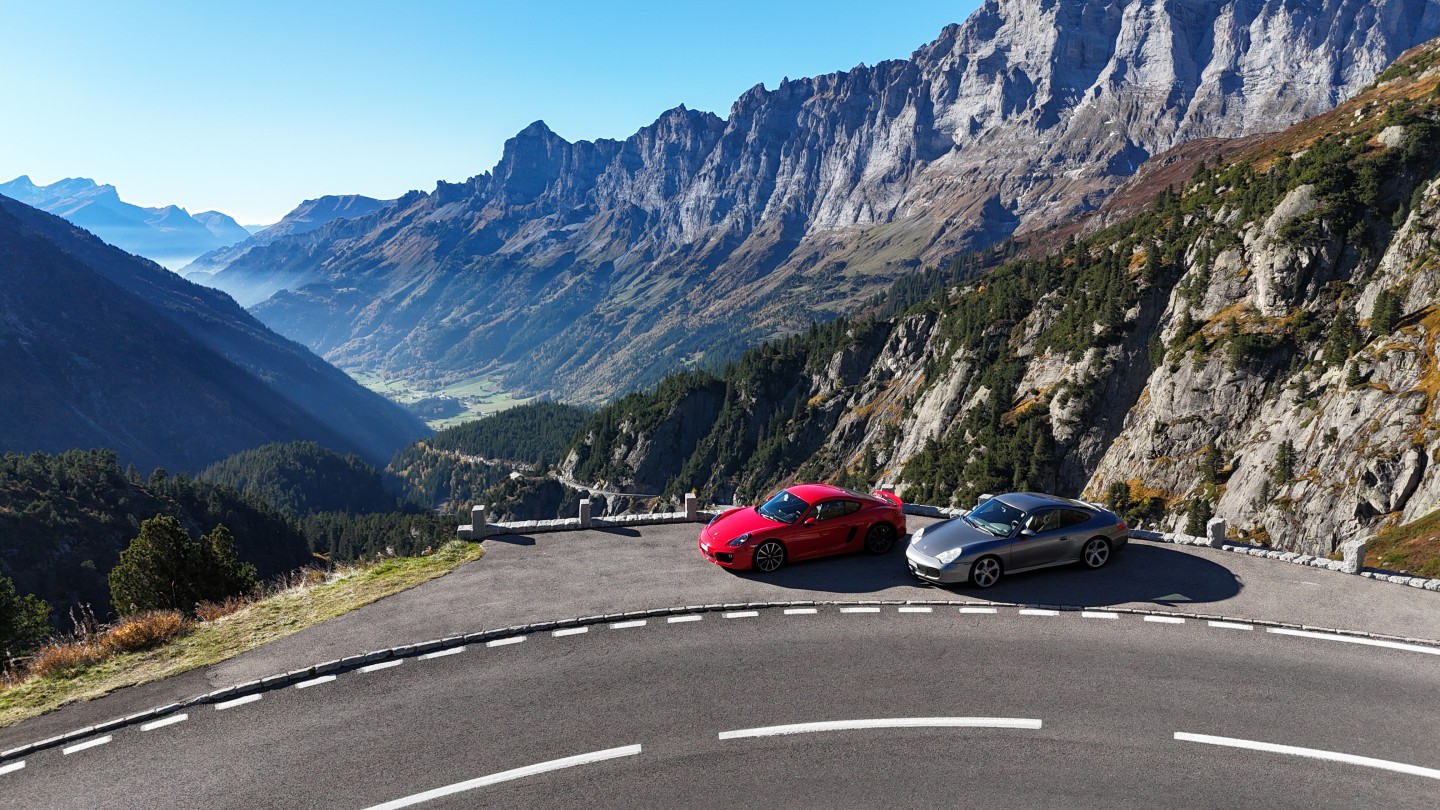
Make Steingletscher a proper stop
The landscape around Steingletscher rewards curiosity about what you are seeing. The Gletscherpfad Steinalp introduces local geography, geology and biology through 15 stations. The local visitor site gives approximately two and a half hours and identifies Hotel Steingletscher as the starting point; a detailed booklet is available there.
That makes the trail an activity to plan, rather than something to squeeze in while the engine cools. Add time for reading, photographs and breaks, and check the route's current condition before starting. A glacier trail explores a glacier landscape; its name should not be taken as an invitation to walk onto ice without specialist arrangements.
You can also choose a shorter visit. Ask locally about an appropriate walk for the day's weather and your group's footwear, mobility and experience. Seeing one part of the valley carefully is more rewarding than beginning a longer route because a map made the distance look small.
Photographs from previous years are useful inspiration, but they are not a live survey of the glacier, paths or access points. Keep your expectations centred on the broader mountain landscape and follow the current marked route. The story is more interesting when you notice what is there, rather than trying to reproduce an old image precisely.
Choose one worthwhile detour
The Gadmen valley also provides access to the Tälli area. For travellers who want a walking day with an interesting drive attached, this can be a worthwhile alternative to collecting more pass summits. Assess it as a separate excursion, with its own transport arrangements, walking requirements and operating times.
Check the Grimselwelt mountain-railway information for the Tällibahn's current operation. There is also an important 2026 change nearby: the operator states that the Triftbahn will not operate during the 2026 season because of technical problems and necessary adjustments. Do not build this year's Susten itinerary around a cable-car trip to the Trift area.
For a gentler extension near Innertkirchen, consider the Aare Gorge area on a separate part of the day, checking its admission and access arrangements. There is no prize for choosing the most demanding option. The best detour is the one that adds something your travelling companions actually want.
Three itineraries that work
The first-time Susten day
Stay around Meiringen or Innertkirchen, have breakfast and begin once the weather and road information support the crossing. Pause briefly in the Gadmen valley, make Steingletscher your main stop and continue via the summit to Wassen. Finish the drive before an evening commitment begins to dictate your pace.
If you are returning to the same accommodation, going back over Susten offers a different perspective without introducing another unfamiliar pass. Allow for the second crossing in the plan from the start. Returning does not mean you failed to design a loop.
The road-and-walking day
Make the Steinalp trail the central activity. Arrive with suitable clothing and enough time to complete it comfortably, eat afterwards and then decide whether a full crossing still suits the conditions. A shorter drive with a substantial walk can be the more complete experience, particularly for a group with mixed interests.
The two-day grand tour
Use Susten as one day of a weekend based between the Haslital and Andermatt regions. Keep the first day's itinerary modest, then choose Grimsel, Furka or the Gotthard area for the next leg. This arrangement gives you room to respond to weather without losing the entire purpose of the trip.
Confirm accommodation access and opening dates before relying on a mountain property. A hotel near a pass can be a wonderful setting for the evening, but only if its actual location fits your route. A famous name on the booking confirmation does not shorten the drive.
How to enjoy the road from both seats
A good Susten drive should feel smooth to the passenger as well as satisfying to the driver. Use the pace that lets everyone follow the scenery without being repeatedly pushed against a seat bolster. If someone becomes uncomfortable, choose a proper stopping place and adjust the plan. A mountain holiday is a poor setting for a debate about who is being too sensitive.
For the driver, the most useful habit is anticipation: look through the available view, manage speed before the bend and leave room for the road to change. Tunnels and open slopes bring different light; tight corners and broad sections bring different sight lines. Consistency comes from responding to those differences, not applying the same pace everywhere.
Sports cars, ordinary family cars and grand tourers can all fit the trip. A wider or heavier car may ask for more deliberate positioning and downhill management. In a classic, sort known mechanical weaknesses before the holiday and choose a schedule that allows comfortable pauses. You should be listening to the engine because you enjoy it, rather than because you are diagnosing it.
For an EV, plan enough charge for the ascent and onward options. Regeneration on the descent is useful, but its availability depends on the vehicle and battery conditions. Confirm charging access and compatibility in your chosen stopping towns instead of assuming every hotel plug is available to passing visitors.
Photography without turning the road into a set
Susten's strongest photographs often show how a modest strip of road sits within an enormous valley. Let the bridge, tunnel entrance or curve provide a line through the picture, then give the mountains enough space to explain the scale. If including a car, one thoughtfully chosen parked scene is usually enough.
Work from authorised stopping places and keep the road clear. A passenger can note promising locations for later; the driver should not try to assess a composition while negotiating a corner. If a viewpoint is busy, move on to the next suitable opportunity. You are collecting memories, not directing the movements of everyone else on the mountain.
Link Susten with Grimsel and Furka thoughtfully
The classic loop connects Innertkirchen, Grimsel, Gletsch, Furka, Andermatt, Göschenen, Wassen and Susten. Each pass has its own character and its own access conditions. Check all three before treating the circuit as a single available route.
A full day can accommodate a drive with sensible breaks when conditions cooperate. A glacier walk, a long lunch and a major attraction introduce a different schedule. Our Grimsel Pass guide and Furka Pass guide help you decide which stops to retain and which deserve another day.
For an organised journey, explore driving tours and road rallies on Petrolbase, then check the actual route, driving format and inclusions. Look for an itinerary that names the roads you want to experience and allows enough time to enjoy them.
Susten earns its reputation through the whole crossing: the valleys, the climb, the engineering and the pause at the top. Give each part some room, and the drive becomes far more than a road between two places.
Frequently Questions People Ask
Do you have any questions?

-thumb.jpg)