Drifting en Suiza: cursos, taxis de drift y eventos (2026)
Descubre la escena suiza de la conducción de lado, desde cursos para principiantes en Sennwald y Cazis hasta drift taxis en Tuggen y Seelisberg, con consejos prácticos sobre costes, coches y cómo elegir tu experiencia.
There is a moment in a drift taxi when the view through the side window becomes unexpectedly relevant. The car is travelling one way, its nose is pointing another, and the driver appears remarkably relaxed about the whole arrangement. From the passenger seat, it is wonderfully entertaining. Behind the wheel, it becomes an absorbing lesson in timing, balance and precision.
Switzerland offers several ways into that world. You can learn the fundamentals at an instructed course, practise existing skills during an open session, ride beside an experienced driver or follow the local competition scene. Choosing the right format matters more than choosing the most dramatic photograph.
This guide brings together Swiss locations, practical differences between experiences, realistic budget examples and the questions worth asking before you commit. Sennwald, Cazis, Tuggen and Seelisberg each have a different role to play, with another beginner option in Pfäffikon ZH.
Dates and advertised prices checked on 10 September 2026. Availability, hire cars and individual package conditions must be checked for your chosen date.
Which drifting experience should you choose?
A drift course: learn the skill yourself
You take the wheel and work through exercises with an instructor. A beginner course introduces how a car behaves when the rear tyres lose grip, then builds your ability to manage that movement. It suits someone who wants to understand the car and leave with a skill to develop. Look for an explicit beginner programme and enough coached practice to make the journey worthwhile.
A drift taxi: experience the passenger seat
An experienced driver handles the steering and pedals while you experience the car from inside. You can enjoy the changes of direction without learning the technique yourself. This can work well as a first taste of drifting or a gift, provided the participant meets the particular package's age, height and seating requirements.
An open drift session: practise what you already know
Open drifting usually gives experienced participants room to practise, with venue rules and session management still in place. It should not be assumed to include beginner tuition. GRIP&DRIFT, for example, restricts its Sennwald open sessions to drivers with previous drifting experience on asphalt. Ask about the required level, how cars share the course and whether coaching can be arranged.
A competition: follow the sport from trackside
Competition offers a different kind of involvement: watching prepared cars and drivers work within a judged format. A training day is not automatically a public spectator event. Check the current calendar and visitor arrangements before travelling, especially when an older article mentions a championship date.
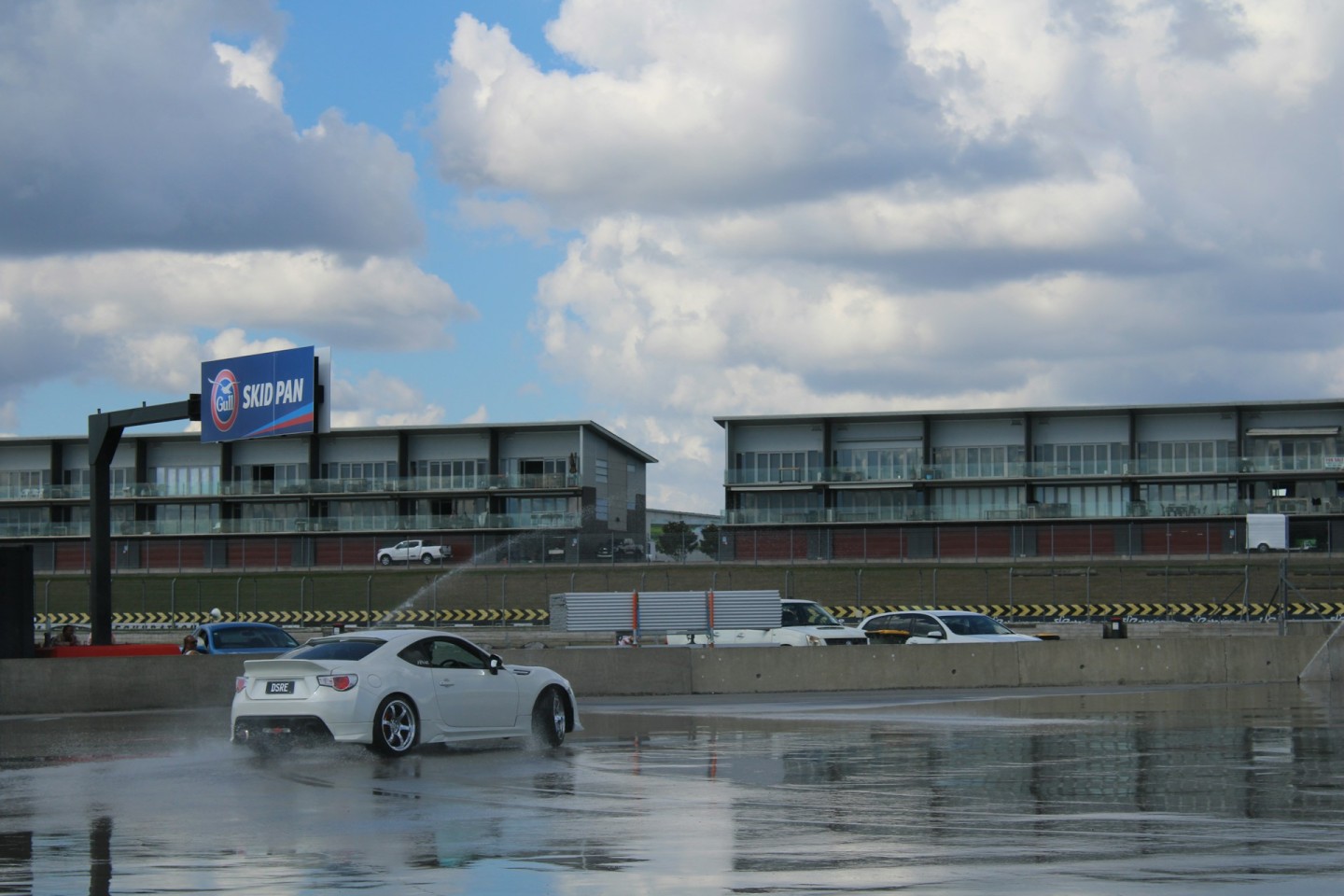
Learning to drift in Sennwald
Sennwald, in the canton of St. Gallen, is one of the locations used by GRIP&DRIFT for beginner tuition, advanced training and open practice. That progression is useful if you want an introduction now and a route to further training later.
The beginner programme starts with approximately 30 minutes of theory, followed by exercises on low-grip surfaces and watered asphalt. The aim is to understand the start of a slide, maintain control and finish it cleanly. Instruction may come by radio, through the window or from an instructor in the car, depending on the exercise.
For the remaining 2026 season, the organiser advertises a beginner evening on 17 October, from 17:00 to 20:00, at CHF 280 for tuition. Optional car hire adds to that price. Check the selected session's details rather than relying on a generic timetable, as starting times can differ.
Sennwald is a sensible option to investigate if you are based in Eastern Switzerland or travelling from nearby Liechtenstein. The deciding factor should still be the course itself: your experience level, the available car and the amount of practice included. Consult the official Sennwald programme for the venue's training and vehicle requirements.
Beginner drift courses in Cazis
Cazis brings another instructed option to Graubünden. GRIP&DRIFT's programme follows a similar learning sequence: an introduction to the fundamentals, exercises on low-grip surfaces and practice on watered asphalt. The emphasis is on repeatable car control, with feedback that helps you understand why one attempt worked and the next became a rather enthusiastic turn.
The organiser lists beginner afternoons on 18 October and 15 November 2026, both from 13:15 to 17:00, with tuition advertised at CHF 280. Rental vehicles are additional. These are course windows, so allow for the briefing and the way practice is organised within the session.
Start with the Cazis beginner course on 18 October when comparing the experience. Check the chosen hire car separately: a vehicle offered at one venue is not necessarily offered at the same price at another.
If you are making a longer trip into Graubünden, leave some breathing room around the course. A concentrated afternoon behind the wheel deserves an unhurried arrival and a realistic plan for getting home. Your final exercise should not be calculating whether you can reach check-in before the hotel closes.
Another beginner option: Pfäffikon ZH
Transportschule offers beginner drifting at its training facility in Pfäffikon ZH, with supplied BMW training cars, a three-hour programme and a maximum of four participants. Its entry requirements include a valid driving licence and confident use of a manual gearbox.
This is useful for readers who want to learn without bringing their own car. It is also a reminder to check the exact location: Pfäffikon ZH is the destination here. Transportschule's advanced programme takes place in Tuggen and requires previous training or comparable drifting experience.
You can review the school's beginner and advanced course descriptions directly. Compare its supplied-car format with the tuition-plus-hire structure elsewhere, including driving time and group arrangements.
[IMAGE]
Drift taxi rides in Tuggen
Tuggen, in the canton of Schwyz, is an option for experiencing drifting beside a DriftRacing driver. For someone coming from the Zürich region or planning an evening with fellow enthusiasts, the after-work format is worth a look.
The Tuggen passenger experience dated 25 September 2026 describes three stints of up to five minutes each. Its 17:00–20:00 event window also accommodates arrival, briefing and waiting. The time shown for the event is therefore much longer than the time spent riding.
The listing mentions a Nissan Skyline R32, Nissan 200SX S13 or BMW E46, depending on availability. Treat those as possible vehicles rather than a guaranteed choice. If a particular model is the main reason for your visit, ask before booking.
A passenger ride lets you notice the driver's corrections, the car's changing direction and how quickly everything happens inside the cabin. It can be an excellent way to discover whether drifting is something you want to learn. It does not replace instruction if your next ambition is to take the wheel.
Drift taxi rides in Seelisberg
Seelisberg is another Swiss destination connected with passenger experiences and drifting competition. The DriftRacing passenger listing for 30 October 2026 describes three stints of up to five minutes, with the car determined by availability.
Before choosing it as a gift or group activity, confirm the exact participation conditions. Drift cars can have supportive seats, harnesses and a different cabin layout from an ordinary road car. Age, height and weight requirements belong to the specific package and should be checked for the person who will actually take part.
Also confirm the arrival instructions and expected finish time before planning onward travel. A passenger package, an open practice session and a competition can all take place at the same venue, but they have different schedules and access arrangements.
For a first experience, the useful comparison between Tuggen and Seelisberg is practical: which date suits you, what the package contains, how you will get there and whether the participant fits the requirements. Either name on a map tells you less than those details.
What a beginner course actually teaches you
Understanding the car's balance
A good first session gives you a framework for what you feel through the seat and steering wheel. You learn how braking, acceleration and steering affect the car's behaviour, and how that behaviour changes as grip reduces. The briefing becomes much more interesting once the first exercise gives those explanations a physical reference.
Recognising and managing oversteer
Oversteer describes the rear of the car rotating more than expected through a turn. In drift training, the instructor introduces that behaviour deliberately within a prepared environment. You work on recognising it, coordinating steering and throttle, and bringing the car back to a stable state. Those movements require timing, so expect repetition.
Building consistency
Your first useful achievement may be a small slide that you can explain and reproduce. That is meaningful progress. More ambitious angles and linked changes of direction build on those foundations. Ask for feedback after an attempt: understanding what changed is more useful than simply hoping the next run goes better.
Our beginner's guide to starting drifting explores the learning process in more detail. Use it to understand the terminology before your course, then let the instructor set the practical progression.
Why Swiss drift training often uses wet surfaces
Watered asphalt and specially prepared low-grip surfaces help make sliding possible at lower speeds. They can also reduce tyre wear compared with repeated drifting on dry asphalt. This allows the lesson to focus on recognising the car's behaviour and refining your responses.
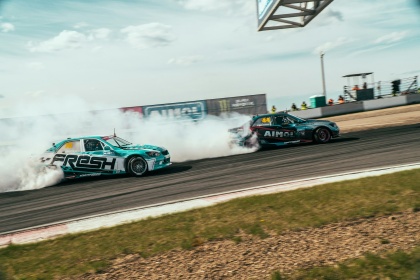
A quieter session with little smoke can still demand plenty of concentration. The amount of smoke in a photograph tells you very little about the quality of the instruction. Your tyres may be delighted about that; your coordination will still get a workout.
Wet training does not remove mechanical wear or every risk, and it is not an invitation to practise in a rainy car park. Keep learning within designated training areas, follow the organiser's rules and use the vehicle settings specified by your instructor.
[IMAGE]
How much does drifting in Switzerland cost?
The biggest budgeting mistake is comparing a course-only price with a package that supplies the car. Decide first whether you need tuition, a vehicle, a passenger ride or an open practice place. Then compare the total for that particular experience.
Tuition with your own suitable car
The GRIP&DRIFT beginner dates discussed above advertise CHF 280 for tuition. Your own fuel, tyre use, travel and vehicle preparation sit outside that headline figure. A road car may also need the organiser's approval before it can join.
Tuition with a hired drift car
GRIP&DRIFT's published Sennwald evening or half-day hire rates list a BMW Compact 325ti at CHF 280 and a BMW 130i at CHF 340, added to tuition. That makes an illustrative beginner-course total of CHF 560 with the Compact or CHF 620 with the 130i, before any other applicable costs.
At Cazis, the published half-day BMW 130i hire rate is CHF 340, giving the same CHF 620 tuition-plus-hire example. The cheaper Sennwald Compact option should not be assumed to be available in Cazis. The organiser states that its published hire prices include fuel, tyres and final cleaning; confirm the chosen car and terms for your date.
Passenger packages
Compare the number of stints, their stated length and the actual package conditions. A three-hour event window does not mean three hours in the car. Check whether extras such as photographs, onboard video or additional rides are included before using them to judge value.
The questions behind the price
Ask how many people share each car, how driving time is allocated and how much individual coaching is included. Read the damage and insurance terms, including any excess, as well as cancellation and weather arrangements. A clear answer to those questions is more useful than an impressive horsepower figure at the top of the page.
Should you bring your own car?
Taking your own car can make sense when it is suitable and you want to understand its behaviour. It also means accepting the preparation and running costs. Begin by sending the organiser the model, drivetrain, gearbox and relevant modifications, then ask whether it is appropriate for that session.
Requirements can include mechanical condition, tyres, fluid leaks and exhaust noise. GRIP&DRIFT's Sennwald programme, for example, requires a sound vehicle with no fluid leaks and fitted silencers. Venue-specific rules matter even if the car is perfectly acceptable for your normal road driving.
If you are still deciding whether drifting is for you, a supplied or hired car can simplify the first visit. You can concentrate on learning before taking on another vehicle, maintenance schedule and collection of spare wheels. There will be plenty of time to become deeply interested in tyre prices later.
Rear-wheel drive is a common training choice, but ask the organiser to approve the actual car. Gearbox requirements also vary. Driving an automatic every day does not automatically prepare you for a course that expects confident manual driving.
Watching drifting competitions in Switzerland
Seelisberg hosted the DRIFT.de Drift Series finale in August 2026. That event has already taken place, so it should be treated as part of the season's story rather than an upcoming date to attend. Check the next announced competition before planning a spectator visit.
When you do attend a competition, follow more than the biggest slide. Watch how drivers position the car, how smoothly they change direction and how consistently they repeat the intended run. The details of judging vary by series and class, but learning what the officials are looking for makes the action easier to follow.
DRIFT.de Drift Series and Drift Masters are separate championships. The official Drift Masters 2026 calendar has no Swiss round. Swiss organisers may also run activities at French or German venues; an organiser's nationality does not make an event Swiss. Check the actual location when comparing your options.
For spectators, confirm admission, viewing areas and the event schedule. A venue accepting course participants or passenger bookings does not automatically offer general public access that day.
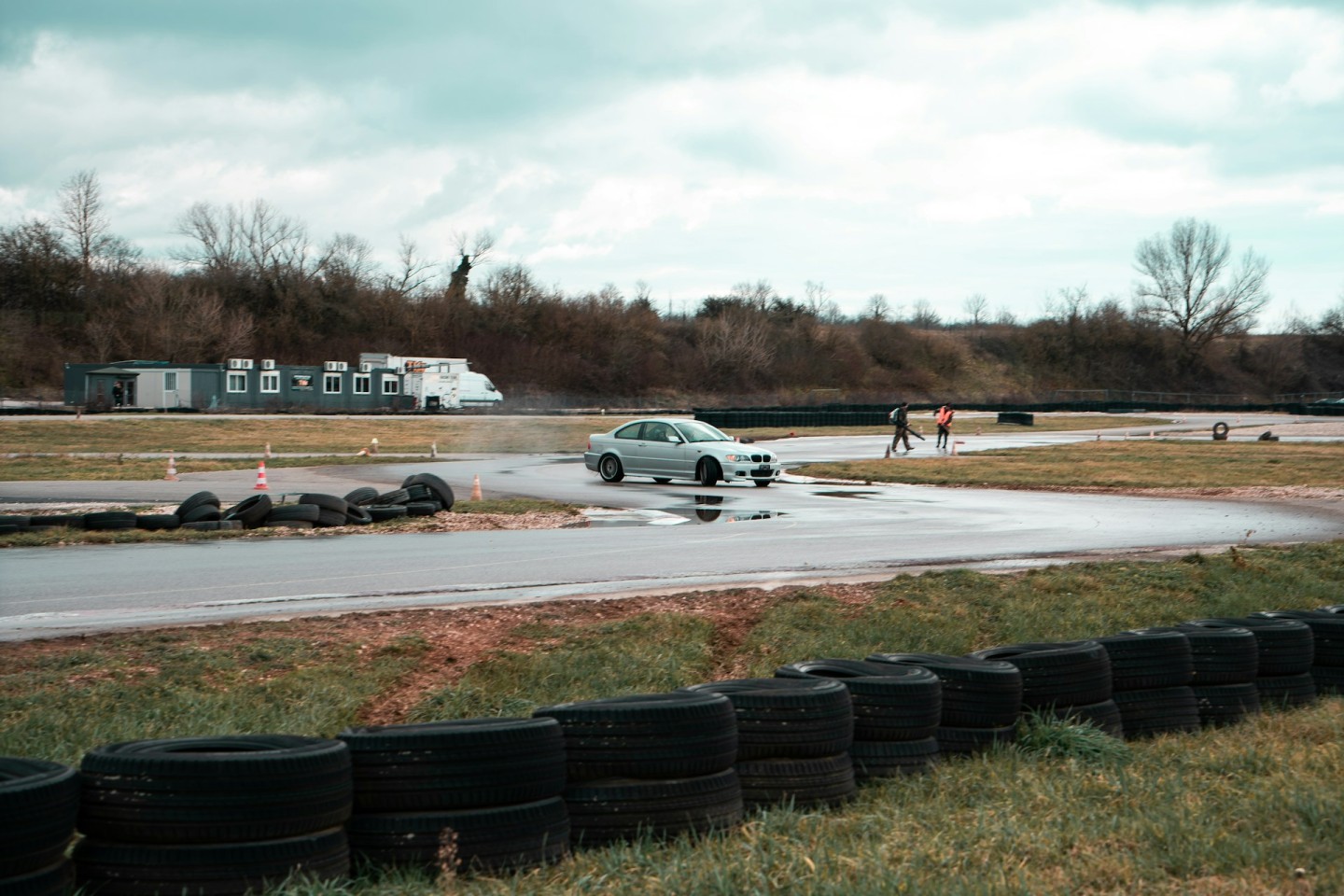
Planning your first Swiss drifting visit
Choose the experience before the destination
Start with what you want to do: learn, practise, ride or watch. Then compare suitable dates and locations. This avoids booking an advanced session because its venue is convenient, or buying a passenger experience when you expected to drive.
Confirm the language and participation requirements
Ask which language will be used for the briefing and coaching. GRIP&DRIFT advertises English-language training, but confirm arrangements for your chosen session. Bring the required driving licence for a course and check any age or hire-car restrictions. Passenger eligibility needs its own check.
Prepare for time outside the car
Wear comfortable closed shoes and clothing that allows easy movement. Bring layers, weather protection and water, particularly for an evening session. Check whether a helmet is required and supplied. There is no reason to buy specialist equipment before understanding what your chosen course actually asks you to bring.
Plan the complete visit
Allow time for arrival, registration and the briefing, then leave a sensible margin afterwards. For autumn bookings, consider the journey home as carefully as the outward trip. Use the organiser's final meeting-point instructions, which may be more precise than the general venue address.
There is no single Swiss drifting season that applies to every provider. The verified programme includes autumn courses, and some schools publish later-year sessions. Watered training surfaces do not depend on natural rainfall, but the organiser's weather and operational policies still apply.
Choose your next sideways experience
For learning, investigate the instructed programmes in Sennwald, Cazis and Pfäffikon ZH. For a passenger introduction, compare the linked Tuggen and Seelisberg packages. If you already have experience, look for a session that matches your level and gives you the practice or coaching you want.
Explore drifting experiences on Petrolbase and use each listing to check the format, date, location and inclusions. Every live event listing with tickets available can be booked through Petrolbase. If tickets are not available, booking is not possible.
The attraction of drifting is easy to understand from a photograph. The real fascination comes when you begin to understand what the car and driver are doing. Whether that starts with a passenger ride or your first coached slide, choose an experience that gives you a good reason to come back.
Preguntas frecuentes
¿Tienes preguntas?